The crossover is the first move most young players want to learn and the one most of them execute badly. Not because the mechanics are difficult, but because they practise the hand movement and skip the part that actually makes it work.
A crossover is not a dribbling trick. It is a lie. It only beats a defender if that defender genuinely believes you are going one way before you go the other. Learning how to do a crossover dribble properly means learning to sell that lie, not just learning to move the ball across your body.
The Three Parts of an Effective Crossover
The setup. Before the ball moves, the defender has to be convinced you are attacking in one direction. This means a genuine push off the outside foot, shoulders and eyes committed that way, and enough speed that the defender must react. Without this, the crossover is just moving the ball from hand to hand while a stationary defender watches.
The transfer. The ball crosses in front of your body, low and fast. Low is the important part. A high crossover travels further, takes longer, and gives the defender time to reach in. The ball should be around knee height or lower.
The explosion. The moment the ball arrives in the new hand, you go. Immediately and hard. Players who complete a clean crossover and then hesitate have wasted it, because the defender recovers within a fraction of a second.
Most young players spend all their practice time on the second part and almost none on the first and third, which is why their crossover works in the driveway and fails in games.
The Step by Step Technique
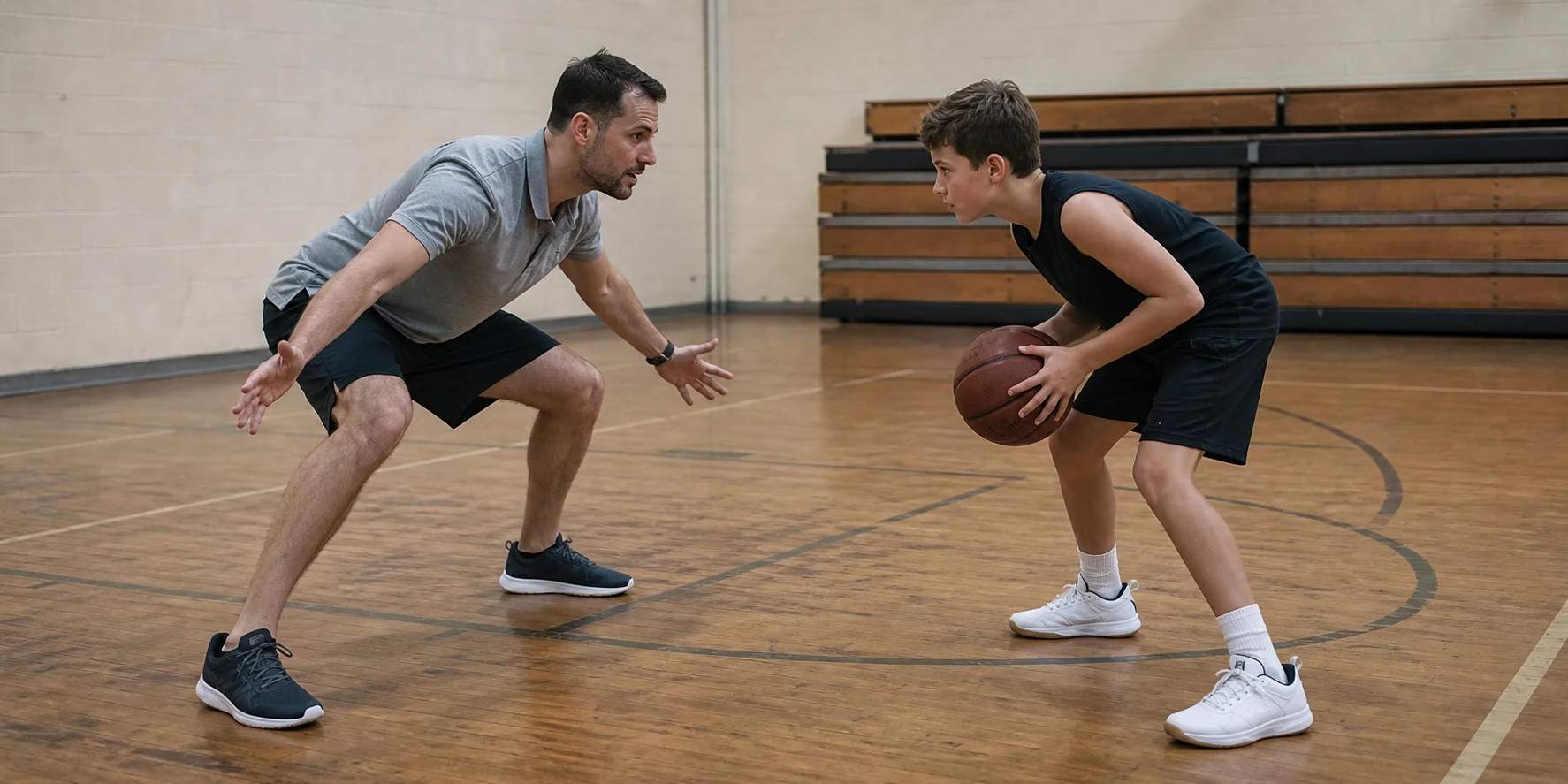
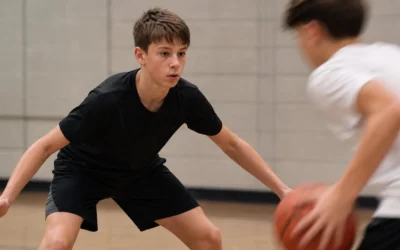
Start in a low athletic stance. Knees bent, weight balanced, back straight, head up. Standing tall makes every change of direction slower.
Establish the ball on your strong side. Push the ball out in front and to the side as you attack in that direction. This is the setup and it needs to look genuine.
Take a hard step in the direction you are selling. The outside foot plants and the shoulder dips that way. If your body does not commit, the defender does not commit.
Push the ball across low and hard. From the outside of your body across to the opposite hand, staying below knee height. The push comes from the fingers and wrist rather than the whole arm.
Push off the outside foot as the ball crosses. The foot change and the ball change happen together. If the ball crosses before your weight shifts, the move is slow and readable.
Receive with the new hand and immediately attack. No pause. The new hand meets the ball already moving in the new direction.
Keep your eyes up throughout. Watching the ball is the most common fault in young players and it removes the ability to read what the defender is actually doing.
Our guide on basketball dribbling drills covers the foundational handling skills this move is built on.
The Practice Progression
Learning how to do a crossover dribble works best in stages rather than attempting the full move against a defender immediately.
Stage one: stationary, eyes up. Standing still, crossing the ball low from hand to hand while looking straight ahead rather than at the ball. Sixty seconds continuous. The goal is a low fast transfer with no visual dependence on the ball.
Stage two: stationary with a foot shift. Add the weight shift so the feet and the ball change together. This builds the coordination between upper and lower body that makes the move effective.
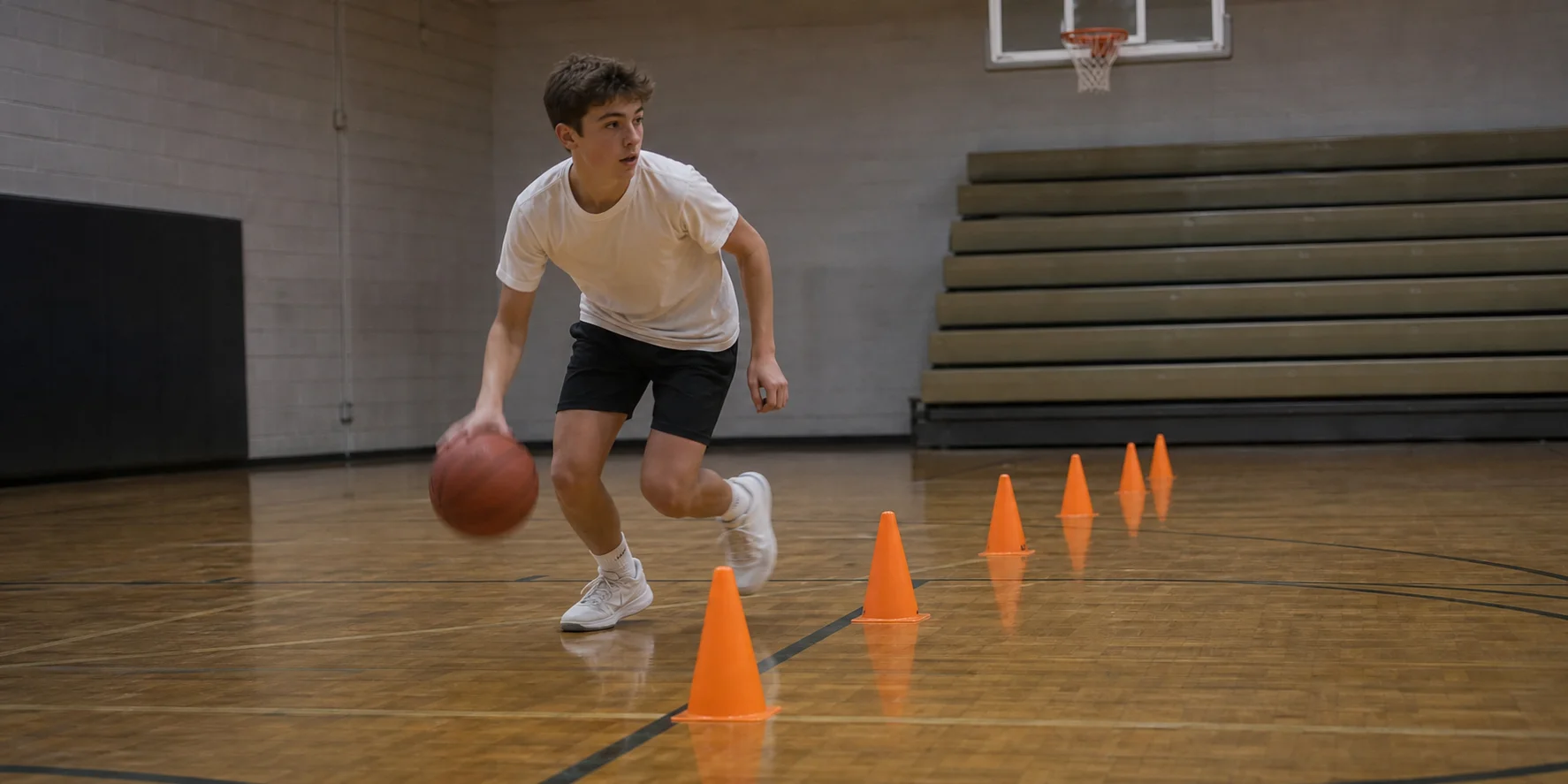
Stage three: walking, then jogging. The same movement while moving forward slowly, then progressively faster. Many players can crossover standing still and lose control entirely at speed.
Stage four: against a cone. Attack a cone as though it is a defender, plant hard, crossover, explode past. This adds the setup and the explosion to the transfer.
Stage five: against a passive defender. A teammate who moves but does not actively contest. This introduces reading and reacting.
Stage six: live one on one. The full move against genuine defence, which is where players discover whether their setup is convincing.
Skipping to stage six without building stages one through five is why so many players have a crossover that only works when nobody is guarding them.
The Most Common Mistakes
Crossing too high. A crossover at waist height or above travels a longer distance, takes more time, and is easy for a defender to reach in and steal. Low is faster and safer.
No setup. Moving the ball across your body without first convincing the defender you were going the other way achieves nothing. The defender simply moves with the ball.
Watching the ball. Removes the ability to see the defender’s reaction and telegraphs the move. Eyes up is not optional.
Standing too tall. A high stance makes changing direction slow. The lower the stance, the sharper the change.
Hesitating after the cross. The advantage exists for a fraction of a second. Players who complete the move and then pause to think have lost it.
Overusing it. A defender who has seen the same crossover four times stops respecting the setup. Effective ball handlers mix moves so that the crossover retains its threat.
Practising only with the dominant hand. A crossover that only works in one direction is a crossover a defender can simply overplay.
When to Actually Use It
Technique is only half of it. Knowing when the crossover is the right choice is what separates players who look good in drills from players who are effective in games.
When the defender is overplaying one side. If a defender is shading you to your left, the setup toward the left is genuine and the crossover back to the right has real advantage.
In transition against a retreating defender. A defender backpedalling has their weight moving in one direction, which makes a hard setup particularly effective.
When you have space to attack into. A crossover that beats your defender into a crowded lane achieves nothing. Reading where the help defence is sitting matters as much as beating the first defender.
Not when heavily pressured in a corner. A low crossover in a trap invites a steal. Different situations call for different solutions.
Developing this judgement is what our work on basketball IQ training focuses on, because skill without decision-making does not translate into games.
How Long It Takes
A young player practising the progression consistently typically has a functional crossover, meaning one that works against a passive defender, within three to four weeks.
A crossover that reliably beats live defence in games generally takes two to three months of consistent work, because the reading and timing element takes longer to develop than the mechanics.
The players who progress fastest are the ones doing ten focused minutes daily rather than an hour once a week. Ball handling responds strongly to frequency.
At YouHoop our skill training classes include structured ball handling progressions with individual correction, which matters because most technique faults are invisible to the player performing them. To find the right pathway for your athlete, book a welcome session with our team.
For home practice guidance, see our guide on getting better at basketball at home.
Youth skill development frameworks are published by USA Basketball and AAU Basketball.

0 Comments