Watch a game closely and the players who seem to glide, changing direction smoothly, staying balanced through contact, rarely getting caught flat-footed, almost always share strong footwork underneath everything else they’re doing. Basketball footwork drills build the balance, control and quickness that support every other skill in the game, from shooting to defending to finishing at the rim.
This guide covers the footwork drills we actually build into training at YouHoop, and why they matter more than most young players and parents initially realise.
Why Footwork Underlies Everything Else
Good footwork is the foundation good shooting, passing and defending are all built on top of. A player with poor balance struggles to shoot consistently regardless of how good their arm mechanics are, since the base a shot is launched from directly affects its consistency.
It’s also one of the more overlooked areas in youth development, purely because it’s less visually exciting than working on a crossover or a jump shot. Footwork doesn’t feel as immediately rewarding to practice as skills that produce a visible, exciting result, which is exactly why it’s worth deliberate attention rather than assuming it develops naturally on its own.
Defensive Slide Drills
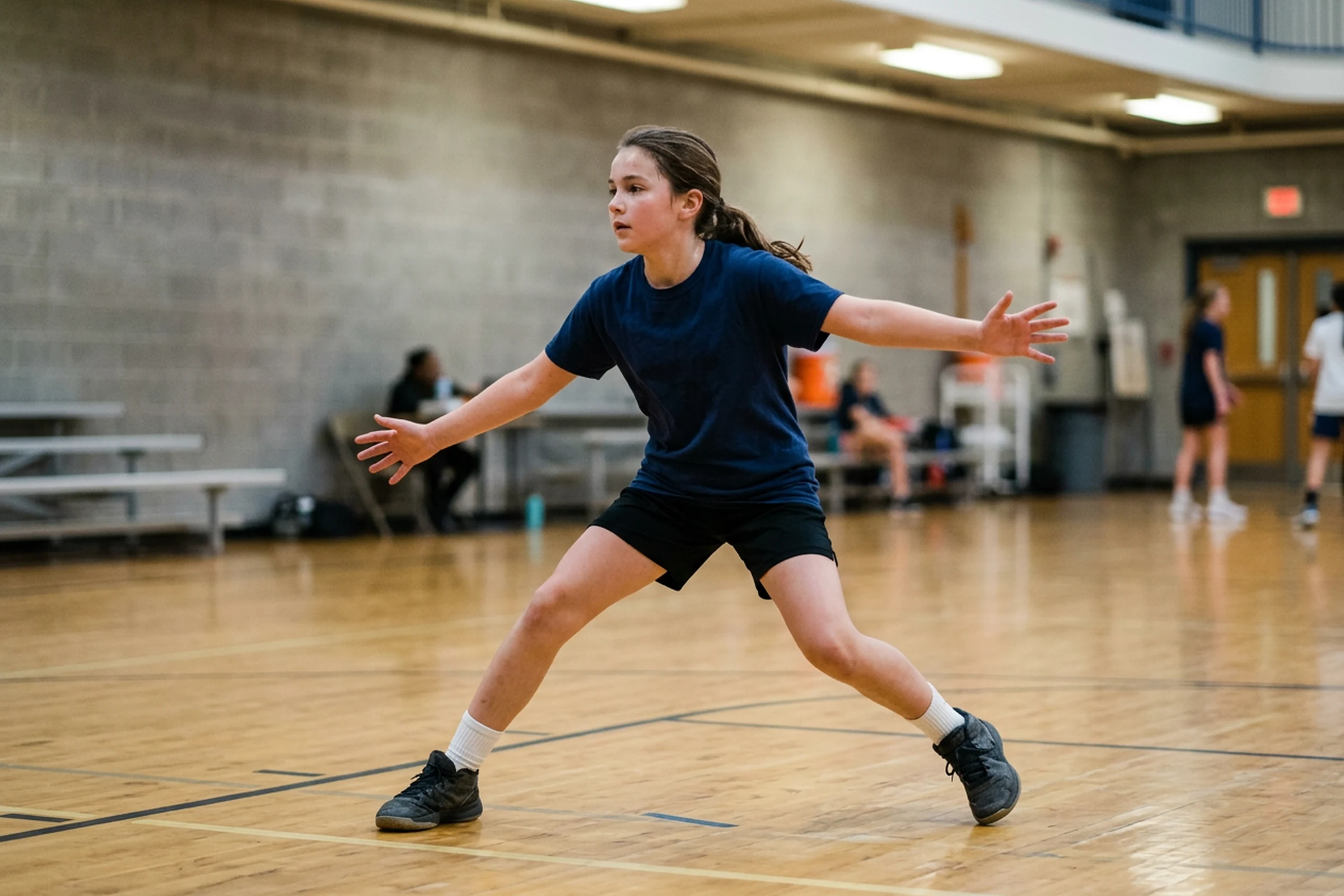
Lateral defensive slides, staying low with a wide stance, build the balance and control needed to guard effectively without crossing the feet. This is a foundational defensive movement pattern that, done correctly and repeatedly, becomes second nature during actual game defense.
Short, quick slides across a defined distance, focusing on staying low and not standing up between movements, reinforce the habit of maintaining a defensive stance rather than popping up, which is a common flaw in young defenders that immediately compromises their ability to react quickly.
Agility Ladder Work
Ladder drills build quick, precise foot placement and coordination. A range of patterns, simple two-feet-in-each-box progressions through to more complex lateral and crossover patterns, develop the fine motor control that translates directly into quicker, more controlled movement on the court.
Starting slow and prioritising correct foot placement over speed. Rushing through ladder patterns before the correct pattern is grooved just reinforces sloppy footwork at speed, which defeats the purpose of the drill entirely.
Pivoting and Balance Drills
Correct pivot footwork, keeping one foot planted as the established pivot foot while the other moves freely, protects the ball and creates passing and shooting angles. Many young players either drag their pivot foot, which is a travelling violation, or fail to use pivoting effectively at all, simplifying their offensive options considerably.
Single-leg balance holds, simple but genuinely effective, build the core and ankle stability that supports quick, controlled changes of direction without losing balance, which matters as much for injury prevention as for performance.
Jump stops, landing with both feet simultaneously under control, teach a young player to stop suddenly and remain balanced, ready to pivot, shoot or pass, rather than stumbling forward off balance after a drive.
Change of Direction Drills
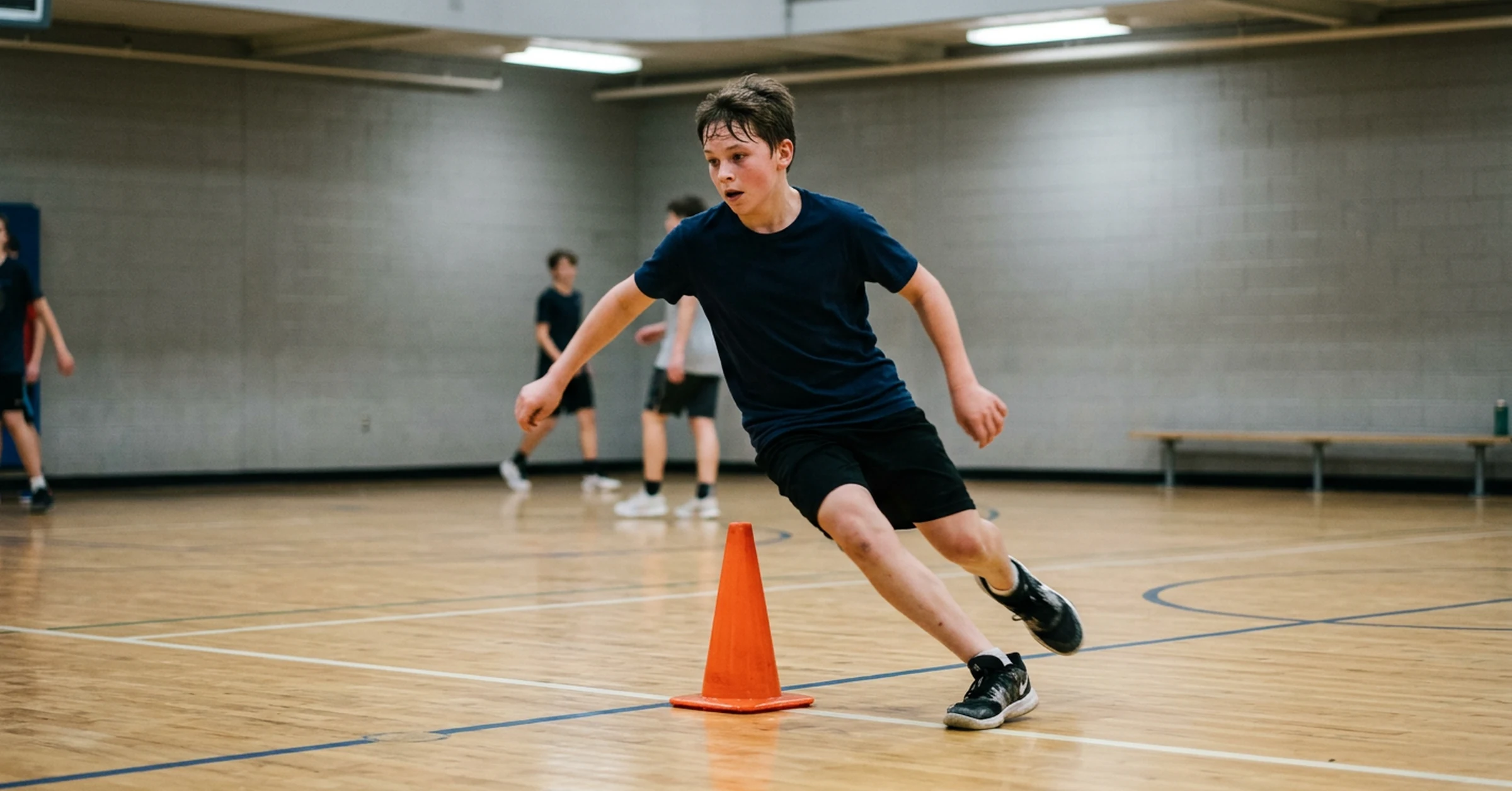
Cone or marker-based cutting drills, changing direction sharply at defined points, build the explosive first-step quickness and body control that separate players who can create separation from a defender from those who can’t.
Combining footwork drills with a ball once the movement pattern itself is solid. Adding ball-handling to a footwork pattern the player hasn’t fully grooved yet tends to break down both skills simultaneously, so sequencing matters here as much as it does in shooting development.
Building Footwork Into Regular Practice
A few minutes of dedicated footwork work at the start of most sessions, rather than treating it as a separate, occasional focus, builds the consistency that actually produces improvement over a season.
Progressive difficulty as a player’s base level improves, keeping the drills challenging enough to continue developing genuine skill rather than becoming rote and easy.
At YouHoop, footwork is woven into our regular training sessions rather than treated as an afterthought, because it genuinely underlies almost everything else a player does on the court. Our skill training classes build this alongside shooting, ball handling and other skill work. Book a welcome call with our team to see how footwork development fits into our broader training approach.

0 Comments