Almost every inconsistent shooter, at any age, has a shot flaw that falls into one of a small number of recognisable categories. Basketball shooting form mistakes tend to repeat across players because the underlying causes, muscle weakness, poor early habits, or simply never having the flaw pointed out, are common to how young players naturally develop.
This guide covers the mistakes we see most often at YouHoop, why they happen, and the specific correction for each.
The Flared Elbow
What it looks like: the shooting elbow sits out to the side rather than tucked underneath the ball, producing a shot that curves left or right rather than travelling on a straight line toward the basket.
Why it happens: often simply habit, sometimes compensating for a ball that’s held too far back or too low, forcing the elbow outward to get the shot up and over a defender.
How to fix it: close-range shooting directly in front of a mirror or a phone camera, with the specific cue of keeping the elbow directly under the ball throughout the motion. Some coaches use a simple visual guide, like shooting close to a wall where a flared elbow becomes immediately obvious.
The Pushing Guide Hand
What it looks like: shots that consistently drift to one side, often traced back to the guide hand influencing the ball’s direction on release rather than simply stabilising it.
Why it happens: the guide hand naturally wants to help, especially when a player is shooting from distance and reaching for extra power, but that extra “help” almost always throws off the ball’s actual line.
How to fix it: one-handed shooting drills at close range, removing the guide hand from the equation entirely, help a player feel what a clean release from the shooting hand alone actually feels like, before reintroducing the guide hand as a purely stabilising presence.
The Dropped Follow Through
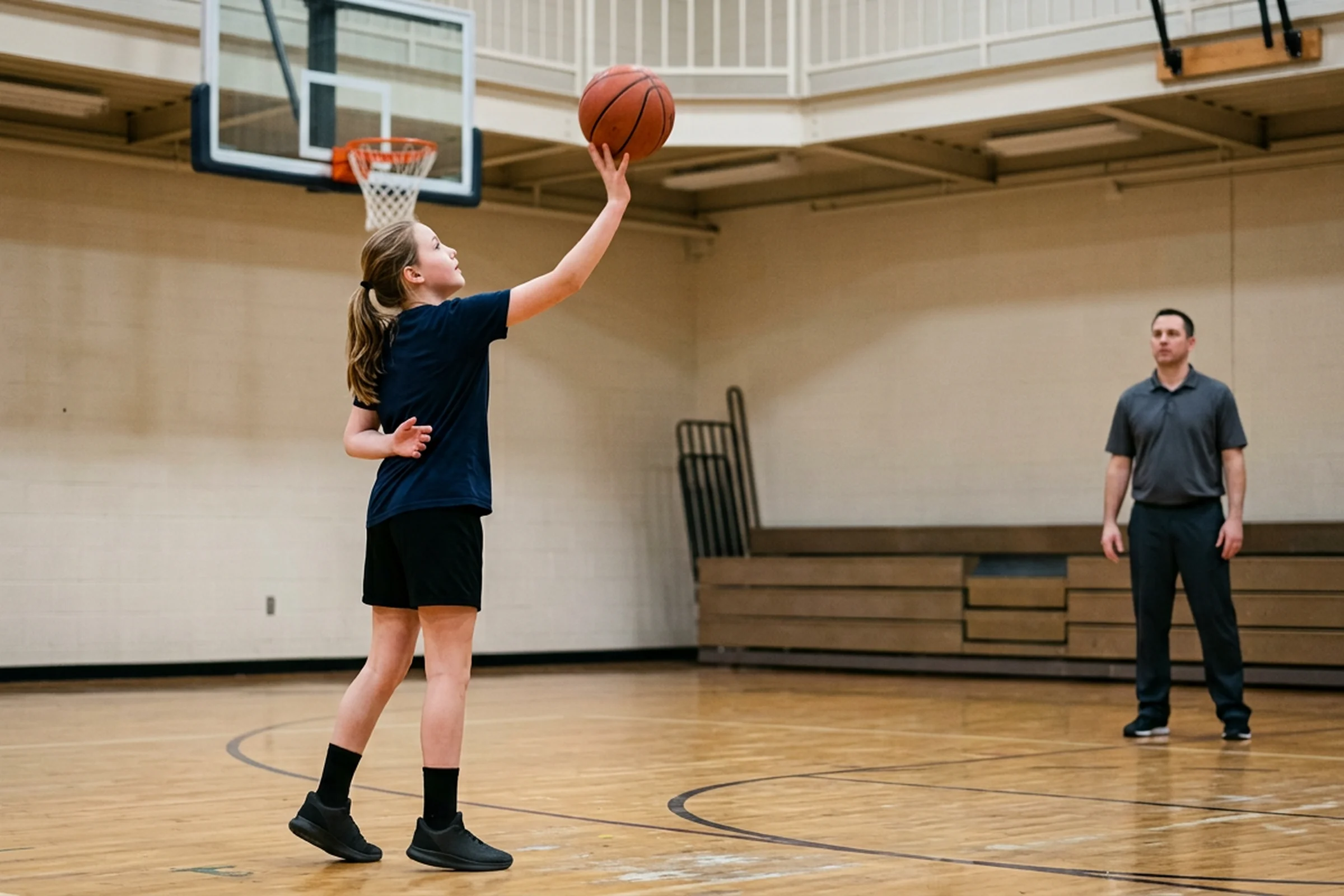
What it looks like: the shooting arm drops immediately after the ball leaves the hand, rather than holding the extended, wrist-snapped position through the shot’s flight.
Why it happens: rushing, often because a player is anxious about a defender closing out, or simply hasn’t been taught to hold the position deliberately.
How to fix it: a simple cue, “hold your follow through until the ball hits the rim,” repeated consistently in practice until it becomes automatic. This is genuinely one of the fastest flaws to correct once a player is aware of it.
Shooting From Too Low a Release Point
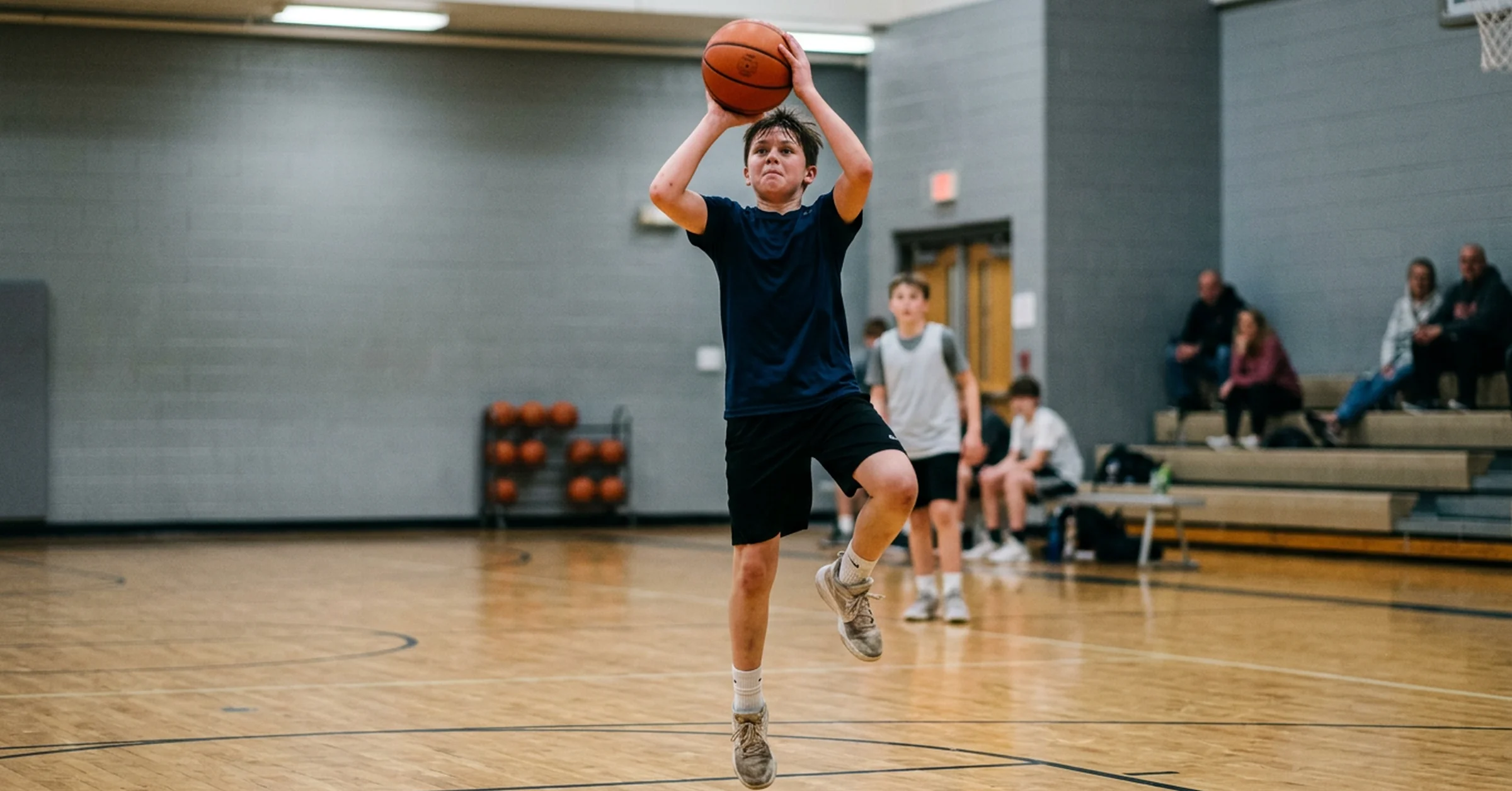
What it looks like: the ball released from around chest height rather than above the forehead, producing a flatter shot that’s both easier to contest and less consistent on the rim.
Why it happens: most commonly a strength issue in younger players who don’t yet have the arm and shoulder strength to comfortably shoot from a higher release point, though it can also persist as a habit even once strength develops.
How to fix it: for younger players, this often resolves naturally with strength development and shouldn’t be aggressively forced too early. For older players with adequate strength who’ve simply never adjusted the habit, deliberate practice shooting from a higher set point, even if shots feel awkward initially, retrains the pattern over a few weeks of consistent repetition.
Inconsistent Rhythm and Timing
What it looks like: a shot that has all the individual mechanical pieces correct in isolation but still misses inconsistently, often because the timing between catching, loading, and releasing varies from shot to shot.
Why it happens: rushing under pressure, inconsistent footwork on the catch, or simply never having developed one repeatable rhythm.
How to fix it: rhythm-focused shooting drills, sometimes counting out loud through the catch, load and release phases, help a player internalise one consistent tempo rather than a different one every shot.
Every one of these flaws is genuinely fixable with the right feedback and consistent, focused repetition. Our skill training classes at YouHoop give coaches the chance to spot and correct these specific patterns individually, rather than leaving a player to figure it out alone. Our guide on basketball shooting form fundamentals covers what correct mechanics look like from the ground up. Book a welcome call with our team if you’d like a coach to take a look at your player’s shot specifically.

0 Comments