Teaching a young player to shoot well involves more patience than most new coaches and parents expect, and rushing the process, piling on every mechanical detail at once, usually backfires. How to teach proper basketball shooting form effectively comes down to sequencing, patience, and knowing which details matter most at which stage.
This guide covers a practical approach that actually sticks, rather than overwhelming a young player with more correction than they can process at once.
Start Close, Not With Distance
The basket should feel achievable from the very first attempt. A young player struggling to even reach a regulation hoop will develop compensating habits, heaving the ball with their whole body, dropping the elbow, throwing from the hip, purely to generate enough power, and these habits are considerably harder to unlearn later than they would have been to avoid in the first place.
A lowered hoop or a much closer starting distance removes this pressure entirely. Shooting from a distance where good form alone is enough to make the shot lets a young player build correct mechanics without fighting against a basket that’s simply too far away for their current strength.
Distance increases only once form is solid at the current range. There’s no rush here. A player who has genuinely correct mechanics at a short distance will transfer that pattern outward far more successfully than one pushed to shoot from further away before the fundamentals are actually in place.
Teach One Thing at a Time
Overloading a young player with every correction simultaneously rarely works. Elbow position, follow through, footwork, release point, all mentioned in the same breath, is too much information for most young players to process and apply at once.
Pick the single most impactful correction and focus there until it’s genuinely automatic. Once one piece becomes second nature, without needing conscious thought, move to the next. This sequencing takes longer in the short term but produces considerably more durable technique than trying to fix everything simultaneously.
Prioritise the correction that’s causing the most inconsistency. A flared elbow that’s sending shots wildly off target matters more, right now, than a slightly low release point that’s simply a normal developmental stage.
Use Simple, Consistent Cues
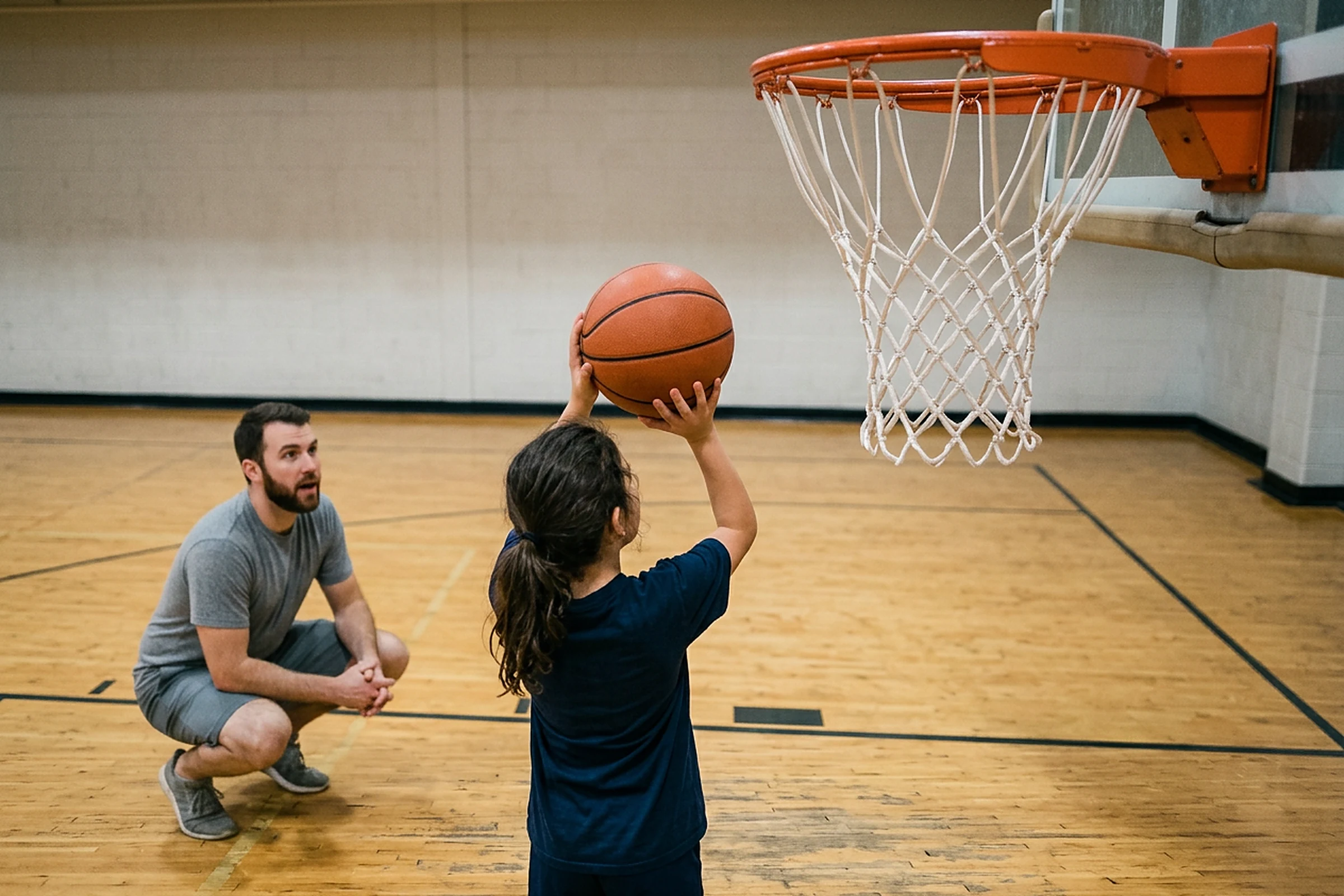
Short, repeatable verbal cues work better than lengthy technical explanations. “Elbow under the ball,” “hold your follow through,” or “square to the basket” are far easier for a young player to internalise and self-correct with than a full paragraph explaining the biomechanics of a proper release.
Use the same cue every time for the same correction. Consistency in language helps a young player build a genuine mental association between the cue and the correction, which speeds up the process of the correction becoming automatic.
Positive, specific feedback reinforces good repetitions. Rather than only correcting misses, acknowledging when a repetition genuinely nailed the specific mechanic being worked on helps a player recognise what correct actually feels like.
Make It Feel Like Progress, Not Correction
Frame the process around building a skill, not fixing something wrong. Young players who feel like they’re constantly being told they’re doing it wrong can lose enthusiasm quickly. Framing each session as adding a new piece to their game keeps the process feeling like genuine progress.
Celebrate the process, not just makes and misses. A shot with genuinely improved mechanics that happens to miss is more valuable progress than a lucky make with poor form, and it’s worth communicating that distinction clearly to a young player who’s naturally focused on whether the ball went in.
Keep sessions appropriately short for the player’s age and attention span. Younger players in particular lose focus quickly, and a shorter, higher-quality session produces better results than a long one where genuine attention fades halfway through.
Video and Self-Reflection
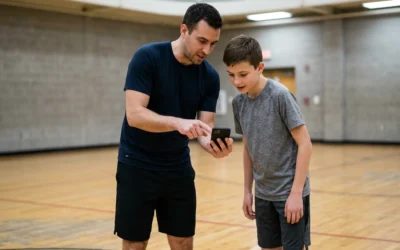
Even young players benefit from seeing their own shot on video. It’s often the moment a correction genuinely clicks, seeing rather than just being told what’s happening.
Ask the player what they noticed before pointing things out yourself. This builds a habit of self-awareness that serves them well beyond any single correction, helping them develop the ability to self-correct during games when a coach isn’t right there to cue them.
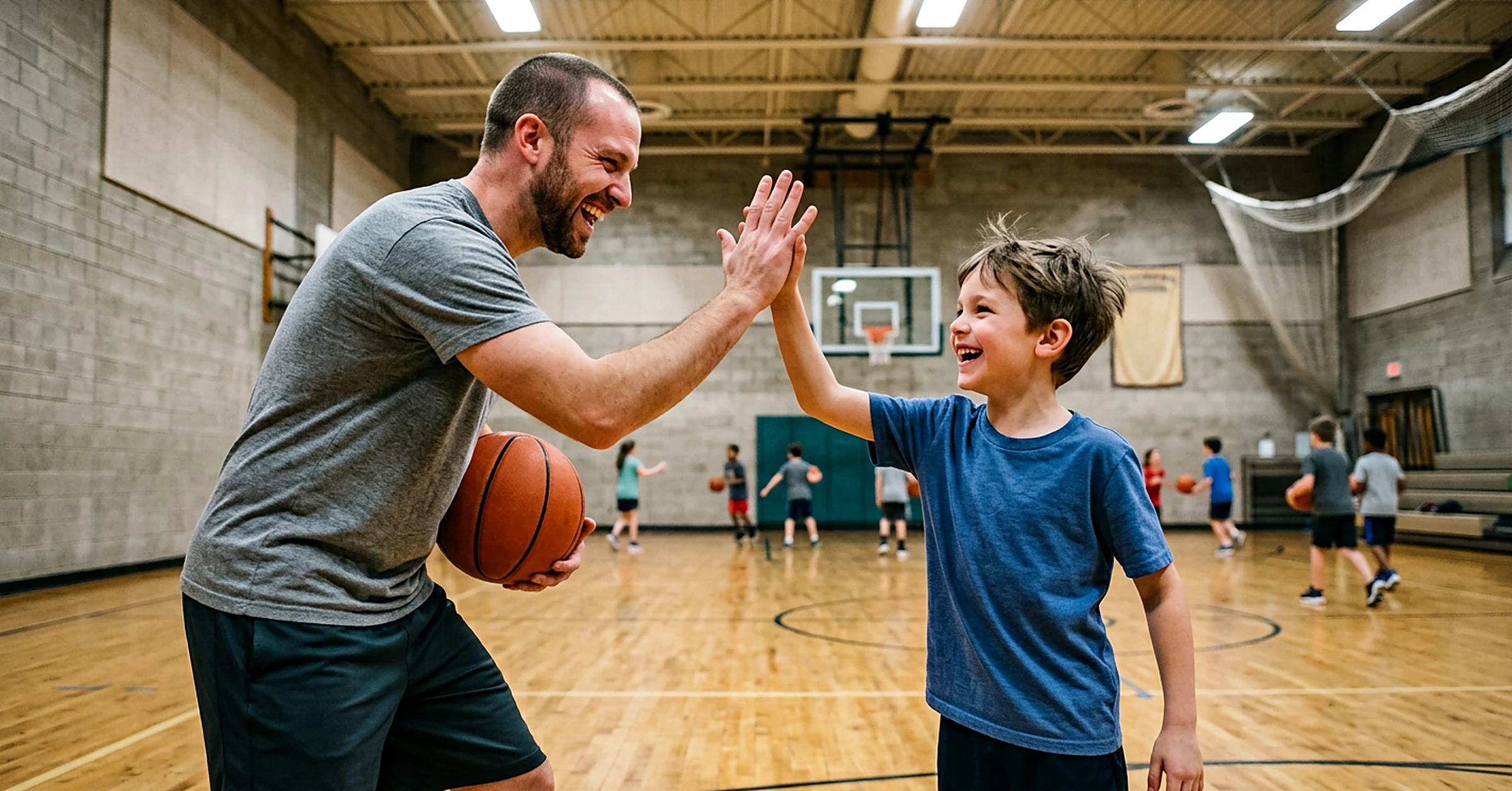
At YouHoop, our coaches teach shooting form with exactly this patient, sequenced approach, building genuine mastery rather than rushing toward distance before mechanics are solid. Our guide on basketball shooting form fundamentals covers the specific mechanics we’re building toward, and our skill training classes give players structured, focused repetition in a supportive environment. Book a welcome call with our team to see how we approach shooting development for your player’s specific age and stage.

0 Comments