Few topics in youth sport generate as much confused advice as strength training for young basketball players. Some parents were told it stunts growth. Others assume it is only for older teenagers. Neither of those beliefs holds up against the current evidence, and the confusion is costing young players a genuinely effective tool for both performance and injury prevention.
This guide covers what the research actually says, at what age it becomes appropriate, and what good coaching of it looks like.
The Growth Plate Myth
The most persistent concern parents raise is that lifting weights will damage growth plates and stunt a child’s height. This belief has been circulating for decades and it is not supported by the evidence.
The National Strength and Conditioning Association’s position statement on youth resistance training and the broader sports medicine literature are consistent on this point. Properly supervised, age-appropriate resistance training does not damage growth plates and does not stunt growth. The injuries historically associated with youth weightlifting in the public imagination came almost entirely from poor supervision, inappropriate loads and incorrect technique, not from resistance training itself.
What the same body of research also shows is that supervised strength training in youth athletes reduces sports injury risk, improves motor skill development and produces measurable performance gains, without the negative effects widely assumed.
This does not mean any strength programme is appropriate for any child at any age with any level of supervision. Those conditions matter enormously, which is covered below.
At What Age Is It Appropriate
There is no single age at which strength training suddenly becomes appropriate. What matters more is readiness.
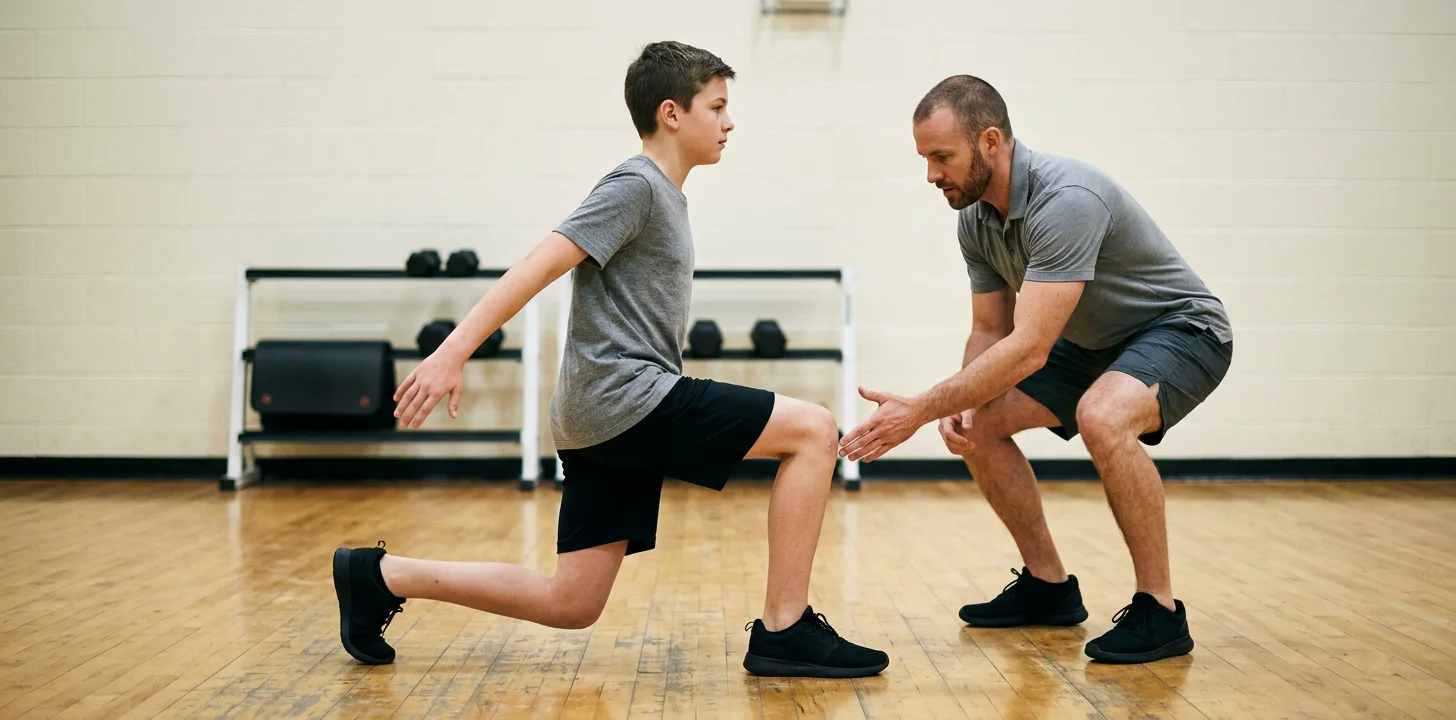
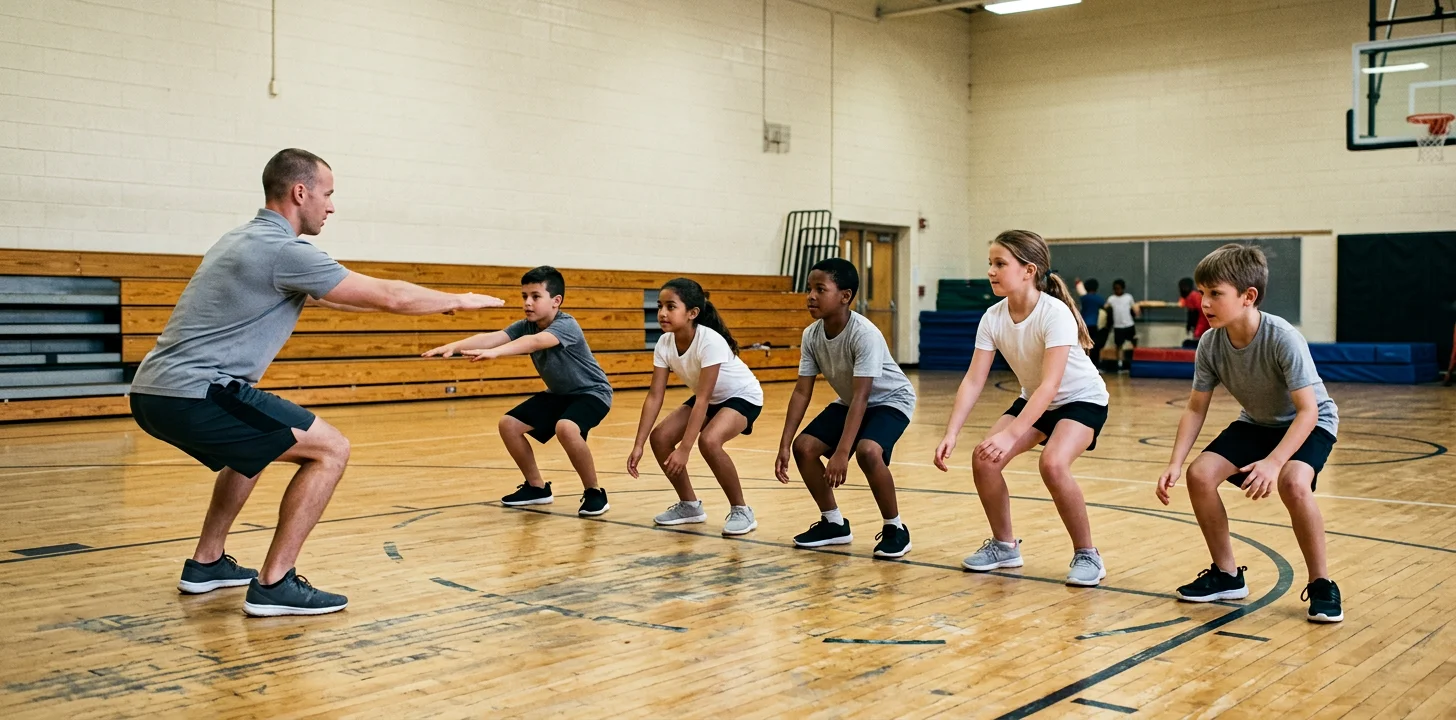
Younger children, roughly six to ten. Bodyweight movement, coordination and general athleticism form the foundation. This is not weightlifting in the traditional sense. Squats, lunges, push-ups, balance work and movement games build the movement literacy that later strength work depends on. A child who has never learned to squat properly with bodyweight is not ready for loaded squatting regardless of age.
Pre-teens, roughly ten to thirteen. As coordination and body control develop, light external resistance can be introduced, still with a heavy emphasis on technique over load. The goal at this stage is learning correct movement patterns, not lifting heavy weight.
Teenagers, roughly fourteen and up. Progressive resistance training becomes genuinely appropriate, with load increasing as technique is demonstrated consistently and supervision remains in place. This is also the age range where the physical demands of competitive basketball increase substantially, making the protective benefit of strength training more relevant.
Chronological age is a rough guide. A child’s stage of physical and motor development matters more than the number of years they have been alive, and two twelve-year-olds can be at very different readiness levels.
Why It Matters Specifically for Basketball
It protects growing joints. Basketball repeatedly loads the knees and ankles through jumping, landing and cutting. Stronger muscles around those joints absorb force that would otherwise pass directly through tendons and growth plates, which is particularly relevant during growth spurts when those structures are under extra tension. Our guide on knee pain in young basketball players covers why this matters in basketball specifically.
It improves the athletic qualities basketball demands. Jumping, first-step speed, and the ability to change direction sharply all have a strength component. Our guides on jumping higher for basketball and speed and agility training both connect directly to strength foundations.
It reduces recurrence of common injuries. Ankle and knee stability both depend partly on the strength of the surrounding musculature. Our guide on ankle sprains in youth basketball covers this in relation to one of the most common basketball injuries.
It builds the durability needed for a long season. Players with a stronger foundation tolerate the accumulated load of a competitive season considerably better than those without one, which means fewer interruptions to their development.
What Good Supervision Actually Looks Like
The evidence supporting youth strength training assumes proper supervision. Without it, the same training carries real risk.
Technique before load, always. A young athlete should demonstrate correct movement with bodyweight before any external load is added, and load should increase only when technique remains sound under it.
A qualified coach present. Not a parent guessing, and not a programme run from a phone screen. Someone who understands appropriate progression for young athletes and can correct technique in real time.
Individualised progression. Players develop at different rates. A programme that pushes every player through the same load progression regardless of readiness is not well supervised, regardless of who is running it.
Movement quality prioritised over weight lifted. For young athletes, the goal is building a strong movement foundation, not maximising how much they can lift. A coach chasing numbers over technique is coaching it wrong.
Adequate recovery built in. Strength sessions add to a player’s total training load, which needs to be considered alongside basketball practice, games and any other sport. Our guide on basketball injury prevention for youth players covers why tracking total load across all activities matters.
What to Avoid
Unsupervised training with heavy load. The scenario that gives youth strength training its bad reputation, and it is a supervision failure rather than an argument against the training itself.
Programmes designed for adults applied to children. Adult strength programmes are not simply scaled down for youth athletes. Age-appropriate programming considers growth, coordination development and recovery capacity differently.
Maxing out or one-rep testing in young athletes. Testing absolute maximum lifts is not appropriate for developing athletes and adds risk without meaningful benefit at this stage.
Copying a professional athlete’s programme. What an NBA player’s body can tolerate has no relevance to what a twelve-year-old’s body can tolerate. This is a common and entirely avoidable mistake.
Ignoring pain. Any pain during strength training, as with any training, warrants stopping and assessment rather than pushing through.
How We Approach It
At YouHoop, strength and movement work is built into our programme at an age-appropriate level, with technique as the priority and progression individualised to each player.
For younger players this means bodyweight movement quality, coordination and general athleticism. For older players it means introducing supervised resistance work that builds the strength basketball genuinely demands, always with technique and appropriate load as the priority over how much weight is being moved.
This sits alongside our skill development work rather than replacing it. Our skill training classes integrate movement quality and appropriate physical preparation into regular sessions rather than treating it as a separate add-on. You can read more about our approach on our about page.
If you have questions about how we would approach strength and conditioning for your player specifically, book a welcome call with our team.
Position statements and guidance on youth resistance training are published by the National Strength and Conditioning Association, and broader youth athletic development guidance is available through USA Basketball.


0 Comments