The car ride home after a basketball game is one of the most influential conversations a parent has with their child, and most parents do not realise how much weight it carries. What you ask, and how you ask it, shapes whether your child associates basketball with pressure or with growth.
This is not about walking on eggshells or avoiding honest conversation. It is about asking questions that actually help your child think, rather than questions that sound innocent but function as judgment in disguise.
Why This Matters More Than It Seems
Children take their cues about what matters from the questions adults ask them. If every conversation after a game centres on points scored, minutes played or whether the team won, a child learns that those are the things worth caring about, even if you never say so directly.
Sports psychology research consistently finds that young athletes who play primarily to please the adults in their life, rather than for their own enjoyment and growth, are considerably more likely to burn out and quit earlier. The questions asked after games are one of the clearest signals a child receives about what basketball is actually for.
This does not mean pretending results do not matter. It means the conversation can build a healthier relationship with competition without avoiding it entirely.
Questions That Sound Innocent but Backfire
“Why didn’t you shoot more?” Reads as criticism disguised as curiosity, and most children hear it exactly that way regardless of tone.
“Did you see what your teammate did wrong?” Teaches a child to look outward for blame rather than reflecting on their own game, and it undermines the trust and unity a team needs.
“What was the coach thinking?” Models disrespect for the coach’s authority, even said casually, and a child who hears this repeatedly begins to question coaching decisions rather than trusting the process.
“Don’t you want to win?” Implies the child does not care enough, which is rarely true and rarely helpful to say out loud.
“Did you have fun?” immediately after a tough loss. Well intentioned but can feel dismissive of genuine disappointment a child is still processing. Timing matters as much as the question itself.
The common thread across all of these is that they have a right answer the parent is fishing for. A question with a hidden correct answer is not really a question. Children can tell the difference, even young ones, and repeated questions like these teach a child to perform for approval rather than to reflect honestly.
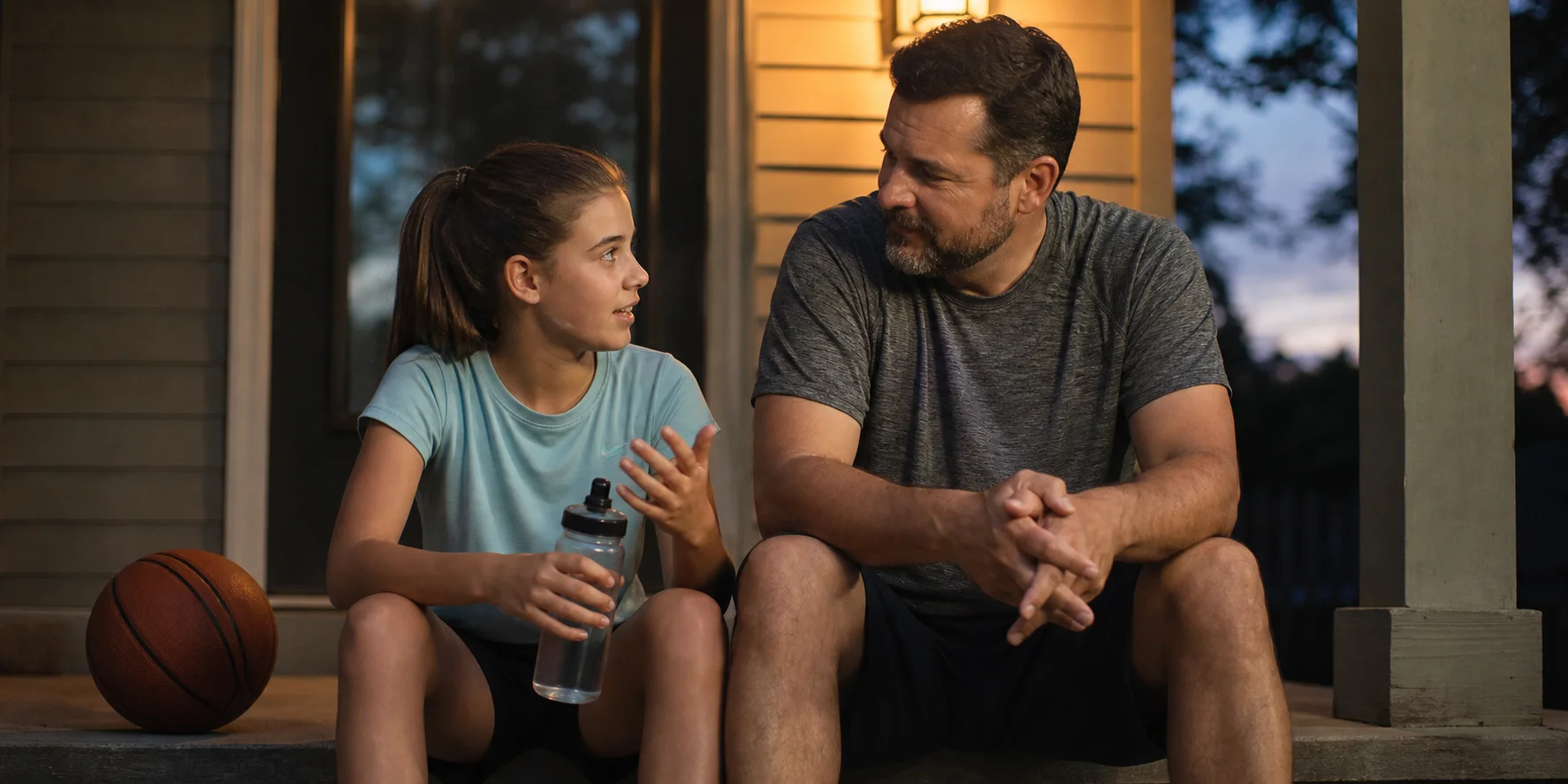
Questions That Actually Help
“What was something one of your teammates did well today?” Shifts focus outward in a positive direction, builds the habit of noticing and valuing others, and reinforces that basketball is a team endeavour rather than an individual showcase.
“What did you learn today?” Encourages reflection and treats the game as a learning opportunity rather than purely a result to be judged. It also works regardless of whether the team won or lost, which makes it a reliable go-to.
“How do you feel about your contribution to the team today?” Gives your child space to reflect on their own effort and role honestly, without you supplying the judgment yourself. Genuine curiosity in your tone matters here, since a question that sounds like it is checking up on performance defeats the purpose.
“What was hard about today, and what are you proud of?” Two questions in one that acknowledge both struggle and accomplishment, giving a fuller and more honest picture than either alone.
“What do you want to work on next practice?” Points forward rather than dwelling on what already happened, and puts your child in the driver’s seat of their own development rather than positioning you as the one identifying what needs fixing.
“Which teammate or coach deserves a shout out today?” Reinforces that basketball is not just about the individual player, and builds a habit of generosity and team-mindedness that extends well beyond the sport.
The Timing Matters as Much as the Question
Give some space before diving in. Immediately demanding a debrief the second your child gets in the car rarely produces genuine reflection. A few minutes of quiet, or a simple how are you feeling, often opens the door better than an immediate detailed breakdown.
Read the room. A child who is clearly upset after a tough loss needs comfort and space before analysis. Pushing straight into reflective questions when emotions are still raw usually backfires regardless of how well the questions themselves are framed.
Let them lead where possible. Children who want to talk about the game will usually start the conversation themselves if given the chance. Following their lead rather than always initiating the debrief respects their own relationship with what just happened.
Know when the answer is simply not tonight. Not every game needs an extended conversation. Sometimes the most supportive thing is genuinely letting it go and talking about something completely unrelated.
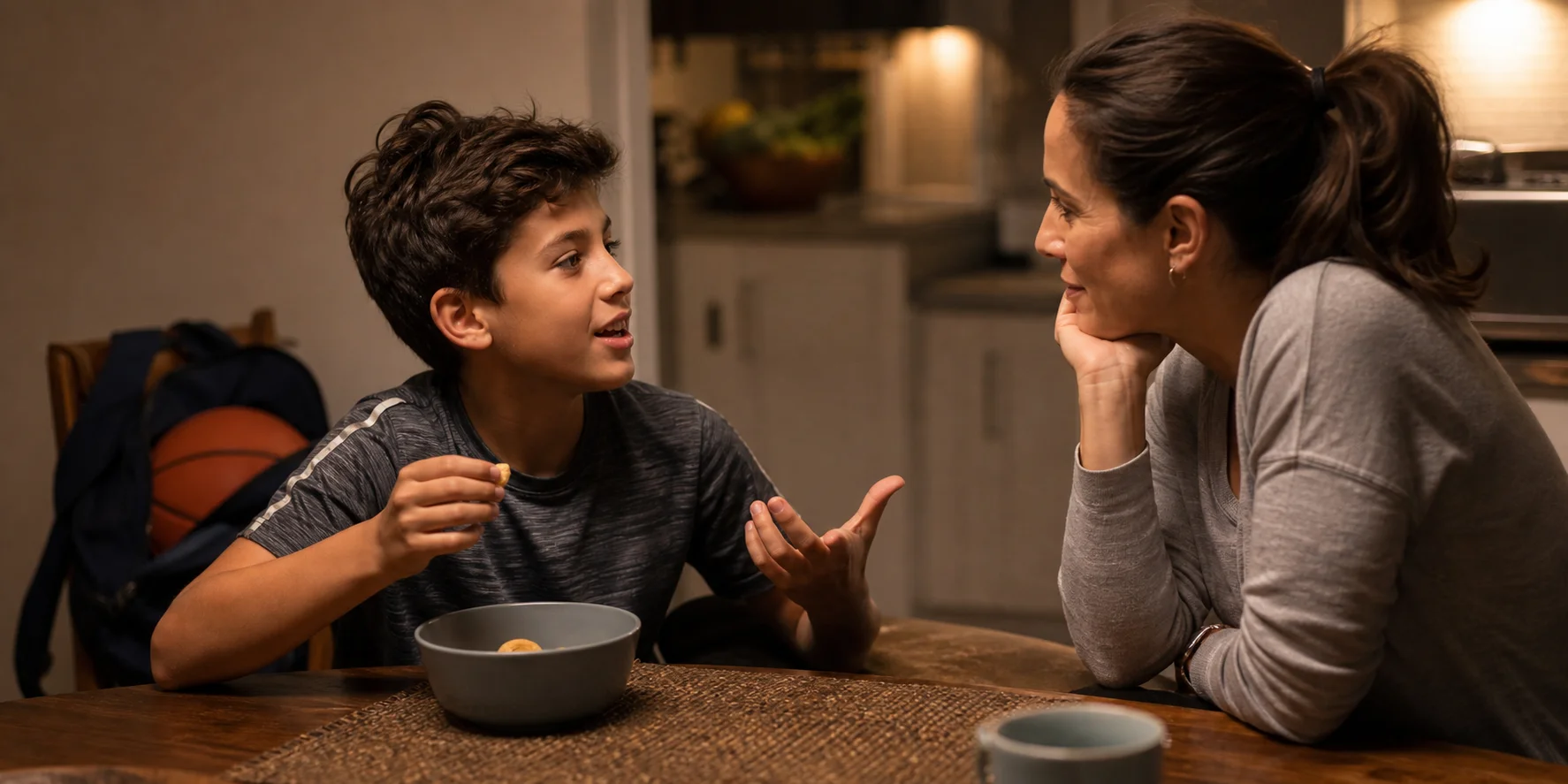
What This Builds Over Time
Parents who consistently ask growth-oriented questions rather than outcome-focused ones tend to raise children who stay in love with basketball longer, handle setbacks with more resilience, and develop a healthier relationship with competition generally.
This is not a single conversation that fixes anything. It is a pattern repeated across hundreds of car rides and kitchen table conversations over years, and the cumulative effect is considerably larger than any individual exchange. Small, consistent shifts in how these conversations go compound into a genuinely different relationship with the sport.
It also models something valuable beyond basketball itself. A child who learns to reflect thoughtfully on effort, learning and contribution rather than fixating purely on results carries that habit into school, into other activities, and eventually into their own approach to work and challenges as an adult.
If Your Child Seems to Be Struggling
If your child consistently seems anxious before games, reluctant to talk about basketball at all, or notably different in mood around the sport compared to other parts of their life, that is worth paying attention to beyond just adjusting your post-game questions.
Sometimes it reflects pressure coming from multiple directions, not just from home. A conversation with the coach, covered in our guide on talking to your child’s basketball coach, can help clarify what is actually happening in that environment.
At YouHoop we care about how our players feel about basketball, not just how they perform in it, and we would rather a family adjust their approach early than watch a child quietly lose their love for the game. You can read more about our approach on our about page, and if you want to talk through how your player seems to be doing, book a welcome call with our team.



0 Comments