The ankle sprain is the most common injury in basketball at every level, and it is also the one most frequently rushed. A player rolls an ankle, it feels better after a few days, and they are back on the court before the ligament has actually finished healing. That single decision is the biggest reason ankle sprains keep recurring throughout a player’s career.
This guide covers what actually happens in a sprain, why rushing back causes so many repeat injuries, and what a sensible recovery and return to play looks like.
Why Basketball Produces So Many Ankle Sprains
Basketball involves constant landing, often on an uneven surface created by another player’s foot underneath your own. Jumping for a rebound and coming down on an opponent’s shoe. Planting hard to change direction and rolling the ankle outward. Landing awkwardly after a contested shot.
The mechanism in the large majority of basketball ankle sprains is the same: the foot rolls outward, stretching or tearing the ligaments on the outside of the ankle. This is called an inversion sprain and it accounts for most basketball ankle injuries.
The single biggest risk factor for a sprain is a previous sprain. This is not a coincidence. It reflects what happens when recovery is rushed, which is covered below.
What a Sprain Actually Involves
Ligaments are the tissue connecting bone to bone, stabilising the joint. A sprain is a stretch or tear of one or more of these ligaments, graded roughly by severity.
Mild sprains involve stretching with minimal tearing. Some swelling, some pain, but the player can usually bear weight, even if uncomfortably.
Moderate sprains involve partial tearing. More significant swelling and bruising, more difficulty bearing weight, and a longer recovery.
Severe sprains involve complete tearing of one or more ligaments. Significant swelling, considerable difficulty or inability to bear weight, and the longest recovery. Some severe sprains warrant imaging to rule out an associated fracture.
None of this is something to grade yourself or from a website. What matters for parents is understanding that ankle sprains exist on a spectrum, and the appropriate recovery timeline depends entirely on where a specific injury sits on it, which only a proper assessment can determine.
Why Rushing Back Causes Repeat Sprains
This is the single most important thing for parents to understand, because it explains why so many players sprain the same ankle repeatedly across a career.
When a ligament heals, it does not simply return to its previous state on its own. Two things need to happen alongside the tissue healing. The ligament needs to regain its full strength, which takes longer than the pain takes to settle. And the ankle needs to regain proprioception, the body’s sense of where the joint is in space, which is frequently impaired after a sprain and does not automatically return just because the pain has gone.
A player who feels fine after a week and returns to full basketball has usually not regained either of these fully. The ankle looks recovered and functions adequately for daily life, but it is not ready for the sudden loads of cutting, jumping and landing that basketball demands. The next awkward landing finds the weakness, and the same ankle rolls again, often worse than the first time.
This is why the recurrence rate for ankle sprains in basketball is so high, and it is almost entirely a rushed-return problem rather than an inevitable one.
A Sensible Recovery Approach
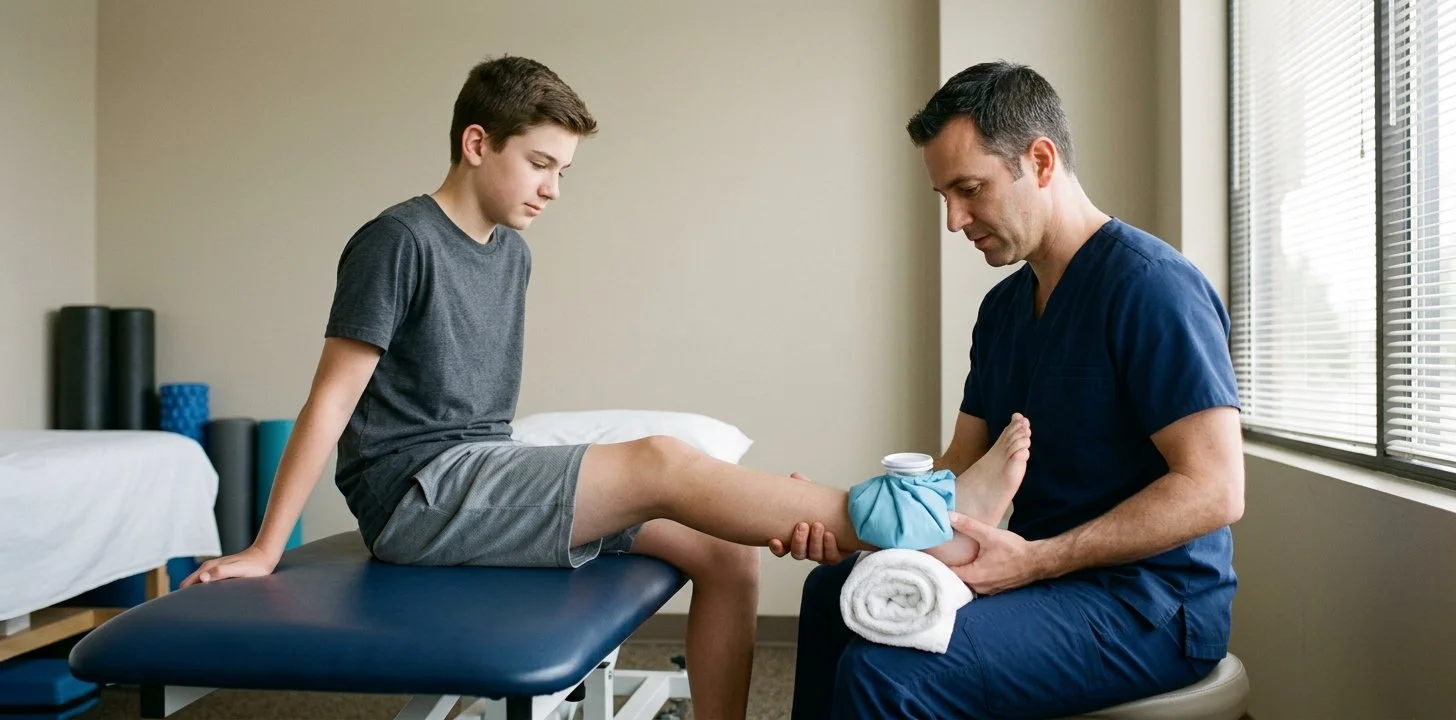
Get it assessed rather than guessing. Particularly for anything beyond a very mild sprain, or any sprain where the player cannot bear weight comfortably. A doctor or physiotherapist can grade the injury properly and rule out an associated fracture where relevant.
Early gentle movement, not prolonged rest. Modern management of ankle sprains generally favours protected movement over prolonged immobilisation, because movement within a comfortable range supports healing and reduces stiffness. This is guidance for a professional to give, not a self-managed decision.
Address swelling early. Elevation and appropriate management in the first days reduces swelling, which supports faster and more comfortable progress through the following stages.
Rebuild strength before returning to sport. Not just pain-free walking. The muscles around the ankle need to regain their strength before the joint is ready for basketball-specific loads.
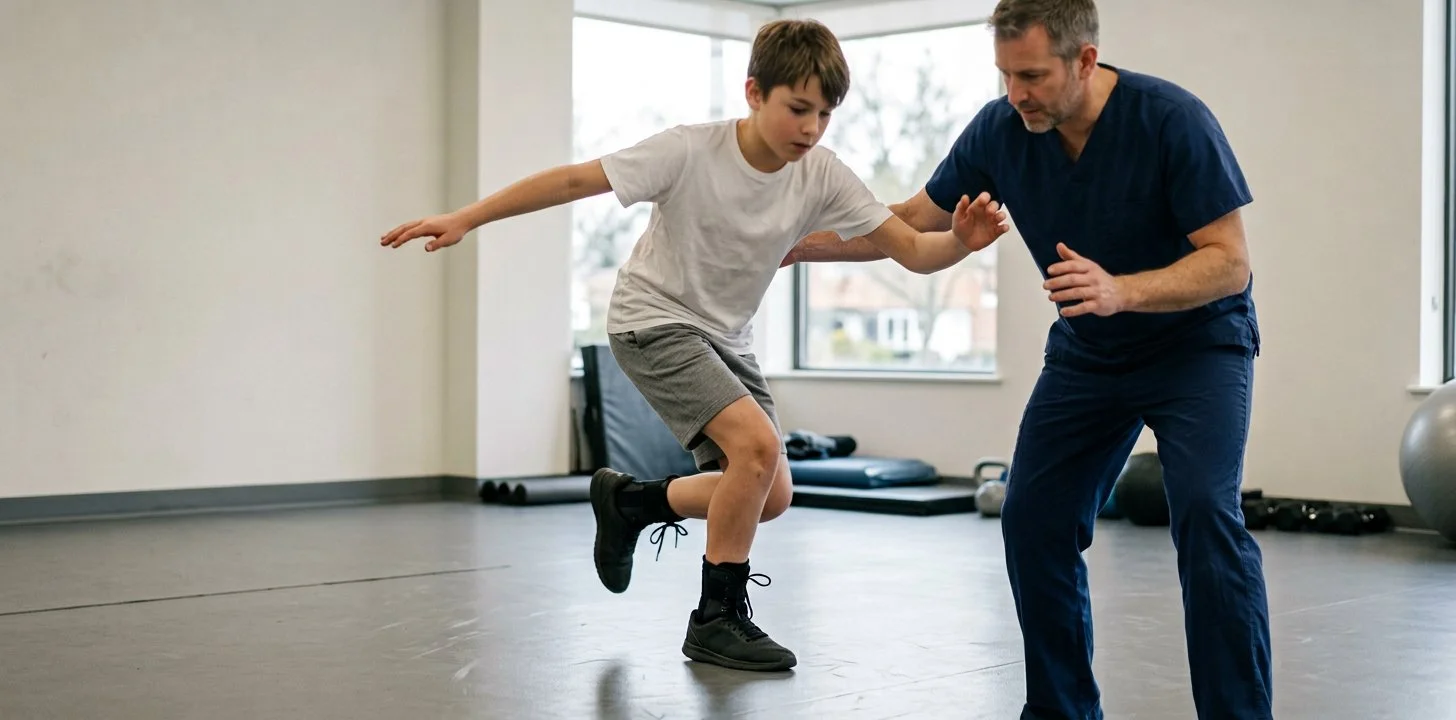
Retrain balance and proprioception specifically. This is the step most commonly skipped and the one most linked to recurrence. Balance work, ideally supervised by a physiotherapist, retrains the ankle’s sense of position and significantly reduces the chance of a repeat sprain.
Progress through sport-specific movement before full return. Straight-line jogging is not the same demand as cutting hard to beat a defender. A proper return to play progresses through increasingly basketball-specific movements before a player returns to full contact play.
Signs a Player Is Not Ready to Return
Ongoing swelling, even mild, after activity.
Pain during cutting or landing, even if walking is comfortable.
A feeling of instability, described by players as the ankle feeling like it might give way.
Visible favouring of the injured side during drills, even subtle.
Reduced range of movement compared to the uninjured ankle.
Any of these mean the ankle is not ready for full basketball, regardless of how many days have passed since the injury. Time alone does not heal a ligament. Appropriate loading and rehabilitation does, and time is simply the container that process happens in.
Reducing the Chance of a First Sprain
Prevention is more achievable than most parents realise, and none of it requires expensive equipment.
Balance and proprioception training as a routine part of practice. Not just for players recovering from injury. Regular balance work measurably reduces sprain risk in players who have never been injured, which is why it belongs in every session rather than only in rehabilitation.
Strengthening the muscles around the ankle. Calf and peroneal strength contribute directly to joint stability during the sudden loads basketball demands.
Court awareness. Teaching players to be conscious of landing space, particularly around the key where players from both teams converge for rebounds, reduces the frequency of landing on another player’s foot.
Appropriate footwear. Basketball shoes providing genuine ankle support, replaced before they are worn out, make a measurable difference.
Not returning too early from a previous sprain. Given that prior sprain is the strongest predictor of a future one, proper recovery from the first injury is itself one of the most effective prevention strategies available.
Our guide on basketball injury prevention for youth players covers the broader picture of training load and injury risk that ankle sprains sit within.
How We Handle It as Coaches
We do not push injured players back on court. If a player has sprained an ankle, our expectation is a proper assessment and clearance before they return to full training, not a guess based on how they say they feel.
We build balance work into regular sessions, not just for players coming back from injury. This is genuine prevention rather than only rehabilitation.
We adjust drills for players returning from injury, progressing them through lower-intensity movement before full-contact play, in line with guidance from whoever has been treating them.
We communicate with families honestly about what we are seeing, including if we think a player looks like they are still favouring an ankle regardless of what they report.
You can read more about our approach on our about page, and our skill training classes provide a lower-intensity environment that is frequently a sensible step during a graded return to full training.
If you have questions about how we would manage a player returning from an ankle injury, book a welcome call with our team.

0 Comments