Beating your defender off the dribble is satisfying. Getting all the way to the rim and then missing the layup because a taller player altered the shot is not. For most young players, the gap between creating a driving opportunity and actually converting it is the single largest source of wasted possessions.
Learning how to finish at the rim is about footwork, angles and having more than one option, rather than about being able to jump higher than the person contesting.
Why Layups Get Missed
Going straight into the defender. Driving directly at a taller player and jumping into them means the shot is contested at its highest point. Angles solve this and most young players never learn them.
Only having one finish. A player who can only shoot a standard right-hand layup off two steps is entirely predictable. Any competent defender takes that away.
Rushing. Speed getting to the rim is useful. Speed at the moment of release is not. The finish itself should be controlled even when the drive was fast.
Watching the defender rather than the target. Players who look at the contesting arm rather than the spot on the backboard miss considerably more.
No off arm. The non-shooting arm should be creating space and protecting the ball. Young players frequently leave it hanging, which allows easy contests and strips.
Wrong foot takeoff. Jumping off the wrong foot changes the angle and reduces the reach at release. This is a habit issue that is very fixable with deliberate practice.
Angles: The Part That Matters Most
The single biggest improvement available to most young players is understanding that how to finish at the rim is largely about where you finish from rather than how high you jump.
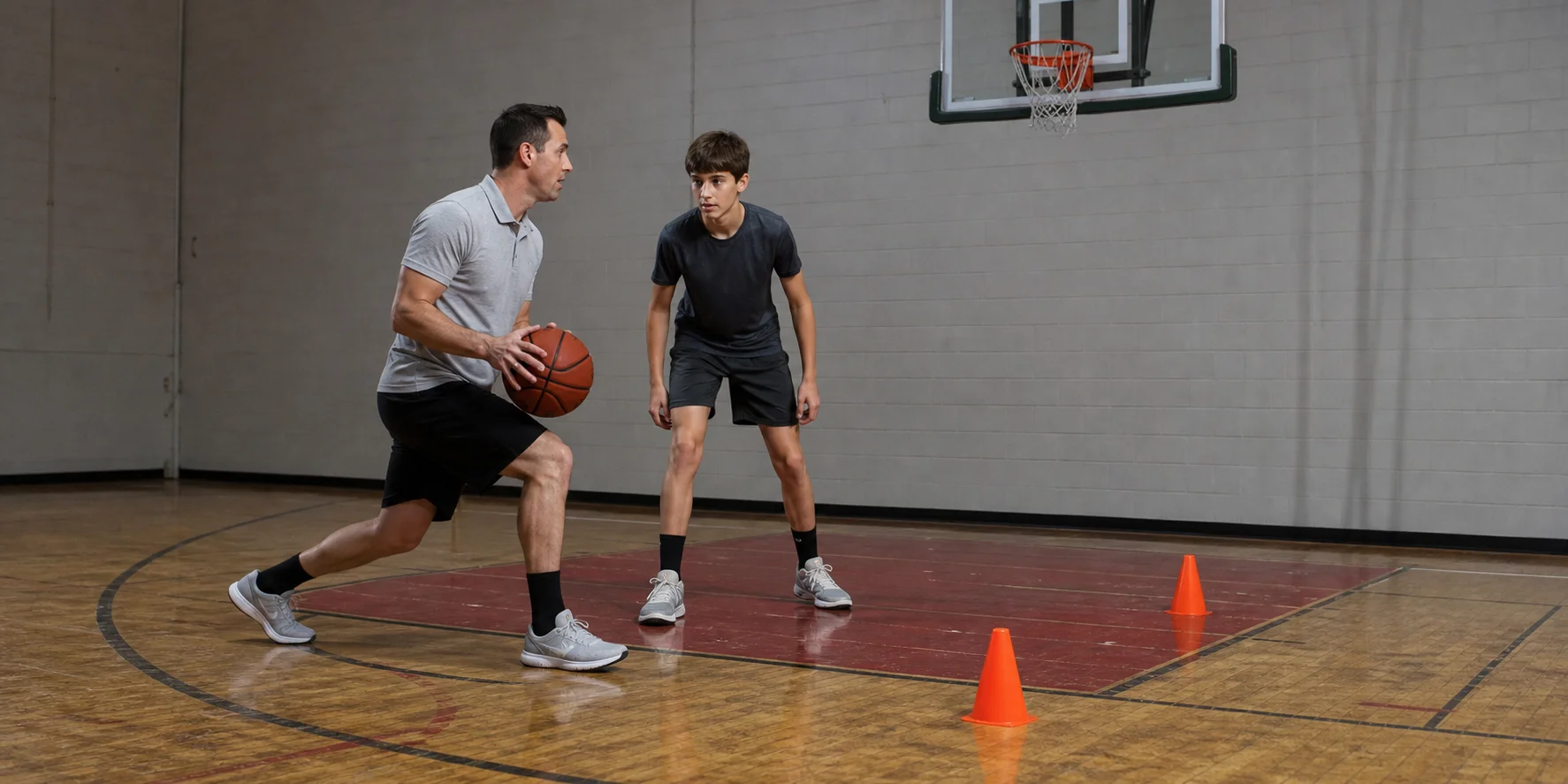
Attack the front of the rim at an angle, not head on. Driving at forty-five degrees toward the backboard gives you the backboard as a target and puts your body between the ball and the defender.
Use the rim as a shield. Finishing on the far side of the basket from the defender means the rim itself blocks their contest. This is why reverse layups are so effective against shot blockers.
Change the angle late. A defender commits to a contest based on where they expect you to finish. Stepping through to a different angle at the last moment leaves them contesting empty space.
Get across the defender’s body. If you can get your shoulder past theirs before you go up, they are behind the play and can only foul or watch.
Finish away from help. Reading where the second defender is sitting determines which side to finish on. Driving into the help is how good drives become turnovers.
Our guide on basketball IQ training covers this reading skill in more depth.
Building a Finishing Toolkit
A player with one finish is easy to defend. A player with four is a problem. These are the finishes worth developing in roughly the order they should be learned.
Standard layup, both hands. The foundation. Right hand off the left foot on the right side, left hand off the right foot on the left side. Being genuinely two-handed here doubles a player’s options immediately and is the single highest-return finishing skill.
Reverse layup. Finishing on the opposite side of the basket from where you drove, using the rim to shield the shot. The most effective finish against a taller shot blocker.
Floater. Released early, before reaching the defender, arcing over an outstretched arm. Essential for smaller guards and one of the most useful finishes in youth basketball because it avoids the contest entirely.
Inside hand finish. Using the hand furthest from the defender rather than automatically using the dominant hand. Keeps the ball away from the contest.
Euro step. Two steps in different directions after picking up the dribble, moving the body around a defender rather than through them. Legal, effective, and widely misunderstood at youth level.
Power finish off two feet. Gathering on two feet rather than one, which provides balance against contact and allows a stronger finish through a defender’s body.
Learn them in that order. A player attempting Euro steps before they can finish reliably with both hands is building on sand.
Footwork That Creates the Finish
Know your takeoff foot. Right-hand finishes launch off the left foot, left-hand finishes off the right foot. This should become automatic rather than something the player thinks about mid-drive.
Use the gather deliberately. The step after picking up the dribble is the moment the finish is decided. A long gather step covers ground and gets past the defender. A short gather keeps you balanced under pressure.
Practise both one-foot and two-foot finishes. One foot covers more ground and is better in transition. Two feet provides balance and strength through contact in traffic. Different situations call for each.
Land balanced. Landing off balance leads to travel calls, lost possession on rebounds, and injury risk. The finish is not complete until the player lands.
Keep the ball high through contact. Bringing the ball low invites a strip. Keeping it high and protected with the off arm survives contact that would otherwise cost possession.
Finishing Through Contact
At youth level, contact around the basket increases sharply as players get older and stronger. Learning to absorb it rather than avoid it is a skill in itself.
Initiate the contact rather than receiving it. A player who braces and goes into the defender under control is more stable than one who is caught off guard by contact they did not expect.
Land on two feet where contact is likely. Two-foot gathers provide a wider base and better balance when contact arrives.
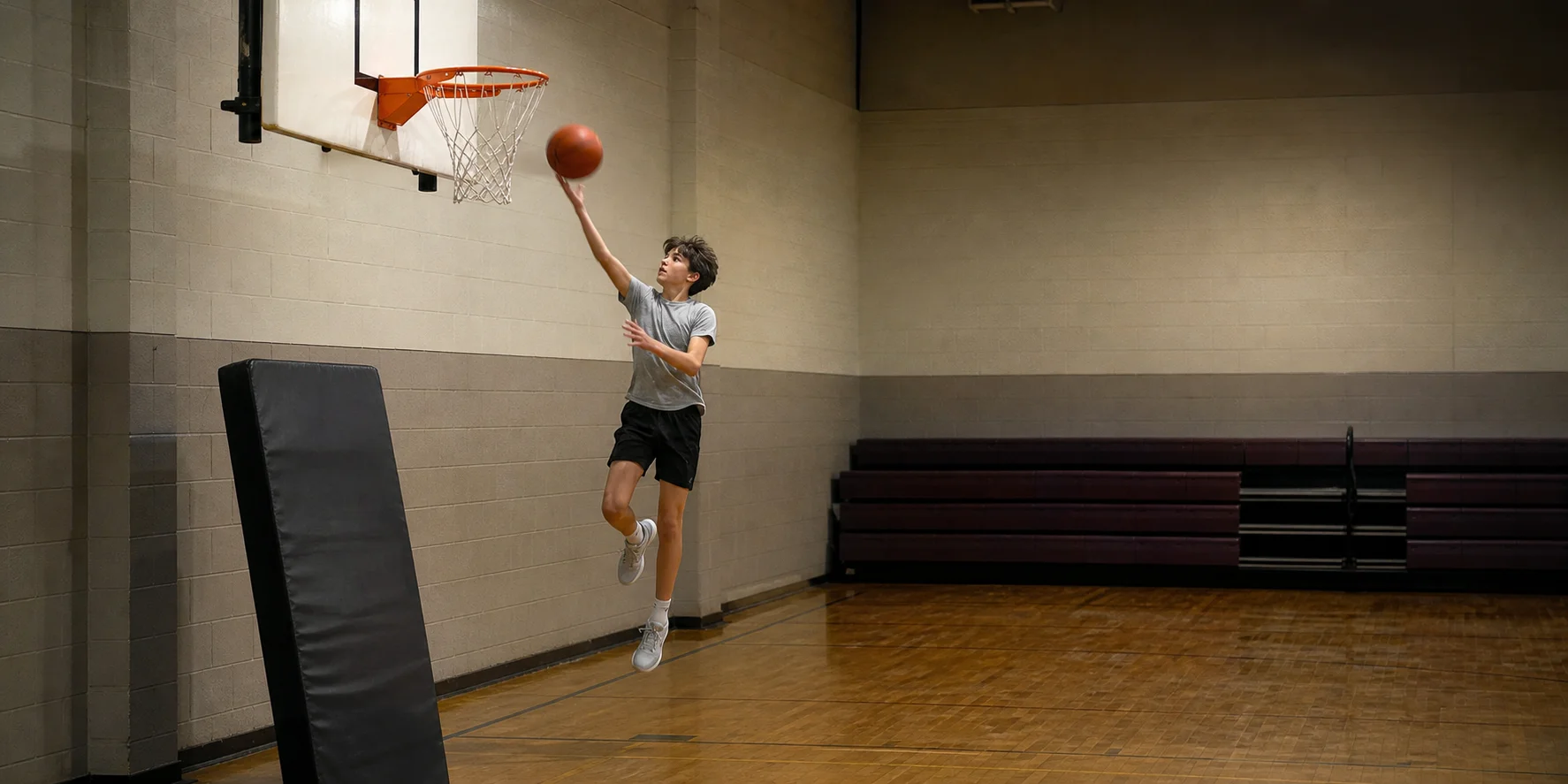
Keep the shooting motion intact. The most common effect of contact is that the shooting arm collapses. Practising with a foam pad providing light contact trains the arm to complete the motion regardless.
Expect the foul call sometimes and not others. Young players who stop competing when a foul is not called lose possessions. Finishing through and following the shot is the habit worth building.
Strength work supports this. Core and lower body strength determine whether contact knocks a player off balance. Our guide on how to jump higher for basketball covers the strength foundation that also underpins finishing through contact.
Drills That Build Finishing
Mikan drill. Alternating hands finishing off the backboard from either side of the basket, continuous. The foundational two-handed finishing drill and the fastest route to genuine ambidexterity around the rim.
Reverse Mikan. The same drill finishing on the opposite side each time, building comfort with reverse angles.
Cone drive finishes. Driving from different angles past a cone and finishing, varying the finish each repetition so the player builds options rather than one habit.
Contact finishing. A partner with a foam pad providing light contact at the point of takeoff. Trains the shooting motion to survive interference.
Two ball finishes. Driving and finishing while a coach throws a second ball, forcing the player to keep their eyes up and finish without full visual focus on the target.
Floater ladder. Practising floaters from progressively further out, building the touch that makes this finish reliable.
Fatigued finishing. Adding finishing work after conditioning, because most missed layups in games happen when players are tired.
How Long It Takes
Two-handed finishing is the fastest meaningful gain available. A player doing five minutes of Mikan drill daily typically becomes genuinely comfortable with their weak hand within four to six weeks.
Angles and reading help defence develop over a season rather than weeks, because they require game experience alongside practice.
The full toolkit, meaning a player with four reliable finishes who chooses appropriately based on the defender, generally takes a year or more of consistent work. That is worth setting out honestly, because finishing is often marketed as something that transforms in a summer.
The players who improve fastest are the ones practising finishes at game speed against some form of contest, rather than performing perfect uncontested layups in an empty gym.
At YouHoop our skill training classes include structured finishing progressions with contact and defender simulation, which is where most of the transfer to games actually happens. To find the right pathway for your athlete, book a welcome session with our team.
For home practice guidance, see our guide on getting better at basketball at home, and for the broader skills picture see basketball player development for kids.
Youth skill development frameworks are published by USA Basketball and AAU Basketball.

0 Comments