Basketball player development for kids is one of the most misunderstood processes in youth sports. Most parents assume development means more games, more tournaments, and more exposure to higher competition. Most coaches assume it means running more drills and pushing harder in practice. Both assumptions miss the point entirely and both lead to the same outcome: athletes who plateau early, burn out before high school, or never reach the ceiling their talent suggested was possible.
Real basketball player development for kids is a patient, intentional, long-term process. It is built on foundational skills developed correctly from the beginning. It is driven by great coaching that meets every athlete where they are. It is sustained by a culture that values effort, accountability, and growth over wins and rankings. And it produces athletes who are better players at every stage of the journey — not just better than they were last month, but better than they would have been anywhere else.
This guide covers exactly what basketball player development for kids looks like done right — what the stages are, what the priorities should be at each stage, and what separates genuine development from the appearance of it.
1. Why Most Youth Basketball Programs Get Player Development Wrong
There is a gap in youth basketball between what programs say they do and what they actually deliver. Almost every youth program in the country describes itself as focused on player development. Very few actually are.
The difference between a program that genuinely develops players and one that simply plays games with them is visible in the details. Does the program track individual player progress with specific measurable data or does it measure success by win percentage? Do coaches identify and address individual skill gaps or do they simply run group drills and let talent sort itself out? Is practice time used to build skills in a deliberate, progressive way or is it used to prepare for the next game?
Basketball player development for kids requires a long-term view that most programs are simply not structured to take. Tournament schedules, league standings, and parent expectations all create pressure to prioritize short-term competitive performance over the patient work of building a complete player. Programs that resist that pressure and stay committed to the process are the ones whose athletes look dramatically different at 16 than they did at 10.
2. The Four Pillars of Basketball Player Development for Kids
Every element of genuine basketball player development for kids falls under one of four pillars. Understanding these pillars is the starting point for evaluating any program or any training approach.
Pillar 1 — Technical Skills. The fundamental skills of the game: dribbling, passing, shooting, footwork, and defensive positioning. These are the building blocks of everything else. A player who does not have solid technical skills cannot execute team concepts, cannot compete at higher levels, and cannot translate their athletic ability into basketball performance. Technical skills must be developed correctly from the beginning because bad habits established early are extremely difficult to correct later.
Pillar 2 — Basketball IQ. The ability to read the game — understanding spacing, recognizing defensive schemes, knowing when to attack and when to reset, anticipating where the ball needs to go before it gets there. Basketball IQ is developed through deliberate practice, quality coaching, and exposure to competitive game situations. It cannot be rushed and it cannot be shortcut. Players with high basketball IQ consistently outperform more athletic players who have never developed their understanding of the game.
Pillar 3 — Physical Development. Speed, agility, coordination, strength, and conditioning all contribute to a player’s ability to execute their skills under game-speed pressure. Physical development in younger athletes should focus on fundamental athleticism and movement skills rather than sport-specific strength training. As athletes mature, conditioning becomes increasingly important for sustaining performance across long practices, games, and seasons.
Pillar 4 — Mental and Character Development. The habits of mind that determine whether a player reaches their potential: coachability, competitiveness, resilience, accountability, and the ability to perform under pressure. This pillar is the one most often overlooked in youth basketball and the one that most consistently determines outcomes at the highest levels. The most talented players in every gym who never reach their ceiling almost always have a gap in this pillar.
3. Basketball Player Development for Kids: The Stage by Stage Roadmap
3.1 Foundation Stage: 3rd Through 5th Grade
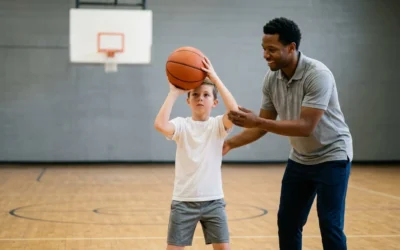
Basketball player development for kids at the foundation stage is about one thing above everything else: building a genuine love for the game. Everything else at this stage is secondary. A child who falls in love with basketball at age 8 will put in thousands of hours of voluntary practice over the next decade. That investment is worth infinitely more than any skill specifically drilled at 8 years old.
That said the foundation stage is when the most critical technical habits are established. How a child first learns to dribble, shoot, and move their feet in the paint creates patterns that their nervous system will default to for years. Coaches who work with young players at this stage carry an enormous responsibility to teach the game correctly from the beginning.
Development priorities at the foundation stage:
- Correct shooting form with emphasis on leg drive, proper hand placement, and consistent follow through
- Ball handling with both hands in stationary and moving contexts
- Basic footwork including triple threat position, pivot moves, and layup approaches
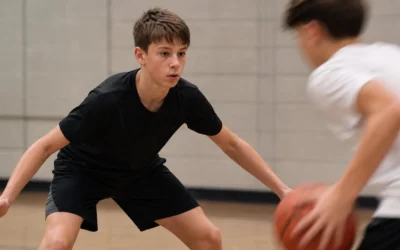
- Introduction to defensive positioning and sliding
- Fundamental passing mechanics with emphasis on accuracy and decision making
- Positive competitive habits including coachability, effort, and resilience
At this stage competition should be local and appropriately leveled. The goal is not winning tournaments. The goal is building a player who will still love the game in 10th grade.
Our Skill Class is specifically designed to provide the kind of foundational development environment that builds players correctly from the beginning. Book a session through our booking page to get your athlete started on the right path.
3.2 Development Stage: 6th Through 8th Grade
The middle school window is the most important developmental period in a young basketball player’s career. The technical habits established during this stage — good or bad — will define a player’s ceiling in high school. The mental habits developed here will determine whether a player responds to adversity with growth or with avoidance. The competitive habits built here will shape how a player performs when the stakes are highest.
Basketball player development for kids at the development stage should become more intentional, more demanding, and more individualized. Coaches should be identifying each player’s specific strengths and weaknesses and building training that addresses both. Players should begin to develop a clear sense of their identity on the floor — the role they play best, the skills that make them valuable, and the areas they need to continue improving.
Development priorities at the development stage:
- Advanced ball handling including change of pace, change of direction, and combination moves under defensive pressure
- Shooting off the dribble from various positions on the floor
- Post footwork, finishing at the rim with both hands, and reading the defense
- Help-side defensive concepts, rotations, and communication
- Pick and roll offense and defense at a fundamental level
- Basketball IQ development through film study, pattern recognition, and in-game decision making
- Strength and conditioning that builds athleticism without compromising growth and development
Competition at this stage should be regular, challenging, and varied. Players benefit from playing against opponents who test different aspects of their game. Occasional regional competition is appropriate and valuable. National competition at the middle school level serves very little development purpose for most athletes.
3.3 Performance Stage: 9th Through 12th Grade
Basketball player development for kids transitions into a performance stage in high school where the emphasis shifts from building skills to executing and competing with them at increasingly high levels. The foundational work done in the first two stages determines how much ceiling a player has at this stage. Players who were developed correctly through middle school arrive in high school with genuine skill sets, high basketball IQ, and the mental habits to compete and grow. Players who were not are trying to correct fundamental gaps while simultaneously competing at a higher level than those gaps allow.
Development priorities at the performance stage:
- Advanced individual scoring package including pull-up jumpers, floaters, and counter moves
- Elite level conditioning that supports performance across full high school seasons and AAU circuits
- Leadership development and understanding of team systems at both the school and club level
- Recruiting awareness and preparation for players with college aspirations
- Film study at a more advanced level with self-evaluation as a primary tool
- Mentorship and accountability structures that develop the character expected at the next level
At this stage the best development environments are the ones that push players hardest while providing the most specific feedback. Vague encouragement does not develop high school players. Clear honest assessment combined with the coaching to address what the assessment reveals does.
Learn more about how our program supports high school athletes pursuing competitive and collegiate goals on our About page.
4. The Role of the Coach in Basketball Player Development for Kids
No element of basketball player development for kids matters more than the quality of the coach. Equipment, facilities, tournament schedules, and program reputation all pale in comparison to the impact of a coach who genuinely understands development and genuinely cares about the athlete in front of them.
A great development coach does several things that an average coach does not. They observe each athlete individually rather than addressing the group generically. They deliver feedback that is specific, constructive, and actionable rather than vague and evaluative. They create an environment where mistakes are treated as learning data rather than failures to be avoided. They maintain high expectations while communicating genuine belief in every player’s ability to meet those expectations. And they understand that the relationship between coach and athlete is the vehicle through which development actually travels.
USA Basketball Gold certification represents the national standard for coaching education in youth basketball. Coaches who hold and maintain this certification have demonstrated a commitment to understanding the science and philosophy of player development at the highest level available in grassroots basketball. When evaluating any program it is worth asking whether the coaches hold this credential and what other ongoing education they pursue.
According to USA Basketball’s player development guidelines, long-term athlete development is the framework through which all quality youth basketball coaching should operate — emphasizing age-appropriate training, skill sequencing, and the development of complete athletes over the long term rather than short-term competitive results.
5. Common Mistakes That Stunt Basketball Player Development for Kids
These are the most common ways that well-intentioned parents and coaches unintentionally limit the development of the athletes they care most about.
Specializing too early. Playing only basketball year-round from age 8 or 9 reduces the breadth of athletic development and dramatically increases injury risk and burnout probability. Multi-sport participation through middle school builds the general athleticism, coordination, and competitive mental skills that make players better at basketball specifically.
Prioritizing competition over skill work. A season of games without sufficient foundational skill work produces players who are more experienced but not more skilled. Development requires deliberate practice — focused repetition of specific skills with specific feedback — not just game experience.
Protecting kids from adversity. The mental toughness that allows athletes to perform under pressure in high school and college is built through repeated exposure to difficulty and discomfort in earlier environments. Parents and coaches who shield young players from challenging situations, hard feedback, or competitive failure are inadvertently preventing the development of the mental skills those players will need most later.
Moving up before a player is ready. Placing a player in a tier of competition that exposes significant skill gaps before those gaps have been addressed is one of the most common development mistakes in youth basketball. The damage to confidence and the reinforcement of poor habits under pressure can take years to undo.
Focusing on outcomes instead of process. Checking the scoreboard after every possession, talking about wins and losses as the primary measure of success, and expressing disappointment in outcomes rather than evaluating effort and execution all teach young players to focus on the wrong things. Basketball player development for kids requires a process focus that parents and coaches must model consistently.
6. How You Hoop Develops Complete Players
At You Hoop, basketball player development for kids is not a marketing phrase. It is the organizing principle of everything we do. Every program decision, every practice structure, every competitive placement, and every coaching interaction is made with one question in mind: what is best for this athlete’s development right now?
Our program pathway runs from 3rd grade through high school and is structured around the developmental stages described in this guide. Athletes are placed in the tier that is genuinely right for where they are, not the tier that looks most impressive. Our coaching staff holds USA Basketball Gold certifications, has played the game at high levels, and is genuinely invested in every athlete in the program — not just the ones who will play in college.
Our core values of trust, commitment, toughness, accountability, teamwork, and hard work are not slogans on a wall. They are the standards by which every athlete in our program is coached and held accountable every single day. And they produce athletes who look different at 16 than they did at 10 — not just because they have more skills but because they have more character.
See what families say about our program on our Reviews page and find out where we are on our Find Us page.

0 Comments