Basketball defense drills are the most neglected part of youth player development and the one that most consistently separates teams that win close games from teams that lose them. Offense gets the attention. Defense wins the championships. And the players who develop genuine defensive skills through deliberate basketball defense drills practice are the ones every coach at every level actively recruits because they know something most youth players never learn: great defenders get playing time regardless of how they are shooting.
Scoring is a variable. A great shooter has bad shooting nights. A great defender does not have bad defensive nights because defense is built on effort, positioning, and habits that are available every single game regardless of how the ball is going in. A player who has committed to developing their defense through consistent basketball defense drills gives themselves an advantage that talent alone cannot replicate.
This guide covers the specific basketball defense drills that build genuine defensive ability, the principles that make defense effective, and how to develop the habits that make great defense automatic rather than effortful.
1. What Great Defense Actually Requires
Before running any basketball defense drills it is essential to understand what genuine defensive effectiveness consists of. Most players think of defense as trying hard and staying in front of their man. That is the beginning. Real defensive ability is a combination of four specific qualities.
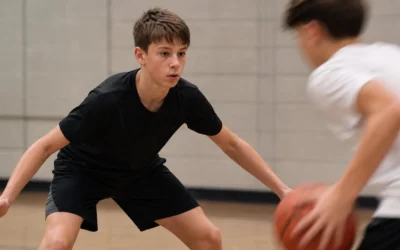
Defensive stance and footwork. The physical foundation of every defensive action. A player in a proper defensive stance with feet wide, knees bent, weight on the balls of the feet, and hands active is physically prepared to move in any direction at maximum speed. Players who stand upright, cross their feet, or commit their weight in one direction before the offensive player moves are always a step behind regardless of their athleticism.
Anticipation and basketball IQ. The ability to read the offensive player’s intentions before they execute them and to position accordingly. Great defenders do not just react. They anticipate. They have studied the tendencies of their matchup, they understand the offensive scheme they are defending, and they use that knowledge to take away the things the offense wants to do rather than simply following the ball around the court.
Communication and team defense. The ability to communicate to teammates in real time about screens, rotations, help-side positioning, and defensive assignments. Great individual defenders who cannot communicate create holes in team defense. Great communicators who are physically limited make teammates better. Communication is the quality that turns five individual defenders into a team defense.
Competitive mental habits. The willingness to compete on every possession, to take charges, to sprint back in transition, to box out on every shot, and to maintain defensive intensity in the fourth quarter when everything is tired. Great defensive habits are built through basketball defense drills that make these habits automatic rather than dependent on motivation levels.
2. The Principles That Make Basketball Defense Drills Effective
The specific drills matter. The principles that govern how they are coached matter more. These are the principles that separate basketball defense drills that build genuine defenders from those that simply look like defensive work.
Defense is played with the feet first. The single most important coaching point in any basketball defense drill is footwork. Every slide must be a true defensive slide with no foot crossing. Every closeout must be a controlled deceleration. Every retreat step must maintain body position relative to the offensive player. Players who cheat their footwork in drills will cheat their footwork in games.
Active hands change the game. Hands that are up and active in the passing lanes, that dig at the ball on drives, and that contest shots without fouling are a separate skill set from foot movement. Basketball defense drills should specifically develop active hand habits alongside footwork so both become automatic simultaneously.
Help defense is the hardest defensive skill. The most advanced basketball defense drills develop not man-to-man containment but help-side positioning, rotation, and recovery. A player who can guard their own man is a good individual defender. A player who can guard their man, see the whole floor, and be in position to help teammates while still recovering to their assignment is a genuinely elite defensive player.
3. Basketball Defense Drills: The Proven 7-Drill Development System
3.1 Defensive Stance and Slide Drill
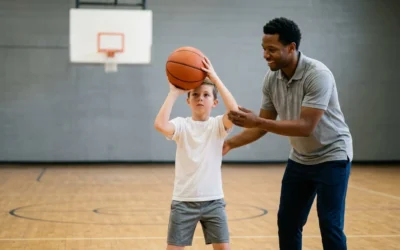
The foundational basketball defense drill and the starting point for every defensive development session. This drill builds the stance, the slide mechanics, and the muscle memory that everything else in defense is built upon.
Execution: Start in defensive stance at one sideline. Defensive slide to the opposite sideline maintaining stance throughout. Slide back. Add a drop step retreat when the coach signals. Add a closeout sprint from the paint when signalled.
Coaching points: Feet never cross on slides. Hips stay low throughout. Head stays level. Hands stay active. The quality of the stance is more important than the speed of the slide in early repetitions.
Duration: 4 sets of 60 seconds with 20 seconds rest between sets. This drill should open every basketball defense drills session before any live work begins.
3.2 The Closeout Drill
One of the most important and most practiced basketball defense drills in competitive programs at every level. Closeouts are among the most dangerous moments in team defense. A poor closeout gives up an open three. A great closeout takes it away while preventing the drive.
Execution: Defender starts in the paint. Coach or partner passes to a player at the three point line. Defender sprints from the paint, decelerates with short choppy steps in the final two steps, contests the shot with a hand up, and then moves their feet to prevent the drive.
Coaching points: Sprint at top speed for the first three quarters of the distance. Decelerate hard in the final two steps. Never leave the ground on the closeout. Contest with the near hand only. Move the feet after the closeout to cut off the drive.
Progression: Add a live drive situation after the closeout where the offensive player can attack off the dribble and the defender must recover and contain.
At You Hoop, defensive closeout drills are a regular feature of our competitive team and elite program training environments because we know that the ability to close out correctly is one of the most game-changing defensive skills at every level above recreational ball.
3.3 One on One Containment Drill
The fundamental competitive basketball defense drill that tests all stance and footwork work against live offensive pressure.
Execution: Offensive player starts at the three point line with the ball. Defensive player takes their defensive stance in front of them. Offensive player attempts to drive to the basket using dribble moves. Defensive player must contain without fouling and without giving up a layup.
Coaching points: Defensive player stays in front without reaching. If beaten the defender sprints to recover rather than reaching from behind. Stay disciplined to the fundamentals of stance and foot movement even under competitive pressure.
Progression: Start from various positions on the floor. Add a shot fake requirement before the drive. Add a second defender for help situations.
3.4 Shell Drill: Team Defense Positioning
The most important of all team basketball defense drills. The shell drill builds the helpside positioning, communication, and rotational habits that make a team defensive system function rather than being five individuals guarding five individuals.
Setup: Four offensive players positioned at the four quadrants around the three point line. Four defensive players in help-side defensive positions.
Execution: Ball moves around the perimeter through passing. As each pass is made all four defenders must adjust their position based on where the ball is and where their man is. The drill begins with no dribble penetration allowed and progressively adds live drives to test rotational help-side positioning.
Coaching points: Every pass is a cue for every defender to adjust. The on-ball defender pressures the ball. The one-pass-away defender is in deny position. The two-passes-away defender is in help-side position with vision on both ball and man. Communication between all four defenders is required throughout.
Duration: 8 to 10 minutes of progressive shell drill work is the highest value team basketball defense drills investment available to any program.
For more on how we integrate team defense into our competitive programme see our About page and our Skill Class page.
3.5 Defensive Rebounding Box-Out Drill
Defense does not end when a shot goes up. It ends when the defensive team has possession of the ball. Box-out discipline is one of the most consistently underdeveloped skills in youth basketball defense and one that produces immediate, measurable improvements in team rebounding when it is specifically drilled.
Execution: Offensive and defensive players are positioned in pairs around the lane. Coach shoots or calls a shot. Every defensive player must find and make contact with their assigned offensive player, turn them, and secure the box-out before pursuing the ball.
Coaching points: The defensive player initiates contact before the ball reaches the rim. They turn the offensive player away from the basket. They maintain contact until the ball is secured. No reaching over the back.
Progression: Make the drill competitive by counting offensive rebounds versus defensive rebounds over a set number of possessions.
3.6 Transition Defense Sprint Drill
One of the most underdrilled and most game-relevant basketball defense drills. The ability to sprint back in transition and set up team defense before the offensive team can score is a defensive skill that determines outcomes in close games as much as any other.
Execution: Five offensive players on the baseline. Five defensive players at half court facing away from the basket. Coach signals. Defensive players sprint to their defensive positions before the offense can advance the ball and score.
Coaching points: Every defender sprints on the signal with no hesitation. The sprint back is at maximum effort. Players prioritise protecting the basket first and finding their assignment second. Communication throughout.
Progression: Give the offense a shorter head start. Allow the offense to attack 5 on 4 and then 4 on 3 as the defense works to recover numbers.
3.7 Competitive Defensive Possession Drill
The most advanced of all basketball defense drills and the one that builds the mental habits of competitive defensive intensity that translate most directly to game performance.
Execution: 5 on 5 with a specific defensive objective. Defensive team must hold the offense to no score for a set number of consecutive possessions to win the game. The consequence for giving up a score is a conditioning run before restarting. The reward for meeting the target is a training reward of the team’s choosing.
Coaching points: This drill is entirely about competitive defensive intensity and habit. The coach’s role is to create genuine stakes around the defensive objective, to celebrate great defensive possessions loudly, and to enforce the consequence consistently so the drill has real meaning.
Why it works: Consequences and rewards in practice create the same competitive pressure that games create. Basketball defense drills that simulate this pressure build the habits that are available when the game is on the line.
According to research published by the Journal of Strength and Conditioning Research on defensive skill development in basketball, competitive practice conditions that simulate game pressure produce significantly better defensive skill transfer to actual game performance than blocked drill conditions alone. This finding supports the inclusion of competitive defensive drills as the highest priority element of any comprehensive basketball defense drills programme.
4. Age-Appropriate Basketball Defense Drills Guidelines
Foundation stage (3rd through 5th grade). At this stage basketball defense drills should focus entirely on stance, basic slide mechanics, and the habit of keeping the hands up. Competition should be low stakes and effort focused. Understanding and wanting to play defense are more important than technique at this stage.
Development stage (6th through 8th grade). All seven drills in this guide become appropriate at the development stage. The shell drill is the highest priority addition in this window because team defensive concepts established in middle school form the habits that make high school team defense teachable. Closeout mechanics and one on one containment are the individual defensive priorities.
Performance stage (9th through 12th grade). Advanced basketball defense drills including full court transition defense, complex help-side rotation scenarios, and competitive possession drills become the primary focus. The physical and mental demands of the drills increase significantly at this stage to match the competitive environment high school athletes face.

0 Comments