Most conversations about basketball injury prevention for youth players focus on the dramatic injuries. A rolled ankle, a knee that gives way, a collision. Those matter, but they are not where most youth basketball injuries actually come from.
Research from the American Medical Society for Sports Medicine has found that close to half of injuries in young athletes are overuse injuries, caused by repeated stress without adequate recovery rather than by any single incident.
That changes what prevention actually means. It is less about protective equipment and more about how much a young player is doing, how quickly that amount increases, and whether their body has the strength to handle it.
The Load Problem Nobody Is Tracking
Here is a situation we see regularly.
A player has one skills session with us on Tuesday. School team practice Wednesday and Thursday. A game Friday night. A tournament Saturday and Sunday. Plus shooting in the driveway most evenings.
Every individual coach involved thinks their player is doing a reasonable amount, because each of them only counts their own sessions. Nobody is looking at the total. And the total is what the player’s body actually experiences.
This is the single biggest driver of overuse injury in youth basketball, and it is almost entirely invisible unless someone deliberately looks at the whole picture.
What parents can do: Keep a simple count. How many organised basketball sessions per week across all teams and programmes. How many are high-intensity. How many rest days with no basketball at all. If the answer to the last question is none, that is worth addressing regardless of how the player feels.
Growth Spurts Change the Risk Calculation
Studies show young athletes are more likely to be injured during and immediately after a major growth spurt, with elevated risk persisting for roughly six months after the fastest period of growth. The faster a child is growing, the higher the risk of growth-related injury.
The mechanism is straightforward. Bones lengthen faster than muscles and tendons can adapt. Everything is under more tension, and the points where tendons attach to bone take more strain than usual.
The practical implication for basketball, a sport built on jumping and cutting, is significant.
Track height, not just age. A monthly standing height check takes thirty seconds and tells you when your child has entered a higher-risk window. Two thirteen-year-olds can be at completely different stages of biological maturity.
Do not spike load during rapid growth. Growth spurts are not a reason to stop training. They are a poor time to add a second team, join a new programme or sharply increase weekly volume.
Ask about new aches. A quick monthly conversation about any new pain, soreness, stiffness or feeling generally off catches problems early, when they are considerably easier to manage.
Our guide on knee pain in young basketball players covers the most common growth-related presentation in basketball specifically.
What Actually Reduces Injury Risk
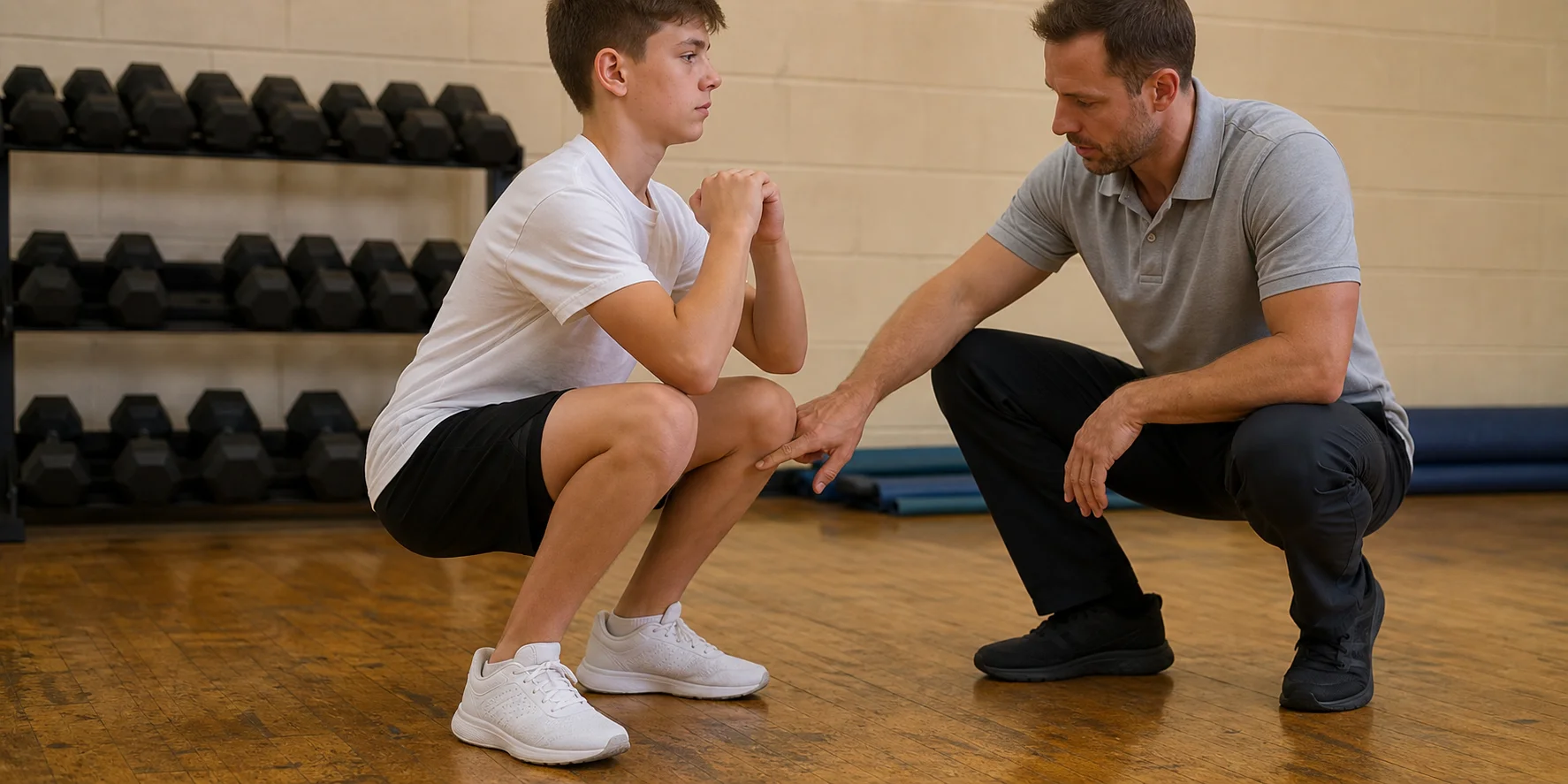
Age-appropriate strength training. This is the intervention with the strongest supporting evidence and the one parents are most cautious about. Supervised, properly progressed resistance training in young athletes is well supported in the sports science literature and does not carry the risks many parents assume. Stronger muscles around a joint absorb load that would otherwise go through tendons and growth plates.
Proper warm-up, every session. Not a token jog and a few static stretches. A structured dynamic warm-up preparing the specific movements basketball demands, jumping, landing, cutting and decelerating. Structured warm-up programmes have consistently shown injury reduction in youth sport.
Coaching landing and deceleration. How a player lands from a jump and how they stop determine how much force goes through the knee and ankle. Both are coachable and both matter more than most youth programmes acknowledge. Our guide on jumping higher for basketball covers the mechanics on both sides of the jump.
Genuine rest days. At least one day per week with no organised basketball, and a period each year away from the sport entirely. This is not lost development time. Tissue adaptation happens during recovery, not during training.
Multi-sport participation in the early teens. Different sports load the body differently, which reduces the repetitive stress that drives overuse injury. Youth development guidance from USA Basketball supports multi-sport participation for younger athletes rather than year-round specialisation.
Adequate sleep and nutrition. Unglamorous and genuinely significant. Recovery capacity depends on both. Our guide on basketball nutrition for youth athletes covers the fuelling side.
The Most Common Basketball Injuries in Young Players
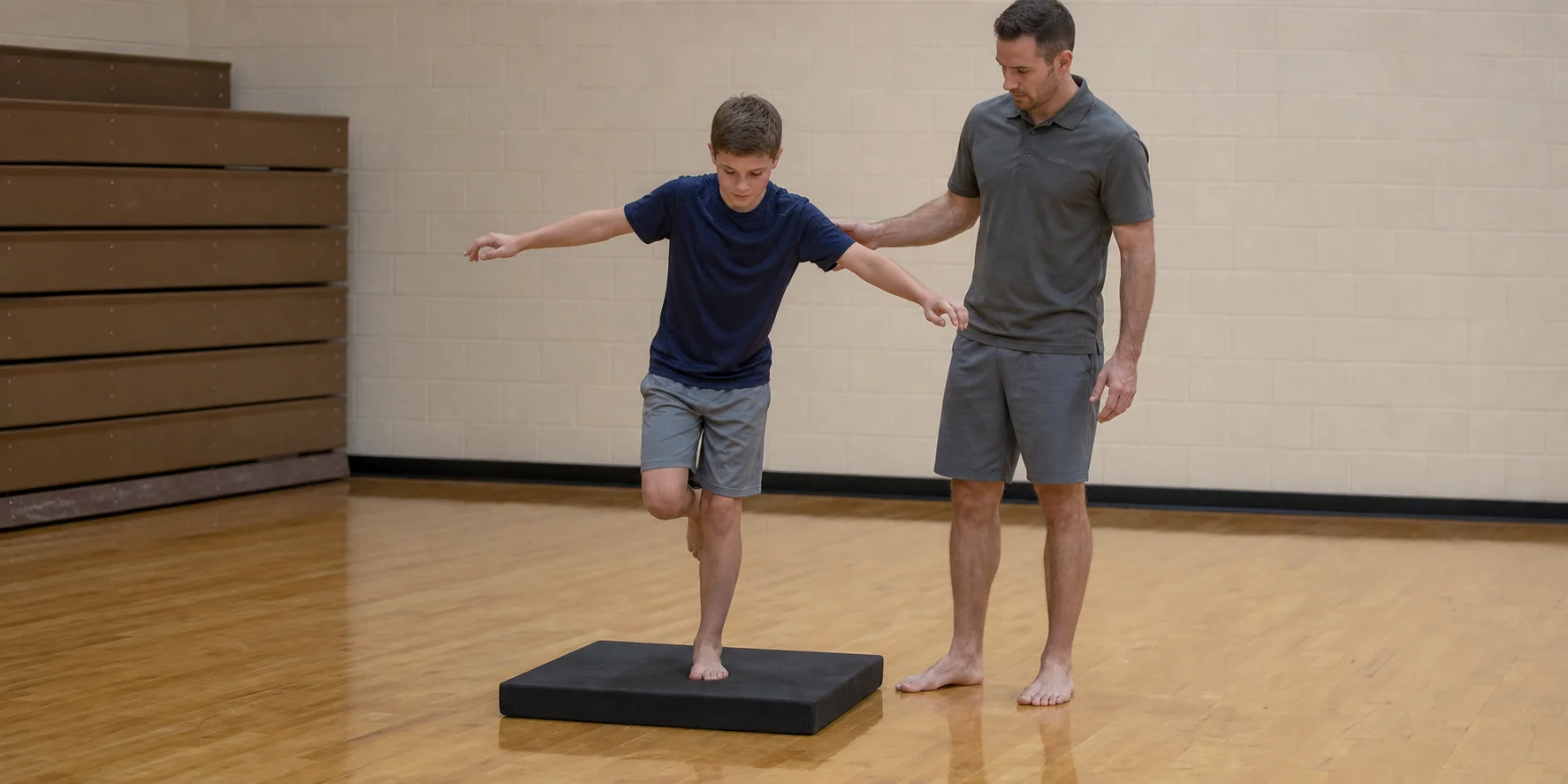
Ankle sprains. The most frequent acute injury in basketball at every level. Usually from landing on another player’s foot or from a sharp change of direction. Balance and proprioception work reduces recurrence substantially, and previous sprain is the single biggest risk factor for another one.
Knee pain related to growth. Covered in detail in our guide on knee pain in young basketball players. Extremely common in the ten to fifteen age range.
Heel pain. Irritation at the growth area at the back of the heel, producing pain during and after running and jumping. Common in the same age window as knee presentations.
Finger and hand injuries. Jammed fingers from ball contact. Usually minor but worth assessing properly if swelling or deformity is present.
Overuse shoulder and wrist complaints. Less common in basketball than in overhead sports but they occur, particularly in players doing very high shooting volumes.
Stress-related bone injuries. Uncommon but serious, associated with rapid increases in training volume. Pain that worsens with activity and does not settle with a few days of reduced load warrants proper assessment.
Warning Signs Parents Should Not Dismiss
Pain that persists more than two weeks without clear improvement.
Pain present at rest or at night, rather than only during activity.
Limping, even mild limping that the player insists is fine.
Swelling around a joint.
A joint locking, catching or giving way.
Pain that keeps returning every time the player resumes activity after a rest period. This pattern specifically suggests the underlying issue has not been addressed, only temporarily quietened.
A player who suddenly stops wanting to play. Sometimes this is motivation. Sometimes it is a child who is in pain and does not want to say so because they are worried about losing their place.
None of these mean something serious is necessarily wrong. They mean an assessment is warranted rather than a guess.
What Good Programmes Do Differently
They ask about total load. A coach who does not know what else a player is doing cannot manage their load. We ask, because the total is what matters.
They modify for individuals. A player in a rapid growth phase or returning from injury may need a different session from the rest of the group. That requires a coach paying attention rather than running a single programme for everyone.
They warm up properly every time. Not when there is time. Every session.
They build strength alongside skill. Skill work develops the game. Strength work protects the player and improves the skill work.
They protect rest. A programme that schedules sessions on top of a full school and tournament calendar without asking about recovery is contributing to the problem rather than solving it.
They tell parents the truth. If a player is doing too much, a good coach says so, even when that means recommending fewer sessions with them.
At YouHoop we build load management into how we run sessions and we ask families about the full picture. Our skill training classes are structured with this in mind, and you can read more about our approach on our about page.
The Balance to Strike
There is a version of injury prevention that becomes so cautious it stops young athletes doing anything demanding. That is not the goal and it is not good for them either.
Young players need to jump, sprint, cut and compete. Those demands are what build strong bodies and resilient athletes. Removing them produces a player who is under-prepared for the next level and no less likely to be injured when they get there.
The goal is not less basketball. It is better managed basketball. Sensible progression, adequate recovery, strength work alongside skill work, proper warm-ups, and attention to individual players going through growth phases.
Done well, that produces players who develop faster because they are available to train consistently rather than repeatedly stopping and starting.
If you want a training environment that manages this deliberately, book a welcome call with our team and we will talk through how we handle load for your player specifically.


0 Comments