5 Fun and Effective Basketball Drills for Solo Practice

Basketball drills are essential for improving your skills, whether you’re on a team or practicing solo. While team practices often focus on group activities, solo practice allows you to refine specific aspects of your game, boosting your skill set and confidence. Here are 5 fun and effective basketball drills that you can easily do alone to take your game to the next level.

1. Shooting Drills: Perfecting Your Shot with Basketball Drills

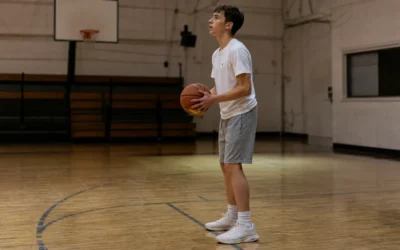
One of the most important aspects of basketball is shooting. Whether you’re practicing free throws or jump shots, focusing on your shooting form is critical. A simple yet effective drill for solo practice is the Spot Shooting Drill. How to do it:
     
      • Start by choosing spots on the court: one at the free-throw line, one at the corner, and one at the top of the key.
      • Take 10 shots from each spot, aiming to make at least 7 out of 10 shots.
      • Focus on your form: Keep your elbow in, and knees bent, and follow through after each shot.
      • If you miss a shot, go back to your starting position and try again.
    This basketball drill not only helps with shooting accuracy but also builds mental toughness and consistency.

    2. Dribbling Drills: Improve Your Ball Handling with Basketball Drills

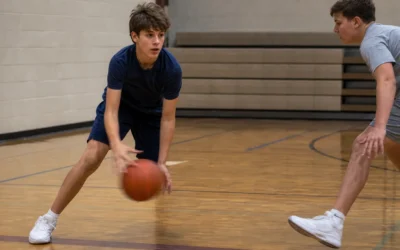
    Strong ball-handling skills are a must for any basketball player. Dribbling drills help you maintain control of the ball, make quick changes of direction, and break down defenses. One effective solo dribbling drill is the Cone Dribble Drill. How to do it:
       
        • Set up 5 cones or obstacles in a zigzag pattern on the court.
        • Dribble the ball through the cones, making sure to keep your head up and maintain control at all times.
        • Focus on using both hands, switching between your left and right hand as you weave through the cones.
        • Once you reach the last cone, sprint back to the starting point and repeat the drill.
      The basketball drills in this drill enhance both your dribbling speed and agility, allowing you to break past defenders easily.

      3. Passing Drills: Strengthen Your Passing with Basketball Drills

      Passing is often an underappreciated skill in basketball, but it’s essential for moving the ball and setting up plays. One great solo drill for improving your passing is the Wall Pass Drill. How to do it:
         
          • Stand about 5-10 feet away from a solid wall, holding the ball in both hands.
          • Throw the ball against the wall with enough force that it bounces back to you.
          • Focus on quick, sharp passes and catching the ball with your fingers, not your palms.
          • Perform chest passes, bounce passes, and overhead passes, aiming for accuracy and speed.
        By regularly practicing this basketball drill, you’ll not only strengthen your passing technique but also improve your reaction time and hand-eye coordination.

        4. Footwork Drills: Enhance Your Defensive Movements with Basketball Drills

        Good defense starts with solid footwork. Improving your defensive positioning and quickness on the court is vital, and one drill that helps develop this skill is the Defensive Slide Drill. How to do it:
           
            • Stand in a defensive stance, keeping your feet shoulder-width apart and your knees bent.
            • Slide laterally to your left for 5 steps, then return to the starting position.
            • Repeat the drill by sliding to the right.
            • Increase your speed as you improve, focusing on staying low and maintaining good posture.
          This basketball drill is crucial for building the lateral movement required for effective defense. Strong footwork enhances your ability to guard opponents and react quickly to changes in the game.

          5. Conditioning Drills: Boost Your Endurance with Basketball Drills

          Basketball requires both physical and mental stamina. To build endurance and ensure you can perform at your peak throughout a game, conditioning is key. One useful drill for conditioning is the Suicide Drill. How to do it:
             
              • Start at the baseline of the court. Sprint to the free-throw line and touch it, then sprint back to the baseline.
              • Sprint to half-court, touch it, and return to the baseline.
              • Repeat the drill, running to the opposite free-throw line and then the opposite baseline.
              • Finish by sprinting to the far end of the court and back to the baseline.
            This high-intensity basketball drill is great for building stamina and improving your overall conditioning. Check out more effective basketball training tips and drills to continue improving your skills and reaching your full potential.

            Conclusion:

            These basketball drills are fun, effective, and easy to incorporate into your solo practice. They target key areas of your game, such as shooting, dribbling, passing, defense, and conditioning, ensuring that you develop a well-rounded skill set. Remember, consistent practice is the key to improvement—so commit to doing these drills regularly, and watch your basketball skills soar! You can learn about our dual-objectives philosophy that prioritizes growth, resilience, and winning in life.

            CLAIM YOUR FREE SESSION!

            ENHANCE YOUR SKILL AND UNLOCK YOUR POTENTIAL.

            Try us out for FREE and receive your custom evaluation.

            Frequently Asked Questions

            Is knee pain normal in young basketball players?

            It is common, particularly during growth spurts in players aged roughly ten to fifteen. Common is not the same as something to ignore. Pain persisting more than two weeks warrants assessment by a doctor or physiotherapist.

            Should my child stop playing basketball if their knee hurts?

            Not necessarily. Complete rest settles symptoms but does not build the capacity needed for return, which is why the pain frequently comes back. Load management, reducing volume while staying active, is generally more effective, but the specific plan should come from a professional who has assessed your child.

            How long does growth-related knee pain last?

            It varies considerably and can persist for months, sometimes longer, typically resolving as growth plates mature. Early and appropriate management shortens the disruption significantly compared to repeated rest and relapse cycles.

            Can my child play through knee pain?

            Mild discomfort that settles quickly after activity is different from pain that increases through a session or persists into the next day. The second means the load was too high. A professional assessment should guide what level of activity is appropriate.

            What can we do to prevent knee pain during a growth spurt?

            Avoid sharp increases in jumping and sprinting volume, build strength around the knee with age-appropriate supervised training, coach landing mechanics, track total load across all teams and activities, and monitor growth so you know when your child is in a higher-risk window.

            Related Posts

            Comments

            0 Comments

            Submit a Comment

            Your email address will not be published. Required fields are marked *