Few things test a parent’s composure like watching your child sit on the bench while other players get the minutes. It is one of the most common sources of frustration in youth sports, and also one of the areas where parents most often handle the situation in ways that end up hurting rather than helping.
This guide covers how to think clearly about playing time, what genuinely warrants raising with a coach, and how to have that conversation in a way that actually helps your child.
Start With an Honest Assessment
Before deciding this is a coaching problem, it is worth honestly considering a few possibilities, even though this is uncomfortable.
Is your child’s skill level genuinely behind their peers on this particular team? This is not a judgment on their worth or potential. Teams are frequently assembled with a range of ability, and a coach managing a roster has to make decisions based on what they see in practice and games, which a parent watching from the stands does not always have full visibility into.
Is effort and coachability part of the picture? Coaches consistently report that attitude and coachability influence playing time decisions as much as raw skill, sometimes more. A talented player who does not respond well to correction, or who is inconsistent in effort during practice, often gets less trust from a coach than a less skilled player who is reliable and responsive.
Has your child actually asked the coach directly what they need to work on? This single step is one of the most underused tools available and one that often produces more useful information than a parent-led conversation with the coach, because it opens a direct line of communication between the two people who need it most.
None of this means playing time concerns are never legitimate. It means starting with an honest look at the full picture, rather than assuming the explanation is unfair coaching, produces a more useful next step.
When It Genuinely Warrants a Conversation
A significant, unexplained and prolonged pattern, not a single game or a rough patch. Every player has games where they play less, for reasons ranging from matchups to specific game situations. A consistent pattern over an extended period is a different matter from a single frustrating night.
No feedback at all about what would change the situation. A coach who genuinely cannot articulate what a player needs to work on to earn more time is either not paying close attention or not communicating well, either of which is worth raising.
A clear discrepancy between what is happening in practice and what is happening in games. If your child is consistently performing well and being praised in practice but this is not translating to game time at all, that gap is worth understanding directly from the coach.
Concerns about fairness or safety, which are different in kind from disagreement over playing time and always warrant a direct conversation regardless of how minor they might seem.
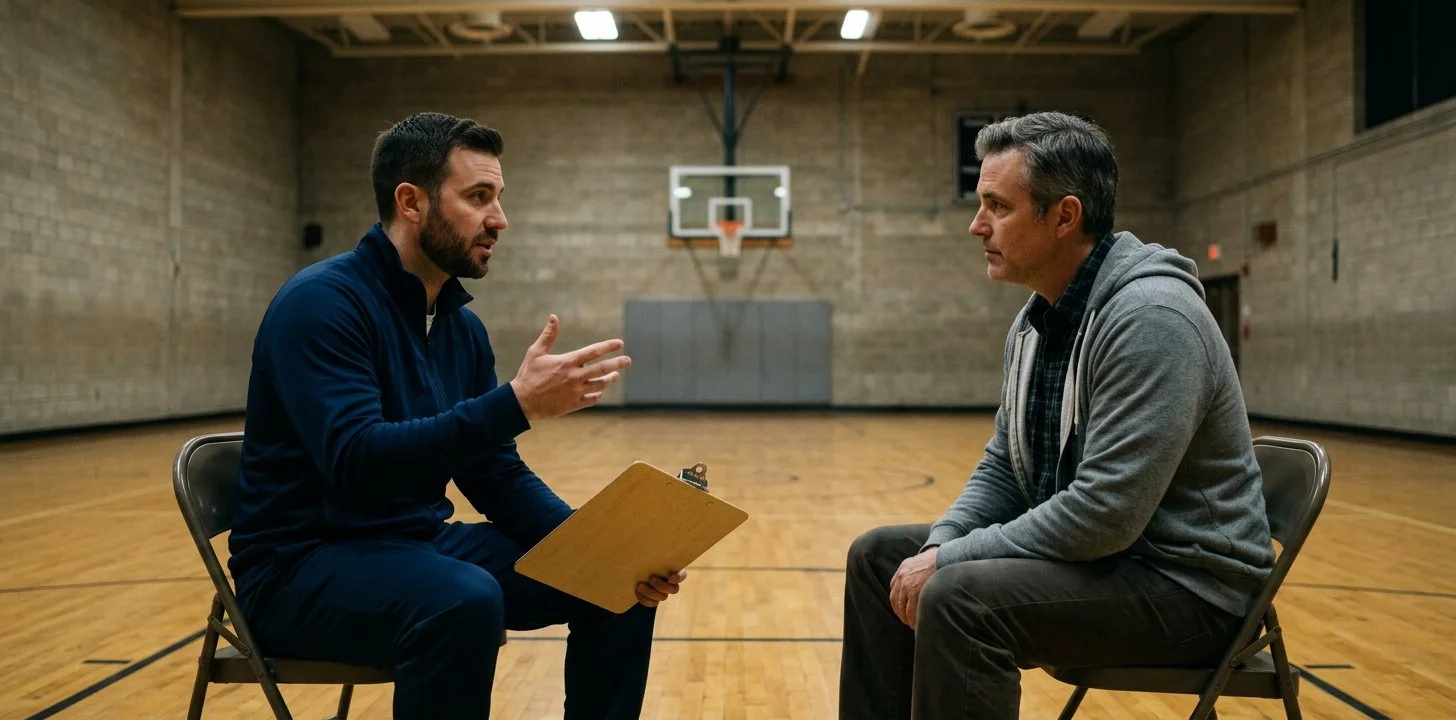
How to Have the Conversation Productively
Wait at least twenty-four hours after a game before reaching out. Approaching a coach immediately after a game, when emotions are still high on both sides, rarely produces a productive conversation. A day’s distance allows both parties to engage more calmly and constructively.
Request a private conversation, never in front of your child or other parents. This protects your child from feeling singled out and gives the coach space to respond honestly without an audience.
Lead with genuine curiosity, not accusation. Asking what your child could work on to earn more playing time invites a coach to engage constructively. Asking why your child is not playing more often puts a coach on the defensive immediately, which rarely produces a useful conversation.
Listen more than you talk. The purpose of this conversation is to genuinely understand the coach’s perspective, not to present your case and wait for agreement. Coaches see practice time and full-squad dynamics that parents in the stands simply do not have visibility into.
Ask for something specific and actionable. A conversation that ends with a clear, specific thing your child can work on is considerably more useful than one that ends in a general disagreement about fairness.
Accept that the answer might not change immediately, or at all this season. A productive conversation with a coach does not guarantee more playing time right away. What it should provide is clarity about what is genuinely being evaluated and what your child can control.
How to Support Your Child Through It
Do not let your own frustration become your child’s frustration. Children absorb parental emotion around this topic quickly, and a parent who is visibly angry or bitter about playing time teaches a child to feel the same way, which rarely helps their development or their relationship with the team.
Help your child focus on what they can control. Effort in practice, coachability, and specific skill development are all within a player’s control. Playing time decisions ultimately are not, and helping a child direct their energy toward what they can actually influence is more productive than dwelling on what they cannot.
Reinforce that limited playing time now does not determine the future. Many players who had limited roles at younger ages went on to become key contributors as they developed. Our guide on what age to start AAU basketball covers how development timelines vary considerably between players.
Consider whether additional individual development would help. If skill genuinely is the limiting factor, targeted work outside of team practice can close the gap over time. Our skill training classes are built specifically for this kind of individual development alongside team participation.
Watch for signs the situation is genuinely affecting your child’s wellbeing, separate from ordinary competitive disappointment. If your child seems consistently unhappy, anxious or has lost enjoyment in the sport entirely, that is a different and more significant concern than frustration over minutes in a specific game.

What Good Coaching Looks Like on This Topic
At YouHoop, we aim to give every player clarity about where they stand and what would help them earn more court time, rather than leaving families to guess. This does not mean every player gets equal minutes, since that would not genuinely serve anyone’s development, but it does mean the reasoning behind playing time decisions should be something a coach can explain honestly if asked.
If your family has questions about how we approach playing time and player development, we would rather have that conversation directly than have it become a source of ongoing frustration. You can read more about our approach on our about page, and book a welcome call with our team if you want to discuss your player’s development specifically.
For broader guidance on productive conversations with coaches generally, see our guide on talking to your child’s basketball coach.




0 Comments