Ask any youth basketball coach what makes their job hardest, and a meaningful number will mention parents in the stands before they mention anything about coaching the players themselves. This is not a criticism of parents as people. It reflects how easy it is for genuine love and investment in a child to come out sideways under the pressure and emotion of a live game.
How to be a good basketball parent is less about knowing basketball and more about managing your own reactions in a setting designed to provoke them. This guide covers what actually helps, and what quietly undermines the experience you are trying to give your child.
Why This Actually Matters
Children notice everything happening in the stands, even when they appear entirely focused on the game. A parent’s visible frustration, shouted instructions, or arguing with officials registers with a child on the court in ways that affect their focus and enjoyment in the moment, and shapes their relationship with the sport over time.
Sports psychology research consistently links negative sideline behaviour from parents to increased anxiety in young athletes and higher rates of early dropout from sport. The stands are not a neutral backdrop. They are part of the environment a young player is performing within.
What Genuinely Helps
Cheer for effort and good plays from both teams, not just outcomes. Genuine encouragement, rather than results-based praise, reinforces the things actually within a young player’s control.
Trust the coach to coach. Even the best coaches do not make every correct decision in every moment, but trusting that they have the team’s development in mind, rather than second-guessing every substitution or play call from the stands, protects the coach-player relationship your child depends on.
Keep your reactions to referee calls in check. Officials at youth level are often volunteers or early in their officiating careers, learning the role in real time. Visible frustration at calls models poor sportsmanship and creates an uncomfortable environment for everyone nearby, including your own child.
Save specific feedback for private conversation, not shouted from the sideline. Instructions yelled during play create a confusing situation where a child is caught between what the coach is telling them and what a parent is telling them from the stands. This is one of the most consistently cited frustrations from youth coaches specifically.
Model the behaviour you want your child to learn. How you handle a tough loss, a bad call, or a disappointing performance from your child teaches them how to handle those same things, considerably more effectively than any verbal advice.
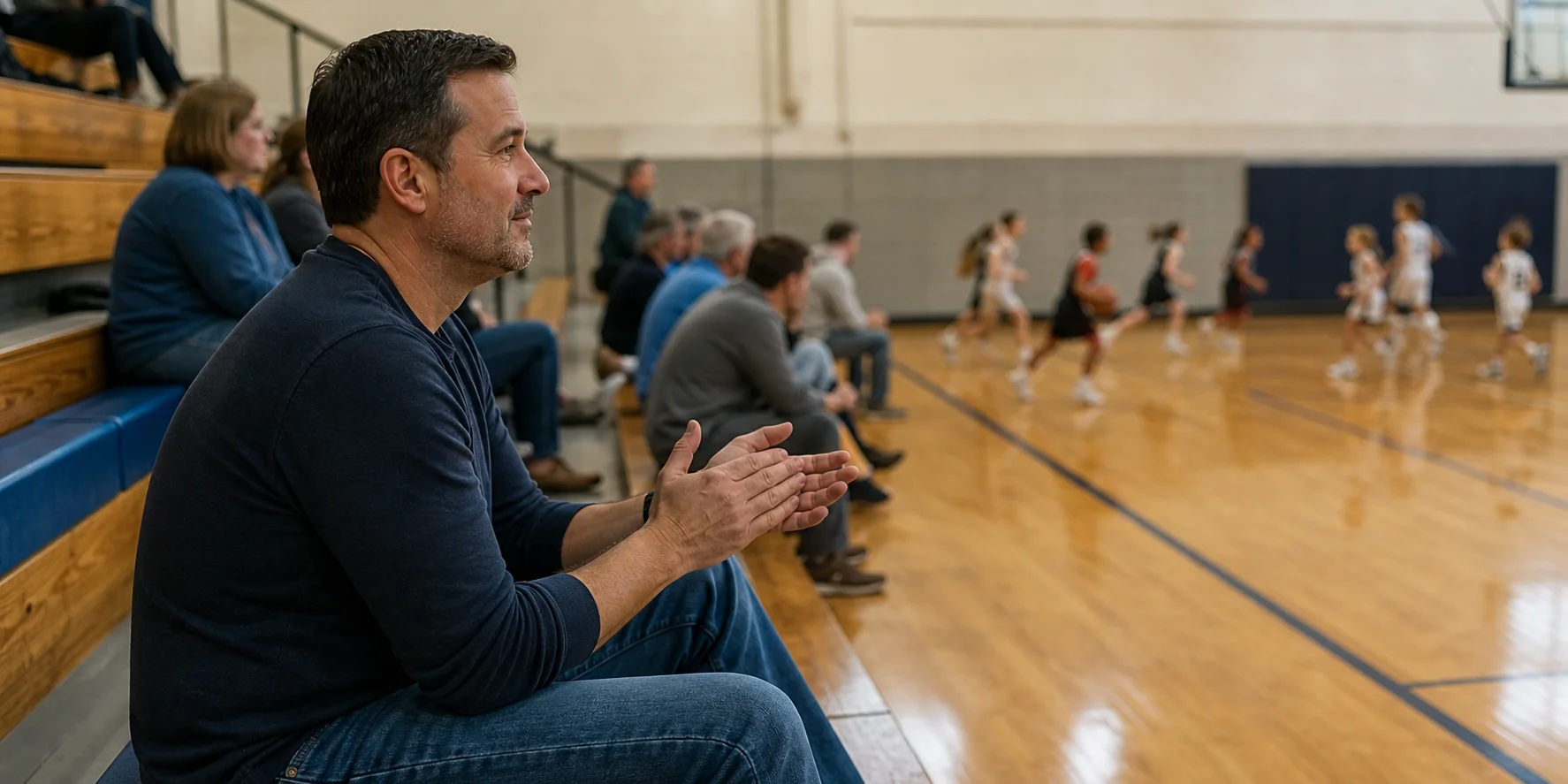
What Quietly Damages the Experience
Coaching from the sideline during live play. Even well-intentioned instructions shouted during a game create split loyalty and confusion for a child who is trying to focus on what their actual coach is telling them.
Visible disappointment after a mistake. A sigh, a shake of the head, or an obvious change in expression after a missed shot or a turnover registers with a child even from a distance, and it teaches them to fear mistakes rather than learn from them.
Comparing your child to teammates, openly or subtly. Even comments that seem harmless, like noting how well another player is doing, can land as unfavourable comparison and damage both your child’s confidence and their relationship with that teammate.
Arguing with officials or other parents. Beyond the immediate embarrassment for your child, this models conflict resolution through confrontation rather than composure, in front of the exact person you are trying to raise well.
Making the drive home or the walk to the car an interrogation. Covered in more depth in our guide on questions to ask after a basketball game, but worth repeating here: the immediate post-game period is not the moment for detailed performance analysis.
Treating every game like it determines something larger. Youth basketball is development, not a career audition. Treating a single game with playoff-level intensity puts pressure on a young player that is disproportionate to what is actually at stake.
Handling Your Own Emotions in the Moment
Recognise your own investment for what it is. It is entirely natural to feel nervous, excited or disappointed watching your child compete. The goal is not to feel nothing. It is to manage what you outwardly express in a setting your child is watching closely.
Have a plan for frustration. If a particular type of moment tends to provoke a strong reaction, whether a bad call, limited playing time or a rough patch of play, having a personal strategy ready, such as taking a breath or briefly looking away, helps in the actual moment rather than relying on willpower alone.
Remember the coach and the players can see and hear you too. Sideline comments carry further than most parents realise, and they are heard by coaches, other parents and other players, not just your own child.
Give yourself grace when you get it wrong occasionally. Nobody manages every sideline moment perfectly. What matters more is the overall pattern over a season, and a genuine, brief acknowledgment to your child afterward if you know a reaction was not your best moment goes a long way.
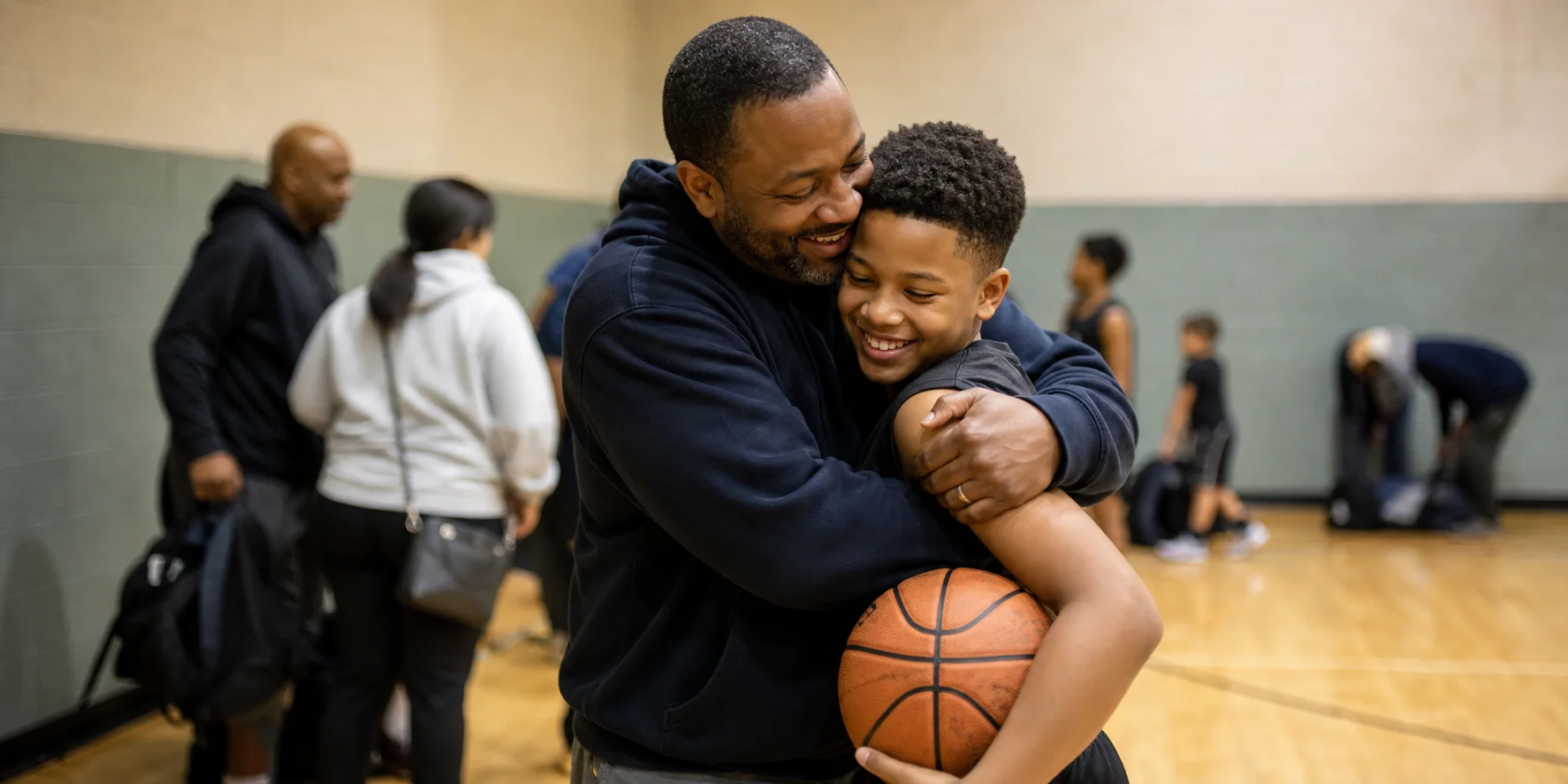
When You Have a Genuine Concern
Being a supportive sideline presence does not mean suppressing legitimate concerns about coaching, playing time or your child’s experience. It means handling those concerns through the right channel rather than through the stands.
Take concerns to the coach directly and privately, not in the moment and not in front of your child. Our guide on talking to your child’s basketball coach covers how to have that conversation productively.
Separate your own competitive feelings from your child’s actual experience. Sometimes what feels urgent to a parent in the moment is less significant to the child, and checking in with your child directly before escalating a concern can clarify whether it genuinely needs addressing.
Trust that most youth coaches want to hear respectful, direct input. A coach approached calmly and privately is far more likely to engage constructively than one confronted publicly or defensively.
The Long View
The way you show up at your child’s games is one of the more lasting impressions you will leave on their relationship with sport, and often with competition and pressure more broadly, well beyond their playing years.
Players who grow up with sideline support rather than sideline pressure tend to maintain a healthier relationship with the game, handle setbacks with more resilience, and are considerably more likely to still be playing, in whatever form, years later.
At YouHoop we value the parents who show up as calm, supportive presences as much as we value skilled players, because the environment around a young athlete matters as much as the coaching they receive on the court. You can read more about our approach on our about page, and if you have questions about how we handle the sideline environment at our own games and tournaments, book a welcome call with our team.

0 Comments