Youth basketball training program Kansas City families are searching for has changed dramatically in the last few years. Gone are the days when signing your child up for a rec league and hoping for the best was enough. Parents across Kansas City, Overland Park, Lee’s Summit, and the surrounding areas are looking for something more intentional — a program that develops real skills, builds genuine character, and gives their athlete a measurable pathway to grow at every stage of the game.
The problem is that not every youth basketball training program in Kansas City is built the same way. Some focus entirely on winning. Some overpromise on recruiting outcomes. Some place kids in the wrong environment for their developmental stage and call it exposure. And some — the best ones — are built around the athlete first, with a clear philosophy, qualified coaches, and a culture that produces better players and better people.
This guide covers exactly what to look for, what questions to ask, and how to evaluate whether a youth basketball training program in Kansas City is the right fit for your child right now.
1. Why the Right Youth Basketball Training Program Changes Everything
Most parents underestimate how much the program environment shapes a young athlete. It is not just about the drills they run or the tournaments they play in. It is about the habits they build, the mindset they develop, and the standards they are held to every single session.
A youth basketball training program in Kansas City that operates with high standards, qualified coaches, and a development-first philosophy does something that goes far beyond teaching a jump shot. It teaches young athletes how to compete. How to handle adversity. How to be a great teammate. How to hold themselves accountable when things go wrong. These are the lessons that stay with a player long after their last game.
The difference between a player who reaches their ceiling and one who falls short of it is almost never talent. It is almost always environment. The right youth basketball training program Kansas City athletes need is the one that challenges them appropriately, develops them consistently, and holds them to a standard that makes them better.
2. What Separates a Great Youth Basketball Training Program From an Average One
Before diving into how to find the right youth basketball training program in Kansas City, it is worth being specific about what separates a genuinely excellent program from one that simply takes your money and keeps your child busy on weekends.
Development over outcomes. A great program tracks individual player growth — not just team wins and losses. Every athlete should have a measurable understanding of where they started, where they are now, and what they are working toward. If a program cannot articulate how they are developing each individual player, they are not a development program. They are a team that plays games.
Qualified and caring coaches. The credential that matters most in youth basketball coaching is not a playing resume. It is the ability to teach the game in a way that young people can understand and apply, combined with the character to do it with patience, positivity, and genuine investment in each athlete. USA Basketball Gold certification is the national standard for coaching education in youth basketball and represents a meaningful commitment to understanding player development at the highest level.
A culture built on values. Programs that define their culture explicitly and hold everyone to those values consistently produce athletes who behave differently on and off the court. The values that matter most in a youth basketball training program are the ones that translate to every area of life: commitment, accountability, toughness, teamwork, and hard work.
Appropriate placement. A youth basketball training program in Kansas City that places every athlete in the highest possible competitive tier regardless of readiness is prioritizing appearances over development. Great programs place athletes where they will grow the most, not where they will look the most impressive.
3. Youth Basketball Training Program Kansas City: The Complete Evaluation Framework
3.1 Coaching Philosophy and Credentials
The first conversation any parent should have with a youth basketball training program in Kansas City is about coaching philosophy. Not past wins. Not alumni who made it to college. Philosophy.
Ask directly: how does the program define success for a 4th grader versus a 10th grader? How do coaches respond when an athlete makes repeated mistakes? What is the approach to playing time and how are decisions communicated to players and families? How does the coaching staff continue to develop their own knowledge and skills?
The answers to these questions reveal whether a program is built around the athlete or around the appearance of success. Coaches who can answer these questions clearly and confidently, with specific examples, are operating from a genuine development philosophy. Coaches who deflect to won-loss records and alumni lists are showing you what they actually value.
At You Hoop, our coaching staff holds USA Basketball Gold certifications annually and has played the game at a high level. More importantly every coach on our staff is genuinely invested in the growth of every athlete they work with — not just the ones who will play in college.
3.2 Program Structure and Tiers
A well-structured youth basketball training program in Kansas City should offer multiple tiers of participation that match different developmental stages and competitive goals. A single-tier program that offers the same experience to a 3rd grader and an 11th grader is not built around development. It is built around volume.
Look for programs that offer distinct pathways: foundational skills training for younger or less experienced players, competitive team environments for players who are ready for structured game play, and elite competition tiers for high-performance athletes pursuing exposure and recruitment visibility.
The right tier for your athlete is the one where they will be consistently challenged without being consistently overwhelmed. Being placed in an environment where a player is significantly outmatched before they have the skills to compete does not build toughness — it builds discouragement.
At You Hoop, our three-tier structure is designed exactly around this principle. Our Skill Class provides the foundational development environment for athletes who are building their base. Our Competitive Teams tier is for players ready for structured game play and consistent growth. And our Elite AAU Circuit is for high-performance athletes who are prepared for regional and national competition and recruitment visibility.
3.3 Practice Quality and Curriculum
The quality of a youth basketball training program Kansas City families should prioritize is measured primarily in the quality of practice, not the frequency of games. Games reveal what athletes have. Practice builds what they will have.
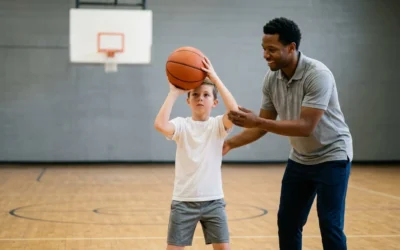
Ask to observe a practice session before committing. Watch how the coaches communicate with players. Watch how feedback is delivered — is it constructive and specific or vague and critical? Watch whether the drills have a clear developmental purpose or whether they are simply filling time. Watch how athletes respond to adversity during competitive drills — do coaches use those moments to teach or to punish?
A great practice in a youth basketball training program is purposeful, progressive, engaging, and demanding. Players should leave tired, smarter, and better than when they arrived.
3.4 Player Evaluation and Progress Tracking
A youth basketball training program in Kansas City that does not track individual player progress is operating on hope rather than on development science. Every athlete in a quality program should be evaluated at the start of their time in the program and regularly throughout their participation.
Evaluations should measure specific, trackable skills — ball handling, shooting form, footwork, defensive positioning, basketball IQ. Progress should be communicated to athletes and families clearly so that every player understands what they are working toward and can see how far they have come.
This kind of individual accountability transforms the development experience from a vague improvement to a measurable journey. It also holds programs accountable for delivering on their development promises.
3.5 Community and Culture
The culture of a youth basketball training program Kansas City athletes join will shape how they think about competition, effort, accountability, and teamwork for years to come. This is not a small thing.
Visit the facility. Watch how athletes treat each other during drills. Watch how coaches respond to mistakes. Watch how the program handles players who are struggling. The behavior of athletes and coaches when things are difficult tells you far more about the culture than any marketing material ever will.
The best youth basketball training program in Kansas City is one where athletes feel challenged, supported, and invested in. Where mistakes are treated as teaching moments rather than failures. Where every player — from the beginner to the elite competitor — feels genuinely valued and pushed to grow.
Read what families in our community say about the You Hoop experience on our Reviews page to get a real sense of what our culture looks like from the inside.
4. Age-Specific Priorities in Youth Basketball Training
The right youth basketball training program in Kansas City looks different at different stages of a player’s development. Here is what the priorities should be at each stage.
3rd and 4th grade. The single most important outcome at this age is that the child falls in love with the game. Everything else is secondary. Foundational skills like dribbling, passing, and shooting should be introduced in a fun, low-pressure environment. Competition should exist but should not define the experience. The habits of effort and coachability planted at this stage grow into everything that comes later.
5th and 6th grade. Skill development becomes more intentional at this stage. Players begin to develop a real sense of their role on the floor and their identity as a player. Team concepts are introduced more formally. The quality of coaching matters enormously here because the technical habits established in this window are very difficult to correct later.
7th and 8th grade. This is the most important developmental window in a young player’s career. The physical, mental, and technical growth that happens between 6th and 9th grade sets the ceiling for high school performance. Players who receive great coaching, consistent challenging practice, and competitive game experience during this period have dramatically more ceiling than those who do not. Shortcuts taken here are paid for in high school.
9th and 10th grade. Competition quality and self-accountability increase significantly at this stage. Players who aspire to play college basketball need to begin understanding what that path actually requires. Skills gaps that were manageable in middle school become barriers at this level. Strength, conditioning, and advanced skill development all become more important.
11th and 12th grade. For players with college aspirations the focus shifts to performance and visibility. The junior year AAU season is the most important competitive experience of most players’ careers in terms of recruiting exposure. Preparation, professionalism, and the ability to perform in high-pressure situations at major events are what determine outcomes at this stage.
5. Common Mistakes Parents Make When Choosing a Youth Basketball Program
Parents want the best for their athletes. But wanting the best and choosing the best are not always the same thing. These are the most common mistakes families make when selecting a youth basketball training program in Kansas City.
Prioritizing the name of the program over the quality of the coaching. A well-known program with poor coaches produces worse outcomes than an unknown program with exceptional coaches every single time. The coach your child works with every week matters infinitely more than the logo on the jersey.
Choosing a program based on where a child will play, not where they will grow. The tier of competition that looks most impressive on paper is not always the tier that produces the most development. A player who is not ready for elite competition and gets placed there anyway often experiences setbacks in confidence that take years to recover from.
Confusing activity with development. A busy schedule of games and tournaments is not the same as a development program. Volume of competition without quality of coaching and intentional skill work produces players who have played a lot of basketball without necessarily getting significantly better at it.
Ignoring culture fit. A program that is technically excellent but whose culture does not match the values you are trying to instill in your child is not the right program regardless of its results. The culture your athlete is in shapes who they become far more than the wins and losses they accumulate.
6. Why You Hoop Is the Youth Basketball Training Program Kansas City Athletes Choose
At You Hoop, we have built a youth basketball training program Kansas City families trust because we have been consistent about one thing since we started: we develop complete players and complete people. Not just athletes who can score. Athletes who can compete, lead, handle adversity, hold themselves accountable, and be great teammates.
Our program serves athletes from 3rd grade through high school with a tiered structure that meets every player where they are. Our coaching staff is certified, experienced, and genuinely invested in every athlete in the program. Our alumni have gone on to compete at every level of college basketball and beyond.
We believe every athlete deserves a place where they can grow, develop, and enjoy the game in a constructive and demanding environment. And we believe that the habits built on our courts translate far beyond the hardwood.
Learn more about our program on our About page, find out where we are on our Find Us page, and when you are ready to take the next step, book your session and come get better with us.

0 Comments
Trackbacks/Pingbacks