7 Ways to Become a Better Basketball Player

I’m super excited today because I have seven different ways to help you achieve basketball success. If you really focus on each of these seven areas, I promise you, your game will reach the next level. While you might not be perfect in every trait, striving for perfection will significantly enhance your skills.

1. Mastering the Art of the Shot for Basketball Success

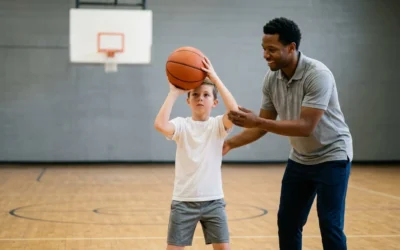
Shooting is crucial in today’s game. If you can’t shoot well, you might end up being just a defender or a corner shooter. Start your workouts with 75-100 makes, depending on your time and resources. This builds confidence as you see the ball go through the hoop. Remember, three points are more than two, and coaches value players who can consistently make outside shots, whether it’s a catch-and-shoot or off-the-dribble shot.

2. Master Ball Handling for Basketball Success

You don’t have to be the best ball handler, but you must be competent enough to dribble three to five times with confidence. Elite ball handlers have aggressive offhands and smooth movement, which comes from excellent footwork and the ability to shift weight effectively. Emulate players like Kyrie Irving, who combine grip, stance, and fluid movements to maintain control under pressure.

3. Elite Finishing for Basketball Success

To be a top finisher, you need confidence and versatility. Focus on three key finishes:
     
      • Overhand: Perfect your floater to get the ball over taller defenders.
      • Side Hand: Stretch away from defenders, similar to Allen Iverson’s moves.
      • Underhand: Use shoulder turns and wrist spins like Kyrie Irving and Steph Curry for an effective underhand finish.
    Mastering these finishes will make you a more versatile scorer around the rim, contributing to your overall basketball success.

    4. Defense for Basketball Success

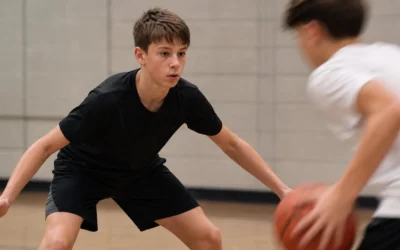
    Being an elite defender is a choice and requires daily commitment. Understand player tendencies and work on your defensive techniques, such as sliding, help-side defense, and taking charges. Defense is about willpower, IQ, and making it tough for your opponent to score. Players like Draymond Green and Marcus Smart excel by getting deflections and altering shots, impacting the game in ways that don’t always show up on the stat sheet.

    5. Passing for Basketball Success

    Elite passing is often overlooked but essential. Master different passes:
       
        • Two-hand and bounce passes: Ensure they are on time and on target.
        • One-hand passes: Use both your dominant and offhand.
        • Hook passes: Essential for screen-and-roll situations.
        • Overhead passes: Useful when double-teamed or for long passes.
      Work on your passing through drills and freestyle sessions to enhance your efficiency and creativity, which are crucial for basketball success.

      6. Deception Leads to Basketball Success

      Not every player is the fastest or most athletic, but you can be deceptive. Use moves like the Euro Step and various speed changes to keep defenders off balance. Learn to sell fakes and misdirect your opponents with body language and eye contact. Effective deception can create scoring opportunities and open up your game, leading to basketball success.

      7. Mentality and Basketball Success

      Your mentality is crucial to your basketball success. Emulate the Mamba mentality of Kobe Bryant by maximizing every aspect of your game. This includes dedicating time to ball handling, shooting, and physical fitness. Approach the game with a growth mindset, learn from your mistakes, and see losses as lessons. Understand that failure is part of the journey to greatness, and use it to improve continuously. For a deeper understanding of how your mindset influences your basketball success and the impact of your parents’ mindset, check out these blogs [WHY YOUR MINDSET AFFECTS YOUR BASKETBALL SUCCESS].  [Crafting the Art of Resilient Leadership]. These articles explore real-life stories and provide practical advice on maintaining a positive and resilient mindset, which is essential for overcoming challenges and achieving greatness on the court.

      Conclusion

      Improving your basketball skills requires dedication and a comprehensive approach. By focusing on shooting, ball handling, finishing, defense, passing, deception, and mentality, you can elevate your game to new heights. Remember that each area is interconnected, and striving for excellence in one will positively impact the others. Embrace the process, learn from your mistakes, and continuously push yourself to be better. With consistent effort and the right mindset, you’ll see significant improvements in your performance on the court. Keep working hard and enjoy the journey towards basketball success. Let’s get it!

      CLAIM YOUR FREE SESSION!

      ENHANCE YOUR SKILL AND UNLOCK YOUR POTENTIAL.

      Try us out for FREE and receive your custom evaluation.

      Frequently Asked Questions

      Is knee pain normal in young basketball players?

      It is common, particularly during growth spurts in players aged roughly ten to fifteen. Common is not the same as something to ignore. Pain persisting more than two weeks warrants assessment by a doctor or physiotherapist.

      Should my child stop playing basketball if their knee hurts?

      Not necessarily. Complete rest settles symptoms but does not build the capacity needed for return, which is why the pain frequently comes back. Load management, reducing volume while staying active, is generally more effective, but the specific plan should come from a professional who has assessed your child.

      How long does growth-related knee pain last?

      It varies considerably and can persist for months, sometimes longer, typically resolving as growth plates mature. Early and appropriate management shortens the disruption significantly compared to repeated rest and relapse cycles.

      Can my child play through knee pain?

      Mild discomfort that settles quickly after activity is different from pain that increases through a session or persists into the next day. The second means the load was too high. A professional assessment should guide what level of activity is appropriate.

      What can we do to prevent knee pain during a growth spurt?

      Avoid sharp increases in jumping and sprinting volume, build strength around the knee with age-appropriate supervised training, coach landing mechanics, track total load across all teams and activities, and monitor growth so you know when your child is in a higher-risk window.

      Related Posts

      Comments

      0 Comments

      Submit a Comment

      Your email address will not be published. Required fields are marked *