How to get a basketball scholarship is the question every ambitious youth player and every invested basketball parent eventually asks — and the one that is surrounded by more myth, misinformation, and misplaced effort than almost any other topic in youth sports. Families spend thousands of dollars on exposure camps, elite tournament circuits, and recruiting services based on assumptions about how the scholarship process works that are simply not accurate.
The reality of how to get a basketball scholarship in 2026 is both more straightforward and more demanding than most families expect. It is more straightforward because the path is clear and the steps are knowable. It is more demanding because those steps require years of consistent, high-quality development — not a single summer of the right exposure.
This guide covers the actual process: what college coaches are evaluating, when the recruiting timeline begins, what separates the players who earn scholarships from the ones who do not, and what families can do right now to give their athlete the best possible chance.
1. The Honest Truth About Basketball Scholarships
Before diving into how to get a basketball scholarship, every family needs to understand the statistical reality clearly. Only 6 to 7 percent of high school basketball players compete in college basketball across all divisions — NCAA Division I, Division II, Division III, NAIA, and junior college combined. Of that group, full athletic scholarships are available only at the NCAA Division I and Division II levels and at NAIA programs. Division III programs do not offer athletic scholarships.
This does not mean the goal is unrealistic for a serious, talented, well-developed player. It means the goal requires realistic self-assessment, appropriate planning, and the right priorities at the right time. Families who pursue this goal with clear eyes and sound strategy give their athlete a real chance. Families who chase it based on emotion and hope often invest enormous resources into activities that do not actually move the needle.
According to NCAA research on the estimated probability of competing in college athletics, approximately 3.4 percent of high school male basketball players and 3.8 percent of high school female basketball players will compete at the NCAA level. Understanding this baseline is not discouraging — it is clarifying. It tells you exactly how competitive the path is and therefore how intentional the preparation needs to be.
2. What College Coaches Are Actually Evaluating
Understanding how to get a basketball scholarship starts with understanding exactly what college coaches are looking at when they evaluate a player. Most families assume the evaluation is primarily about statistics and highlight tapes. It is not.
Physical tools. Size, athleticism, speed, and length are the baseline filters at higher division levels. A player who does not meet the physical profile for a particular level of play will not be recruited there regardless of how skilled they are. This is not a judgment — it is the reality of positional requirements at different levels of competition.
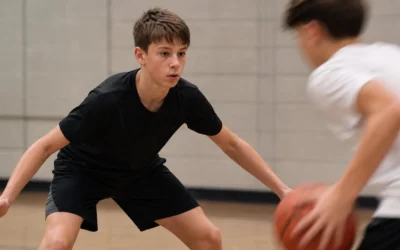
Skill level. Can the player execute the fundamental skills of the game at the speed required by the program? Shooting mechanics, ball handling under pressure, defensive positioning, and understanding of team concepts are all evaluated specifically. Highlight tape moves mean almost nothing. Consistent execution of basic skills under game pressure means everything.
Basketball IQ. Does the player make good decisions? Do they understand spacing, know where the ball should go before it gets there, and compete intelligently rather than just athletically? High basketball IQ translates across systems and levels. Low basketball IQ is a liability that talent alone cannot overcome.
Coachability and character. College coaches ask high school and AAU coaches specifically about character. How does the player respond to correction? How do they behave when things go wrong? How do they treat teammates? What is their work ethic? A talented player with a reputation for being difficult to coach is a risk that most programs will not take.
Academic eligibility. A player who is not academically eligible cannot be recruited regardless of their basketball ability. NCAA eligibility requirements are specific and must be met through course selection and standardized testing. Families who ignore the academic component of the recruiting process find out too late that it was a barrier all along.
Position fit. Every program has specific positional needs. A player who is a perfect fit for the needs of a specific program at a specific time will get recruited there. The same player a year later or at a different program might not get a second look. Understanding how to present yourself as a fit — not just as a talented player — is an important element of the recruiting process.
3. How to Get a Basketball Scholarship: The Proven 8-Step Recruiting Roadmap
3.1 Build the Foundation First: 3rd Through 8th Grade
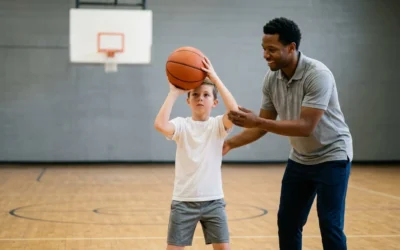
Learning how to get a basketball scholarship starts years before most families think about it. The foundation of every recruiting outcome at the high school level is built in the years before high school. Shooting mechanics established in 5th grade are still present in 11th grade. Competitive habits developed in 7th grade show up in every AAU tournament in 10th grade. Basketball IQ built through quality coaching in middle school is what separates players at elite high school events.
The single most impactful thing a family can do to pursue a basketball scholarship is put their athlete in the best development environment available as early as possible and keep them there consistently. Not the most expensive program. Not the most nationally recognized brand. The best coaching, the most intentional development, and the culture that builds the habits and character that college coaches specifically look for.
Our program at You Hoop is built around exactly this principle. Every athlete in our program from 3rd grade forward is being developed with the same intentionality and held to the same standards whether they are 9 years old or 17 years old. See how our development pathway works on our Skill Class page.
3.2 Understand the NCAA Recruiting Rules and Timeline
NCAA recruiting rules are specific, complex, and change periodically. Families need to understand them because violations — even unintentional ones — can affect a player’s eligibility.
Key recruiting timeline milestones:
NCAA Division I coaches may begin contacting recruits on June 15 after their sophomore year of high school or September 1 of their junior year depending on the sport and division. Before these dates, all communication must be initiated by the recruit or their family.
The recruiting calendar includes specific quiet periods, dead periods, and evaluation periods that dictate when and where college coaches can observe and communicate with recruits. The NCAA evaluation periods for basketball are concentrated in April, May, and July — which is why AAU tournament performance during these months carries such significant recruiting weight.
Registering with the NCAA Eligibility Center (NCAA Clearinghouse) should happen before the start of junior year at the latest. This registration establishes academic eligibility and is required for all Division I and Division II recruits.
3.3 Create a Target School List That Reflects Reality
One of the most common mistakes families make in the basketball scholarship pursuit is targeting only the highest-profile programs at the expense of programs where the athlete actually has a realistic chance of competing and earning a scholarship.
A realistic target school list for most recruits includes schools at multiple levels of competition. Every player who is genuinely good enough to earn a scholarship at some level should be targeting schools across a range: a reach tier of programs slightly above their current profile, a target tier of programs that match their current profile well, and a safety tier of programs where scholarship is highly probable.
Targeting only Division I programs when a player’s profile fits Division II or NAIA is not ambitious — it is a strategy that leaves real scholarship money on the table while the family waits for an offer that may never come.
3.4 Build a Recruiting Profile and Highlight Film
College coaches evaluate players before they ever have a conversation with them. A player who does not have a recruiting profile — a document or online profile that summarizes their academic information, athletic information, contact details, and references — is harder to recruit simply because the basic information is not accessible.
What a recruiting profile should include:
- Full name, graduation year, position, height, weight, and wingspan
- GPA, standardized test scores, and academic interests
- Basketball statistics and accolades from high school and AAU competition
- Coach references with contact information
- Highlight film link and full game film link
The highlight film is the first filter in how to get a basketball scholarship consideration. It needs to show the skills that college coaches value — reads and decisions made at game speed, defensive effort and positioning, execution of fundamental skills in game situations — not just athletic moments and dunks. A highlight film that shows a player doing the right things in game situations consistently is more recruiting-relevant than one that shows the five most athletic plays of a career.
3.5 Attend the Right Events During the Evaluation Periods
For high school players with serious Division I or Division II aspirations, the NCAA evaluation periods in April, May, and July are when scholarship decisions are made. Being at the right events during these windows puts a player’s name in front of coaches who are specifically there to evaluate and offer.
The right events are not necessarily the most prestigious ones. The right events are the ones that the specific coaches a player is targeting attend. Researching which events specific programs attend and competing at those events is a more efficient recruiting strategy than simply chasing the highest-profile tournaments.
For younger players still in the development phase, the evaluation period is not a meaningful priority. A 9th grader who competes at a national event before they are ready does not help their recruiting profile. They simply reveal gaps to coaches who will remember the performance when the player is actually ready to be recruited.
3.6 Proactively Contact College Coaches
Most scholarship opportunities do not begin with a college coach reaching out to a player. They begin with a player or family reaching out to a college coach. Waiting to be discovered is not a recruiting strategy. It is hope.
Proactive outreach to coaches — a brief email introducing the player, sharing the recruiting profile, and expressing genuine interest in the program — is appropriate and effective when done correctly. Coaches receive enormous volumes of recruiting emails. Emails that demonstrate genuine knowledge of the program, specific reasons for the interest, and a clear fit between the player’s skills and the program’s needs get responses. Generic mass emails do not.
Follow up consistently but not excessively. One email per month during the recruiting season is appropriate. Multiple emails per week is not.
3.7 Prioritize Academics From the Very Beginning
The academic component of how to get a basketball scholarship is the one families most often underestimate until it is too late to address. NCAA eligibility requires completion of 16 core courses in specific subject areas with minimum GPA requirements. Standardized testing requirements vary by division and program.
A player who has not completed the required courses by the start of their senior year cannot be recruited by Division I or Division II programs regardless of their basketball ability. Course selection decisions made in 9th grade affect eligibility options in 12th grade. The earlier a family understands and plans around these requirements the better.
Beyond eligibility, academic profile matters for scholarship dollars. Many programs that cannot offer full athletic scholarships offer significant academic scholarships that, combined with partial athletic aid, create packages that fully fund a college education. A player with a strong academic profile has access to significantly more scholarship funding than one with a marginal academic record.
3.8 Use Your Coach Network
High school and AAU coaches are often the most underutilized recruiting resource available to players pursuing scholarships. College coaches trust the evaluations of coaches they know and respect. A personal recommendation from a credible coach carries more recruiting weight than any highlight film.
Players who work hard, demonstrate coachability, and build genuine relationships with their coaches are the ones coaches go to bat for. Coaches who believe in a player will make calls, send film, and advocate directly to college programs on that player’s behalf. This kind of support can open doors that talent and film alone cannot.
The relationships built inside quality development programs like You Hoop extend beyond the court. Our coaching staff has relationships with college coaches at multiple levels and advocates directly for the athletes in our program who are pursuing college basketball. Read about our alumni on our About page and see our community on our Reviews page.
4. Division Breakdown: Where Can Your Athlete Actually Play?
Understanding how to get a basketball scholarship requires understanding what each division level offers and what it demands. Most families fixate on Division I when the reality is that meaningful basketball and meaningful scholarship opportunities exist at every level.
NCAA Division I. The highest level of college basketball. Full scholarships cover tuition, room, board, books, and fees. The talent level is extremely high and the time commitment is equivalent to a professional athletic schedule. Approximately 350 programs nationally.
NCAA Division II. High-quality competitive basketball with partial to full scholarship availability. The athletic and academic demands are serious but somewhat more balanced than Division I. Often provides excellent scholarship packages when academic aid is combined with athletic aid. Approximately 310 programs nationally.
NCAA Division III. No athletic scholarships. However Division III schools frequently offer significant academic and need-based financial aid that can equal or exceed the value of athletic scholarships at scholarship-granting schools. The athletic experience is genuine and competitive.
NAIA. Smaller colleges and universities that offer athletic scholarships and competitive basketball at a high level. Often overlooked by families focused exclusively on NCAA programs. Hundreds of programs with meaningful scholarship opportunities.
JUCO (Junior College). Two-year programs that offer athletic scholarships and serve as a bridge for players who need academic development, additional exposure, or a stepping stone to four-year programs. Many Division I players have taken a JUCO route before transferring to four-year schools.

0 Comments
Trackbacks/Pingbacks