Basketball position training is one of the most important and most consistently overlooked dimensions of youth player development. Most youth programs teach basketball generically — every player runs the same drills, learns the same skills, and receives the same coaching regardless of whether they play point guard or center. This approach produces players who are generically competent but position-specifically underdeveloped — athletes who understand basketball broadly but who have never been coached to master the specific skills, reads, and responsibilities that their position demands at higher levels of the game.
The shift from youth basketball to high school basketball, and from high school basketball to college basketball, is not primarily a shift in athleticism or skill level. It is a shift in positional specificity. At each higher level of the game, positions become more defined, responsibilities become more precise, and the premium placed on players who genuinely understand and excel in their specific role increases dramatically. Players who have received genuine basketball position training arrive at these transitions prepared. Players who have not spend their first season at each new level learning things they should have known before they arrived.
This guide covers what basketball position training looks like for each of the five positions, what skills are position-specific versus universal, and how players at every developmental stage can build the positional expertise that separates good players from great ones.
1. The Difference Between Universal Skills and Position-Specific Skills
Before diving into basketball position training for each position, it is important to understand which skills every player needs regardless of position and which skills are specific to particular positional roles.
Universal skills that every player at every position needs to develop:
- Ball handling — every player at higher levels needs to be able to handle pressure and make decisions with the ball regardless of position
- Shooting — every player at higher levels is expected to be a threat from the perimeter, though the specific shooting range and types of shots vary by position
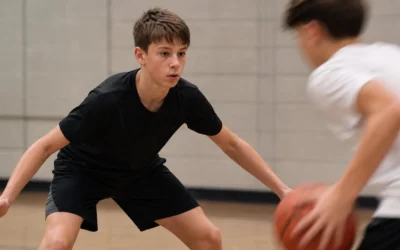
- Defensive footwork and positioning — every player defends and every player needs the fundamental defensive movement skills that make team defense functional
- Basketball IQ — reading the game, understanding spacing, and making correct decisions are universal requirements that translate across all positions
- Competitive habits — effort, communication, accountability, and coachability are not position-specific
Position-specific skills that differentiate basketball position training:
- Point guards develop ball screen navigation, pick and roll reads, and the ability to create advantages for teammates out of two-man game actions
- Shooting guards develop off-ball movement, shooting off screens, and the ability to create their own shot off the dribble from multiple areas
- Small forwards develop versatility — the ability to guard multiple positions, create in isolation, and make decisions in transition
- Power forwards develop post and mid-range scoring combined with the perimeter skills that the modern game increasingly demands
- Centers develop post footwork, screen setting mechanics, roll and pop reads, and the interior defensive skills that protect the basket
2. Basketball Position Training: The Proven Position-by-Position Development System
2.1 Point Guard: The Floor General
The point guard is the most intellectually demanding position in basketball. More than any other position, the point guard’s effectiveness is determined by decision-making quality — not by athleticism, size, or even individual scoring ability. A point guard who makes good decisions in the pick and roll, who manages the game’s tempo correctly, and who consistently puts teammates in positions to succeed is more valuable to most programs than a point guard who can score 25 points but creates chaos in the team’s offensive structure.
The essential skills of basketball position training for point guards:
Pick and roll mastery. The pick and roll is the most common offensive action in basketball at every level above youth recreation leagues. A point guard who can read and respond correctly to every type of defensive coverage of the ball screen — hedge and recover, drop, switch, and blitz — is a point guard who can generate advantages in every game regardless of the defense’s scheme. Basketball position training for point guards must include extensive pick and roll repetitions against every coverage type.
Change of pace and change of direction. The ability to manipulate a defender’s speed and positioning through variations in dribble speed, dribble direction, and body language is the core skill that separates point guards who can create advantages from ones who simply move the ball. This is developed through specific dribble series that teach the rhythm of pace change rather than just the mechanics of individual moves.
Transition management. Point guards run the break — and the decisions made in the first four seconds of transition offense determine whether the possession produces an early advantage or resets into a half-court situation. Reading the numbers, deciding when to push and when to slow, and delivering the ball to the right place at the right time in transition are skills specifically developed through basketball position training that focuses on transition reads.
Pressure handling. At higher levels point guards are specifically targeted by defensive pressure — ball pressure, traps, and full-court schemes designed to create turnovers. The ability to handle pressure calmly, make correct decisions in tight windows, and maintain composure when the defense is specifically trying to disrupt you is the mental and physical skill that basketball position training for point guards must deliberately develop.
Service Link: At You Hoop, our point guard development work is built around decision-making under pressure — not just dribble moves in isolation. See our Skill Class page for how we structure position-specific training.
2.2 Shooting Guard: The Scoring Threat
The shooting guard’s primary value to a team is as a scoring threat — but at higher levels of play that means far more than being able to shoot the ball. It means being a constant offensive threat that the defense must account for at all times, both on and off the ball. A shooting guard who only scores when the ball finds them is a limited weapon. A shooting guard who is constantly moving off the ball, coming off screens, creating pull-up opportunities off the dribble, and attacking closeouts from the perimeter is a weapon that affects every possession on the floor.
The essential skills of basketball position training for shooting guards:
Off-ball movement and screen usage. The ability to read and use screens effectively — the timing of the cut relative to the screener’s arrival, the footwork off the screen that creates a shooting pocket quickly, and the decision of when to curl, fade, or pop based on the defender’s positioning — is the specific basketball position training skill that makes shooting guards elite rather than merely competent.
Shooting off the catch. The ability to catch, set, and fire quickly and accurately from every spot on the floor is the foundational scoring skill of the position. Basketball position training for shooting guards must include extensive work on one and two-step catch-and-shoot mechanics, shooting off lateral movement, and shooting off screens with various footwork patterns.
Shot creation off the dribble. At higher levels a shooting guard who cannot create their own shot is predictable and therefore containable. The pull-up jumper, the step-back, and the ability to get to a mid-range spot off a live dribble are the shot creation tools that allow a shooting guard to be effective when ball screens are not available and the offense needs a bucket in isolation.
Attacking closeouts. When defenders close out aggressively to take away the catch-and-shoot opportunity, shooting guards must be able to use the closeout as a driving opportunity. Reading the speed of the closeout, attacking the correct foot with the first dribble, and finishing or kicking out based on what the help defense provides is a specific basketball position training sequence that shooting guards need to develop deliberately.
2.3 Small Forward: The Versatile Weapon
The small forward is the most physically versatile position in basketball and increasingly the most valuable at the highest levels of the game. The ability to guard multiple positions, create in multiple ways, and function effectively in multiple offensive roles makes a skilled small forward one of the most difficult matchup problems a defense can face.
Basketball position training for small forwards must therefore develop a genuinely broad skill set — not a shallow collection of every skill but genuine competence across a range of offensive and defensive responsibilities.
The essential skills of basketball position training for small forwards:
Perimeter scoring combined with post threat. The small forward who can score from the perimeter and punish mismatches in the post forces defenses into impossible choices. Neither the guard nor the big who is switched onto the small forward has the right tools to guard both threats simultaneously. Developing a functional mid-post game alongside a perimeter scoring package is specific basketball position training work that most small forwards never receive.
Defensive versatility. The ability to guard point guards on switches, stay in front of bigger wing players with length, and compete physically with power forwards on the block is the defensive skill set that makes small forwards truly valuable at the high school and college levels. Developing this versatility requires basketball position training that specifically exposes small forwards to defending different body types and movement patterns rather than only guarding same-size opponents.
Transition scoring. Small forwards are often the primary transition scoring option — the player who fills the lane on the break and finishes at the rim off passes from the point guard. Finishing at the rim in traffic, catching and finishing in stride at high speed, and making quick decisions between finishing and kicking out are basketball position training priorities specific to the small forward role in transition offense.
2.4 Power Forward: The Modern Versatile Big
The power forward position has changed more dramatically than any other over the past decade. The traditional power forward — a physical interior player who rebounded, set screens, and scored in the post — has been replaced at most levels by a versatile player who can do all of those things while also shooting from the perimeter and switching defensively on the perimeter.
Basketball position training for modern power forwards must reflect this evolution while also maintaining the fundamental interior skills that remain the foundation of the position.
The essential skills of basketball position training for power forwards:
Perimeter shooting from the elbow and beyond. The ability to shoot from the elbows and from the three-point line is no longer optional for power forwards at the competitive high school level and above. A power forward who cannot shoot draws the defense into the paint and eliminates the driving lanes for every guard on their team. Basketball position training for power forwards must include substantial perimeter shooting work from the specific spots that their offensive role requires.
Post footwork and interior scoring. Despite the evolution of the position, the ability to score in the post — using footwork to create separation and finishing with both hands around the basket — remains a significant advantage for power forwards at every level. Drop steps, up-and-unders, and face-up moves from the mid-post are basketball position training fundamentals that separate power forwards with complete interior games from those who can only operate on the perimeter.
Screen setting mechanics. The quality of a power forward’s screens directly affects the scoring opportunities created for every guard on the team. A hard, well-angled screen in the pick and roll creates an unguardable advantage. A lazy, soft screen creates nothing. Basketball position training for power forwards must specifically address screen setting technique — the timing, the angle, the contact surface, and the roll or pop decision that follows the screen.
Rebounding positioning and technique. Offensive and defensive rebounding requires specific positioning habits and technique that must be deliberately developed through basketball position training. Reading shot trajectory, establishing position before the shot rather than after it lands, and using physicality legally to secure the glass are specific skills rather than natural instincts.
2.5 Center: The Anchor
The center is the foundation of every team’s interior structure — on offense as the screener, the roller, the post scorer, and the finisher, and on defense as the last line of protection, the shot-altering presence, and the anchor of every defensive rotation.
The essential skills of basketball position training for centers:
Post footwork and finishing. The drop step, the jump hook, the jump stop face-up, and the ability to finish with either hand around the basket are the scoring tools that make a center a genuine offensive threat rather than simply a screen setter and rebounder. Basketball position training for centers at the youth level must establish correct post footwork patterns early because they are the foundation of everything the position requires offensively.
Rim protection and shot blocking. The ability to protect the basket — alter and block shots without fouling, maintain vertical discipline, and be in the right position for the block rather than gambling — is the most impactful defensive skill a center can develop. It requires specific basketball position training that teaches verticality, timing, and the body control to block without the foul rather than simply being tall and jumping athletically.
Pick and roll reads. Whether to roll or pop, how to roll aggressively to the basket while avoiding traffic, and how to catch and finish off lob passes in traffic are basketball position training skills that centers must develop specifically through repeated pick and roll repetitions with their guard partners.
Defensive rebounding habits. Centers secure more defensive rebounds than any other position and developing the specific habits of positioning — finding and sealing the offensive player before the shot, tracking the ball’s trajectory off the rim, and going to get the ball rather than waiting for it to come to them — is basketball position training work that pays dividends on every defensive possession.
3. When to Specialize by Position in Youth Basketball Position Training
One of the most common questions in youth basketball position training is when players should begin to specialize by position. The answer depends on the player’s developmental stage.
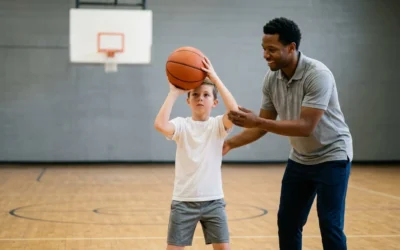
Foundation stage (3rd through 5th grade). Position specialization is not appropriate or beneficial at this stage. Every player should develop every fundamental skill — dribbling, passing, shooting, and defending — regardless of their size or natural position. Early specialization at this stage limits athletic development and often assigns positions to players based on their current size rather than their long-term developmental trajectory.
Development stage (6th through 8th grade). Light positional awareness begins to make sense at this stage — understanding basic positional responsibilities without locking players into narrow positional identities. Bigger players can begin to develop post footwork while continuing to develop perimeter skills. Guards can begin to focus on pick and roll development while maintaining comprehensive skill development.
Performance stage (9th through 12th grade). Genuine basketball position training becomes a primary development priority at the high school level. The positional demands of high school and college basketball are specific enough that position-specific skill development is necessary for players who aspire to compete at the next level.
For more on how our development pathway integrates basketball position training at the appropriate stages, see our About page and book your session to get started.
4. Basketball Position Training and the Modern Game
The modern game of basketball has blurred positional lines more than at any previous point in the sport’s history. The rise of positionless basketball — particularly at the college and professional levels — means that the most valuable players are increasingly those who can function in multiple positional roles rather than being narrowly defined by a single position.
This does not make basketball position training less important. It makes it more important — because the players who are most valuable in a positionless environment are not players who have no positional skills but players who have developed genuine competence across multiple positional skill sets. A player who can guard multiple positions defensively, create in multiple ways offensively, and function effectively in multiple lineup configurations is a player who was developed through comprehensive basketball position training rather than through narrow positional specialization.
According to research on positional versatility in basketball published by the International Journal of Sports Science and Coaching, players who develop competency across multiple positional skill sets demonstrate significantly greater long-term development trajectories and career longevity than those who specialize narrowly by position from an early age. This supports the approach of broad foundational development early followed by increasingly specific basketball position training at higher levels.

0 Comments