What age to start AAU basketball is one of the most common questions parents ask, and the honest answer is that age is the wrong variable to focus on.
AAU divisions technically begin around third grade. But whether a specific child should start at eight, at eleven or at fourteen depends far more on their readiness, their motivation and their family circumstances than on the number of years they have been alive. This guide covers what readiness actually looks like, what the research says about early specialisation, and how to make the decision for your child specifically.
What the Age Divisions Actually Allow
AAU basketball divisions run from 7U through 19U, meaning participation is technically possible from around age seven.
Most programmes concentrate their offering from around third grade upward, and the majority of competitive activity sits in the 11U through 17U range. Our guide on AAU basketball age rules explains how the divisions and the August cutoff work in detail.
The fact that a division exists for a given age does not mean it is the right environment for every child of that age. Availability and appropriateness are different questions.
The Three Readiness Markers That Actually Matter
Motivation coming from the child. This is the single most reliable predictor of whether AAU will be a positive experience. A child who asks to play more, who practises in the driveway without being told, who is disappointed when a session is cancelled, is ready. A child who is participating because a parent thinks it is a good idea is at meaningful risk of burnout and of developing a negative relationship with the sport.
Basic movement competence. Can the child dribble with reasonable control while moving, catch and pass without the ball bouncing off their hands, and coordinate a shooting motion? These do not need to be polished, but the fundamentals need to be present enough that competitive play is productive rather than overwhelming.
Emotional readiness for selection and setbacks. AAU involves tryouts, roster selection, sitting on the bench sometimes, and losing to better teams. A child who can handle those experiences and use them as motivation is ready. A child for whom those experiences would be genuinely damaging is not, regardless of their talent.
What the Research Says About Starting Young
This is worth understanding before deciding, because the evidence points in a fairly consistent direction.
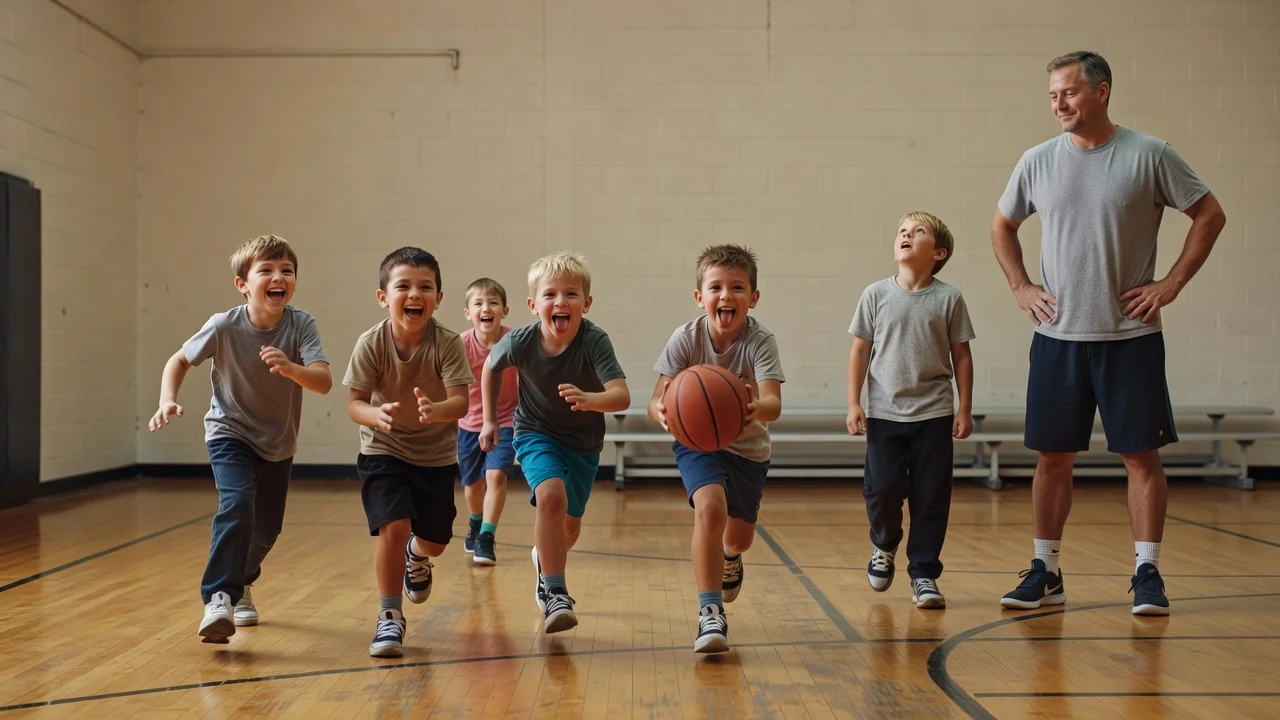
Sports science research on youth athletic development consistently finds that early single-sport specialisation is associated with elevated overuse injury risk and higher rates of burnout, without producing better long-term outcomes than a multi-sport approach.
USA Basketball’s youth development guidelines explicitly recommend multi-sport participation for younger athletes and advise against year-round single-sport specialisation before the mid-teenage years.
The practical implication is not that AAU is harmful for younger children. It is that AAU as one part of a varied athletic life is very different from AAU as a year-round single-sport commitment from age eight. The former is generally fine. The latter carries genuine risk.
A Practical Age-by-Age Guide
Ages seven to nine. The developmental priority is general athleticism, fundamental movement skills and enjoyment. Recreational basketball, informal play and other sports serve most children better than competitive AAU. If a child is exceptionally motivated and a low-pressure local programme exists, participation can be positive, but it should not displace other activity.
Ages ten to twelve. This is where AAU begins to make genuine developmental sense for motivated children who have outgrown recreational competition. The emphasis should still be firmly on skill development rather than tournament results. A programme that plays a modest number of local tournaments and practises properly is preferable to one that travels constantly.
Ages thirteen to fifteen. The competitive level of AAU becomes properly useful here. Players who are serious about basketball benefit substantially from the higher standard of opposition and coaching. Combining AAU with school basketball becomes the standard pattern, as covered in our guide on AAU basketball vs school basketball.
Ages sixteen and above. For any player with genuine college aspirations, AAU participation becomes effectively necessary because of how the college recruitment calendar is structured around it.
The Questions to Ask Yourself Before Committing
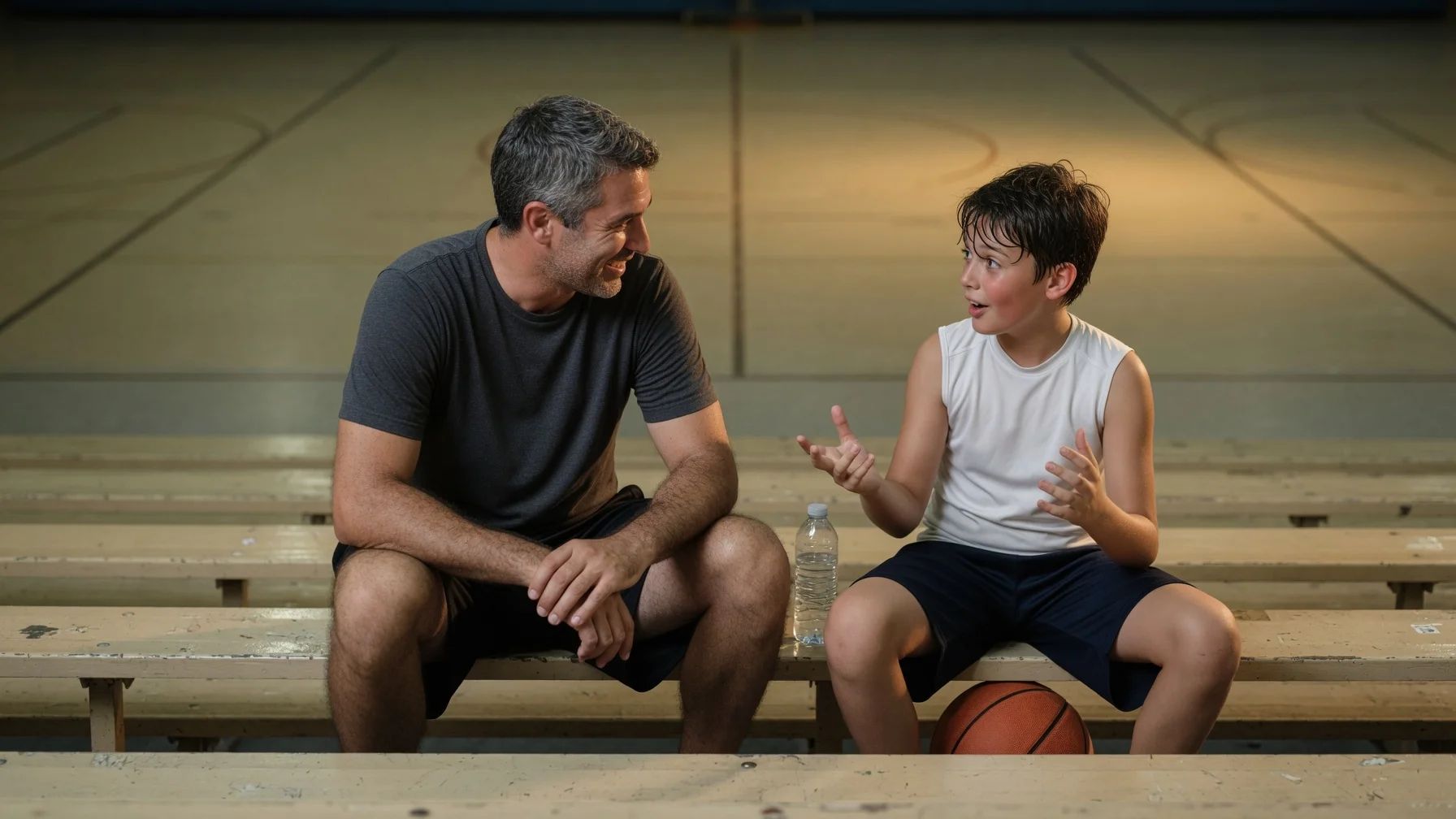
Whose idea is this genuinely? If you strip away your own hopes for your child, would they still want to do this? The honest answer to that question predicts the outcome more reliably than anything else.
What is my child giving up? Weekend tournaments displace other activities, other sports, friendships outside basketball and unstructured rest. For a basketball-obsessed child that trade is easy. For a child with varied interests it may quietly narrow their world in ways that are not obvious until later.
Can our family sustain this? The time and financial commitment is real. Our guide on AAU basketball cost covers the full picture. Committing and then withdrawing mid-season affects the team and the child.
Is the specific programme good? This matters more than the age question. A well-coached development-focused programme is valuable at almost any age. A poorly coached win-at-all-costs programme is harmful at every age. Our guide on how to find the right AAU basketball team covers how to evaluate this properly.
What to Do If Your Child Is Not Ready Yet
Deciding that AAU is not the right step this year is not a setback. There are productive alternatives that build the foundation for later.
Structured skill training. Coached individual and small group skill development builds exactly the technical foundation that makes a child competitive when they do enter AAU. It carries no tournament travel, no selection pressure and considerably lower cost. Our skill training classes are designed for this.
Recreational league play. Regular competitive experience in a lower pressure environment, developing game understanding without the intensity of selected-roster competition.
Other sports. Genuinely valuable rather than a compromise. Athletic qualities developed in other sports transfer directly to basketball, and the varied movement patterns reduce overuse injury risk.
Unstructured play. Driveway basketball, pickup games and playing with friends develop creativity and decision-making in ways that structured coaching does not replicate.
At YouHoop we serve players from third grade through high school across different pathways, and we place each athlete where they will genuinely develop rather than where a fee level suggests they should be. To discuss whether your child is ready and which pathway fits, book a welcome call with our team.
For broader context, see our AAU youth basketball guide and our AAU basketball parent guide.
Official age division information is published on the AAU Basketball site.


0 Comments