The AAU basketball vs school basketball question is usually framed as a choice, which is the first misunderstanding. For most serious young players the answer is not one or the other. The two run in different parts of the year, serve genuinely different purposes, and the players who develop fastest typically do both.
That said, they are meaningfully different environments with different strengths and different weaknesses. This guide explains what each actually provides, where each falls short, and how families should think about the balance.
The Fundamental Differences
Who runs it. School basketball operates under a state athletic association within the school system, with coaches who are usually teachers or school employees. AAU operates through independent clubs affiliated with the Amateur Athletic Union, with coaches employed or volunteering through the club.
When it runs. School basketball is a defined winter season. AAU runs primarily in spring and summer, filling the months when school basketball is not operating. This is precisely why most players do both rather than choosing.
How teams are formed. School teams are limited to students at that school. AAU teams recruit from across a region, which means AAU rosters are typically assembled from a much wider talent pool.
What the schedule looks like. School basketball plays weekly games across a season with regular practice between them. AAU concentrates play into tournament weekends where a team may play four or five games across two or three days.
Who watches. For older age groups this matters enormously. College coaches are permitted to attend and evaluate players during specific periods that align with the AAU calendar rather than the school season. This is the single biggest structural reason AAU became central to college recruitment.
What School Basketball Does Better
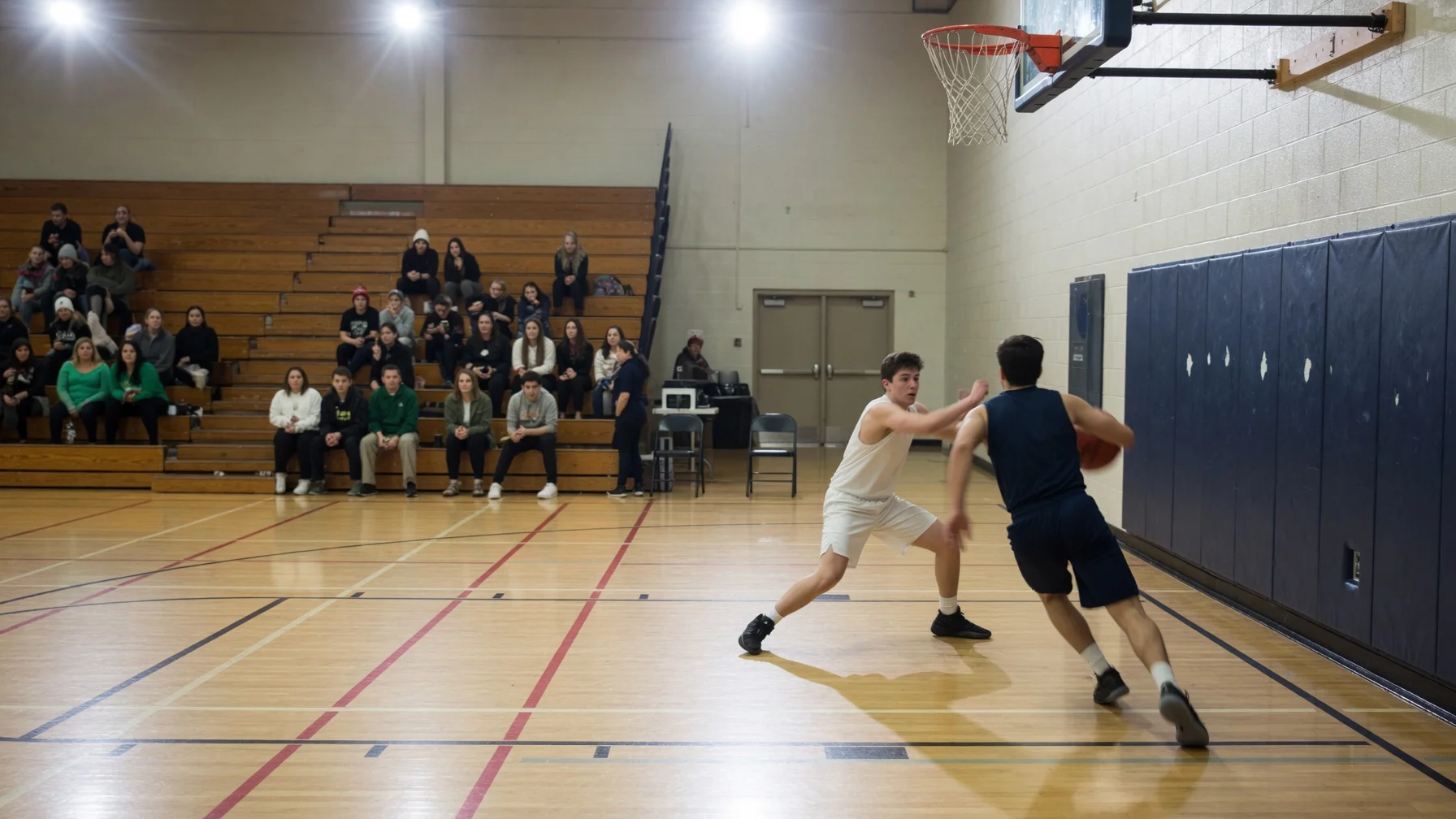
Representing something. Playing for your school carries a meaning that a club team rarely replicates. The identity, the crowd, the rivalry with the school across town, the fact that classmates are watching. For many players this is the most memorable basketball of their youth.
Consistency of practice. A weekly rhythm of practice and games across a season allows for genuine coaching progression. A team can install a defensive system in November and refine it through February. AAU tournament schedules rarely allow that continuity.
Longer relationships with coaches. A school coach may work with a player across four years. That continuity allows for real developmental relationships that a single AAU season cannot match.
Accountability structures. School basketball ties participation to academic eligibility and school conduct expectations, which creates useful external structure for teenagers.
Cost. School basketball is typically free or very low cost. AAU is not. Our guide on AAU basketball cost covers what the difference actually amounts to.
What AAU Basketball Does Better
Level of competition. AAU rosters are selected from a regional talent pool rather than limited to one school. For a player who is comfortably the best on their school team, AAU provides the challenge that drives development.
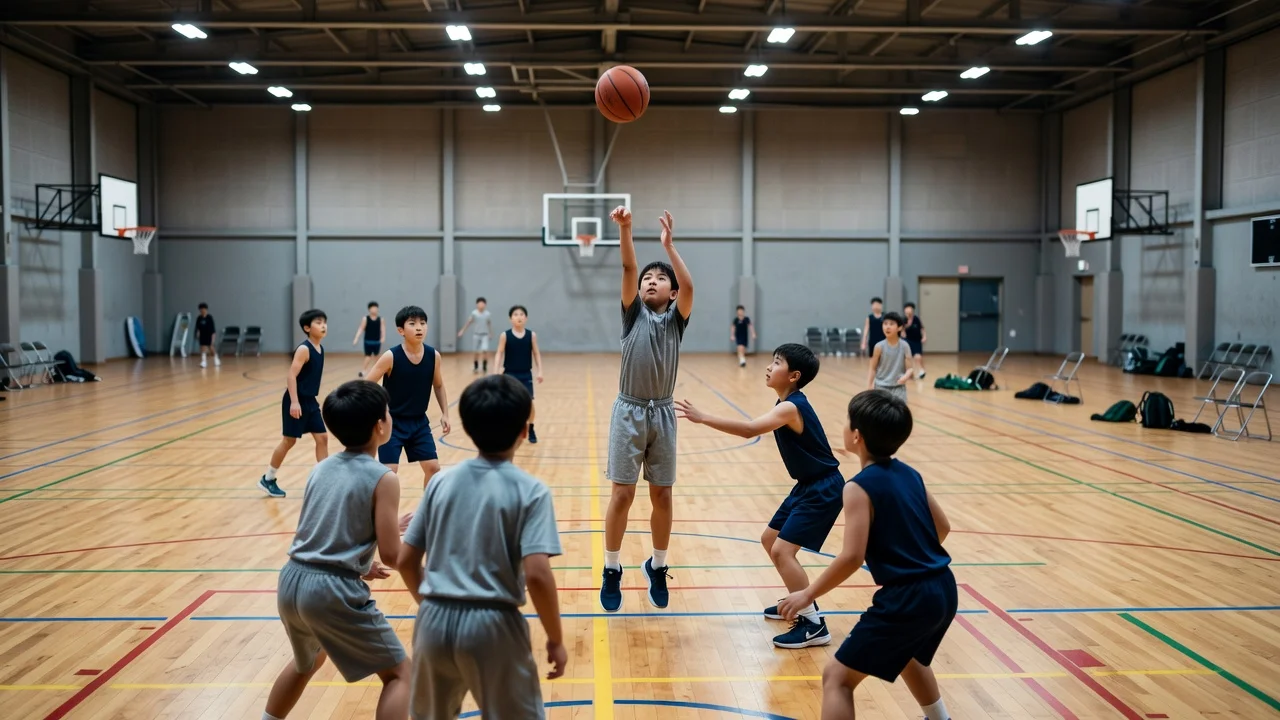
Volume of competitive repetitions. A tournament weekend delivers four or five competitive games. Across a spring and summer season that accumulates to considerably more game experience than a school season provides.
Exposure for college recruitment. From roughly ninth grade onward this is the decisive factor. College coaches evaluate during periods aligned to the AAU calendar. A player with genuine college aspirations who does not play AAU is largely invisible to that process.
Year-round development. AAU fills the months when school basketball is dormant, meaning a player is developing across the full year rather than for three or four months.
Coaching specialisation. AAU coaches are frequently basketball specialists rather than teachers who also coach. This varies enormously by programme, but at the better programmes the depth of specific basketball knowledge is higher.
Where Each Falls Short
School basketball limitations. The talent pool is limited to one school, which for a strong player may mean insufficient challenge. Coaching quality varies and is not always basketball-specialist. The season is short. Playing time politics within a school community can be difficult. And there is minimal college coach visibility.
AAU limitations. The tournament-heavy format means high game volume relative to skill development time, which is the most substantive criticism of the AAU model. Coaching quality is inconsistent because there is no universal qualification requirement. Cost and travel are significant. And some programmes prioritise winning and exposure over genuine player development.
Our guide on whether AAU basketball is worth it covers these criticisms in more depth.
How Serious Players Actually Combine Them
The pattern among players who develop well is fairly consistent.
Winter: school basketball. Full commitment to the school season. This provides the consistent practice rhythm, the coaching continuity and the competitive games within a structured season.
Spring and summer: AAU. Competitive tournament play against a wider talent pool, plus the exposure environment for older players.
Throughout: individual skill work. This is the element that neither school nor AAU provides adequately, and it is the one that most differentiates players over time. Neither format delivers enough individual technical development on its own. Our skill training classes exist specifically to fill that gap.
Deliberate rest. The players who avoid burnout and overuse injury take genuine breaks. Playing school basketball and AAU back to back with no off period across several years carries real physical and psychological cost, and USA Basketball’s youth guidelines explicitly recommend building rest into the annual calendar.
What to Do at Different Ages
Under eleven. School or recreational basketball plus general athletic development. AAU is available at these ages but the developmental case is weak, and multi-sport participation serves most children better.
Eleven to thirteen. School basketball in season, with AAU worth considering if the child is genuinely motivated and has outgrown the recreational level. Skill development should be the priority over competitive volume at this stage.
Fourteen to fifteen. Both, if the family can support it. This is where the competitive gap between school and AAU becomes developmentally useful, and where the habits that determine high school performance are set.
Sixteen and above. Both, with AAU carrying particular weight for any player with college aspirations because of the recruitment structure.
Our AAU basketball age rules guide explains how the age divisions work if you are working out where your child fits.
The Honest Bottom Line
Framing this as AAU basketball vs school basketball sets up a choice that most families do not actually need to make. They operate in different seasons and serve different purposes.
School basketball provides identity, continuity and structure. AAU provides competitive level, volume and exposure. Individual skill work provides the technical development that neither delivers sufficiently.
The genuine decision facing most families is not which one, but whether the AAU commitment in terms of cost, travel and time is right for their circumstances and their child’s level of motivation. That is a family-specific question rather than a basketball one.
To talk through where your athlete currently sits and what the right pathway looks like, book a welcome call with our team and we will give you an honest assessment. You can also read our AAU youth basketball guide for a fuller picture of how the AAU system works.
Registration and eligibility information is published on the AAU Basketball official site.




0 Comments