Basketball is a fantastic sport for improving coordination, teamwork, and self-discipline. For beginners, however, developing the basic skills and confidence required to play can be challenging. Fortunately, with the right basketball drills for beginners, players can quickly improve their abilities while building confidence on and off the court.
In this blog, we’ll walk through five simple and effective basketball drills for beginners that focus on essential skills such as dribbling, shooting, and passing. Each drill is designed to help you feel more comfortable with the game and elevate your performance.
1. Basic Dribbling Drill: Improving Ball Control
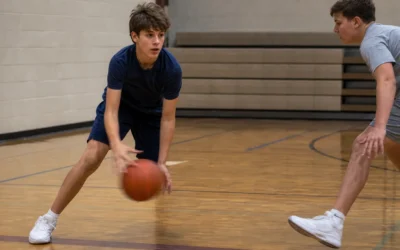
One of the most essential skills for any basketball player, especially beginners, is dribbling. The basketball drill for beginners that will help you get comfortable with the ball is simple and requires just a basketball and some space.
How to perform the dribbling drill:
- Start by standing with your feet shoulder-width apart.
- Dribble the ball with your right hand for about 30 seconds, focusing on keeping the ball low and controlled.
- Switch to your left hand and repeat for another 30 seconds.
- Gradually increase your speed as you improve.
Why this drill works:
This drill enhances your ball control, hand-eye coordination, and confidence when handling the ball. Practicing both hands will help you become a more versatile player on the court.
2. Passing Drill: Building Accuracy and Communication
Passing is a crucial part of the game that helps maintain team dynamics. For beginners, learning to pass accurately and with control can be difficult. This simple basketball drill for beginners will boost both your passing technique and communication on the court.
How to perform the passing drill:
- Partner up with a teammate or use a wall if you’re practicing solo.
- Start with chest passes, aiming for your partner’s chest.
- Once comfortable, progress to bounce passes and overhead passes.
- Aim for a quick release after receiving the pass to mimic real-game situations.
Why this drill works:
This drill develops accuracy, speed, and awareness in passing. Communication is key in basketball, and this exercise encourages players to actively engage with teammates.
3. Shooting Drill: Developing a Consistent Shot
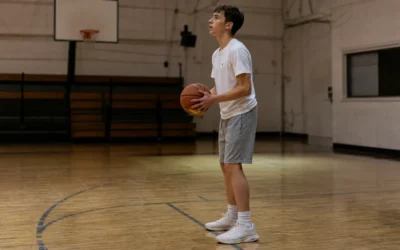
Shooting is one of the most rewarding skills in basketball, and it requires precision and consistency. For beginners, practicing a basic shooting form is essential to developing confidence on the court. The following basketball drill for beginners will help build your shooting form and consistency.
How to perform the shooting drill:
- Start by standing close to the hoop and focus on your form—feet shoulder-width apart, elbows at a 90-degree angle, and a follow-through.
- Take 10 shots from this close distance.
- Gradually move back to the free-throw line and repeat the process.
- Track your progress over time to gauge your improvement.
Why this drill works:
This drill teaches beginners proper shooting form and encourages muscle memory. The more consistent your form, the more confident you’ll be when shooting during a game.
4. Defensive Stance Drill: Mastering Basic Defense
A key element of basketball is defense. A solid defensive stance helps prevent the opponent from scoring while making it easier to react quickly. This basic basketball drill for beginners will teach you the right foot positioning and body posture for effective defense.
How to perform the defensive stance drill:
- Start in a low squat position, with your feet shoulder-width apart.
- Keep your arms out and low to stay in a defensive posture.
- Shuffle side to side, staying low and keeping your body weight on the balls of your feet.
- Focus on maintaining balance and staying quick as you move.
Why this drill works:
This drill develops quick footwork, core strength, and defensive positioning. A strong defensive foundation builds confidence for beginners and can lead to greater success during actual games.
5. Layup Drill: Mastering the Basic Shot Around the Rim
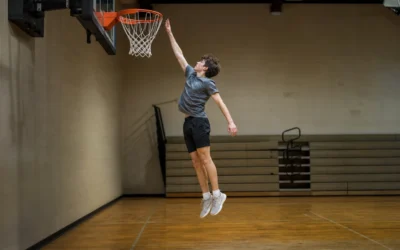
The layup is one of the most fundamental shots in basketball. It’s a close-range shot that is vital for beginners to master in order to score efficiently. This basketball drill for beginners will help you learn the mechanics of performing a smooth and effective layup.
How to perform the layup drill:
- Start dribbling from the top of the key, moving toward the basket.
- Use your right hand to perform a layup when you reach the hoop.
- Repeat with your left hand.
- Focus on aiming for the back of the rim and following through with your shot.
Why this drill works:
This drill helps players understand proper footwork, hand placement, and timing for scoring. Consistent layup practice builds confidence when attacking the rim during a game.
If you’re looking to dive deeper into basketball drills and techniques, check out this helpful guide to advanced basketball drills for beginners that can further enhance your skills.
Conclusion
By practicing these basketball drills for beginners, you’ll lay the foundation for becoming a more confident and skilled player. Remember, consistency is key to improvement in basketball. Continue to challenge yourself with these drills, and don’t be afraid to make mistakes—every step is progress. With time, dedication, and the right drills, you’ll be well on your way to excelling on the basketball court!
You might want to explore this blog as well “How to Structure Basketball Drills for Maximum Efficiency”

0 Comments