7 Ways to Become a Better Basketball Player

I’m super excited today because I have seven different ways to help you achieve basketball success. If you really focus on each of these seven areas, I promise you, your game will reach the next level. While you might not be perfect in every trait, striving for perfection will significantly enhance your skills.

1. Mastering the Art of the Shot for Basketball Success

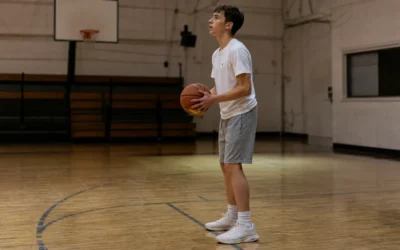
Shooting is crucial in today’s game. If you can’t shoot well, you might end up being just a defender or a corner shooter. Start your workouts with 75-100 makes, depending on your time and resources. This builds confidence as you see the ball go through the hoop. Remember, three points are more than two, and coaches value players who can consistently make outside shots, whether it’s a catch-and-shoot or off-the-dribble shot.

2. Master Ball Handling for Basketball Success

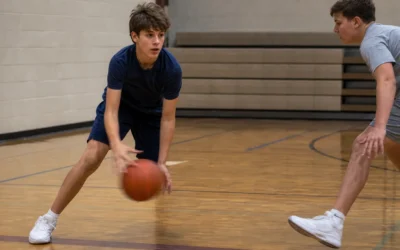
You don’t have to be the best ball handler, but you must be competent enough to dribble three to five times with confidence. Elite ball handlers have aggressive offhands and smooth movement, which comes from excellent footwork and the ability to shift weight effectively. Emulate players like Kyrie Irving, who combine grip, stance, and fluid movements to maintain control under pressure.

3. Elite Finishing for Basketball Success

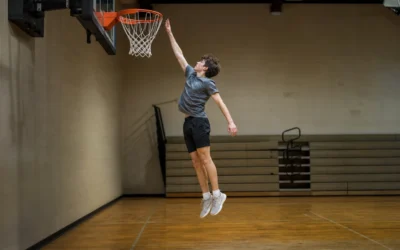
To be a top finisher, you need confidence and versatility. Focus on three key finishes:
     
      • Overhand: Perfect your floater to get the ball over taller defenders.
      • Side Hand: Stretch away from defenders, similar to Allen Iverson’s moves.
      • Underhand: Use shoulder turns and wrist spins like Kyrie Irving and Steph Curry for an effective underhand finish.
    Mastering these finishes will make you a more versatile scorer around the rim, contributing to your overall basketball success.

    4. Defense for Basketball Success

    Being an elite defender is a choice and requires daily commitment. Understand player tendencies and work on your defensive techniques, such as sliding, help-side defense, and taking charges. Defense is about willpower, IQ, and making it tough for your opponent to score. Players like Draymond Green and Marcus Smart excel by getting deflections and altering shots, impacting the game in ways that don’t always show up on the stat sheet.

    5. Passing for Basketball Success

    Elite passing is often overlooked but essential. Master different passes:
       
        • Two-hand and bounce passes: Ensure they are on time and on target.
        • One-hand passes: Use both your dominant and offhand.
        • Hook passes: Essential for screen-and-roll situations.
        • Overhead passes: Useful when double-teamed or for long passes.
      Work on your passing through drills and freestyle sessions to enhance your efficiency and creativity, which are crucial for basketball success.

      6. Deception Leads to Basketball Success

      Not every player is the fastest or most athletic, but you can be deceptive. Use moves like the Euro Step and various speed changes to keep defenders off balance. Learn to sell fakes and misdirect your opponents with body language and eye contact. Effective deception can create scoring opportunities and open up your game, leading to basketball success.

      7. Mentality and Basketball Success

      Your mentality is crucial to your basketball success. Emulate the Mamba mentality of Kobe Bryant by maximizing every aspect of your game. This includes dedicating time to ball handling, shooting, and physical fitness. Approach the game with a growth mindset, learn from your mistakes, and see losses as lessons. Understand that failure is part of the journey to greatness, and use it to improve continuously. For a deeper understanding of how your mindset influences your basketball success and the impact of your parents’ mindset, check out these blogs [WHY YOUR MINDSET AFFECTS YOUR BASKETBALL SUCCESS].  [Crafting the Art of Resilient Leadership]. These articles explore real-life stories and provide practical advice on maintaining a positive and resilient mindset, which is essential for overcoming challenges and achieving greatness on the court.

      Conclusion

      Improving your basketball skills requires dedication and a comprehensive approach. By focusing on shooting, ball handling, finishing, defense, passing, deception, and mentality, you can elevate your game to new heights. Remember that each area is interconnected, and striving for excellence in one will positively impact the others. Embrace the process, learn from your mistakes, and continuously push yourself to be better. With consistent effort and the right mindset, you’ll see significant improvements in your performance on the court. Keep working hard and enjoy the journey towards basketball success. Let’s get it!

      CLAIM YOUR FREE SESSION!

      ENHANCE YOUR SKILL AND UNLOCK YOUR POTENTIAL.

      Try us out for FREE and receive your custom evaluation.

      Frequently Asked Questions

      How do I know if my child's coach is truly bad or just strict?

      The key distinction is whether the coaching behaviour, however challenging, is in service of athlete development or in service of something else. A strict coach who demands high standards, gives critical feedback, and holds athletes accountable to expectations is likely, however uncomfortable, developing your child. A coach who uses humiliation as a tool, shows clear favouritism without developmental rationale, or makes athletes feel genuinely unsafe is a different matter entirely.

      Should I approach the coach alone or with other concerned parents?

      Approach alone first. A group approach feels like a confrontation even when it is not intended that way and rarely produces the open, honest conversation that resolves concerns. If your individual conversation does not produce resolution and multiple families share the same concern, escalating collectively to programme leadership is appropriate.

      What if the coach retaliates against my child after I raise concerns?

      Retaliation against an athlete because their parent raised a legitimate concern is one of the clearest indicators that this is not the right programme for your child. Document specific instances with dates and descriptions. Bring these to programme leadership immediately. A programme that permits coaching retaliation against athletes is one that does not meet the standards of a development-first youth basketball environment.

      Is it ever appropriate to pull my child from a session because of a coaching concern?

      Removing a child from an active session because of a disagreement with a coaching approach is generally counterproductive and teaches children that authority can be overridden by parental intervention whenever it is uncomfortable. The appropriate response to in-session concerns is to document what you observe and raise it through the proper process after the session. The exception is a genuine immediate safety concern that requires intervention in the moment.

      How do I help my child if they have lost confidence because of negative coaching?

      Confidence lost through negative coaching is rebuilt through positive competitive experiences in environments where the athlete receives genuine, specific encouragement for their effort and growth. More individual skill work in low-pressure contexts, more time in environments where they feel competent and valued, and a patient rebuilding of the specific skills that feel most fragile are the practical approaches. Time in the right programme environment with coaches who genuinely invest in every athlete heals this damage faster than almost anything else.

      Related Posts

      Comments

      0 Comments

      Submit a Comment

      Your email address will not be published. Required fields are marked *