I’m excited to share my top tips for learning the basics of basketball. We’ll cover dribbling fundamentals, layups, shooting techniques, and a few fun tricks you can practice on your own. Let’s dive in!
Dribbling – Basics of Basketball
Dribbling is the cornerstone of basketball. It’s the skill we use to move the ball around the court. Here are the fundamentals:
Using Your Fingertips
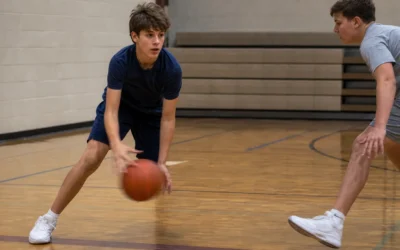
First, focus on bouncing the ball with your fingertips, not your palms. This gives you better control. Bounce the ball at about hip height, maintaining a gentle push with your fingertips.
Staying Low
When dribbling, keep your knees bent and stay low. Your back should be straight, and your legs slightly wider than your shoulders. This position enhances stability and control.
Keeping Your Head Up
Always try to keep your head up while dribbling. This allows you to see the court, your teammates, and potential passes. It’s challenging but essential for good gameplay.
Practice: Windscreen Wipers and Crossovers
- Windscreen Wipers: Bounce the ball across your body in a V motion, staying low and using your fingertips. Practice with both hands.
- Crossovers: Similar to windscreen wipers, but the ball moves from one hand to the other. This improves your control and agility.
Dribbling Rules
- No Carrying: Don’t lift the ball from underneath or to the side. Always keep your hand over the top half of the ball.
- Avoid Double Dribbling: You can’t bounce the ball with both hands simultaneously or start dribbling again after catching the ball.
- Prevent Traveling: If you stop dribbling, you can’t take more than two steps without shooting or passing.
Mastering Layups in the Basics of Basketball
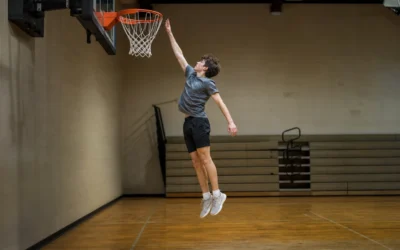
Layups are used when you’re close to the basket. Here’s how to perfect them:
Technique for the Left Side
- Start at a cone near the left side of the net.
- Step with your right foot, jump off your right foot, and lift your left knee high.
- With the ball in your left hand, bounce it off the backboard into the hoop.
Technique for the Right Side
- Start at a cone near the right side of the net.
- Step with your left foot, jump off your left foot, and lift your right knee high.
- With the ball in your right hand, bounce it off the backboard into the hoop.
Advanced Layup Drills
- Dribble Layups: Start farther back, dribble to the net, and perform a layup.
- Through-the-Legs Layups: Dribble through your legs before the layup.
- Body Wrap Layups: Wrap the ball around your body while dribbling, then perform a layup.
Key Points for Layups
- Aim for the top corner of the backboard square.
- Don’t attempt layups from too far away.
- Lift your knee high to gain height and control.
Shooting Fundamentals in the Basics of Basketball
Strong Hand Practice
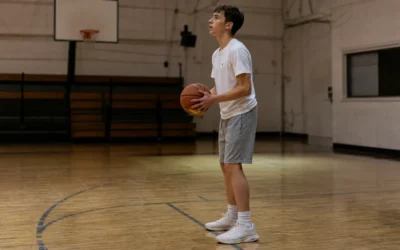
- Stand a meter from the net with the ball in your strong hand.
- Hold the ball under your strong hand, over your shoulder, with your elbow pointing at the target.
- Flick your wrist to create backspin and aim for the net.
Using Your Legs
Combine the wrist flick with a slight bend in your knees for added power and height. Aim for a high arc on your shot.
Full Shot Technique
- Use both hands: strong hand at the back, guiding hand on the side.
- Keep a strong base: legs shoulder-width apart, knees slightly bent.
- Keep your elbow tucked in and flick your wrist upon release.
Key Shooting Tips
- Align your shoulder, elbow, hips, and knee.
- Generate backspin for better control and accuracy.
- Aim for a high arc on your shots.
Advanced Shooting Drills
- Free Throws: Practice standing shots after being fouled.
- Jump Shots: Shoot just before landing after jumping.
- Three-Point Shots: Shoot from behind the three-point line.
- Fadeaway Shots: Shoot while jumping sideways or backwards.
Conclusion
Mastering the basics of basketball is essential for building a strong foundation in the sport. By focusing on dribbling, layups, and shooting techniques, you can improve your skills and confidence on the court. Remember to practice regularly and challenge yourself with advanced drills. Whether you’re playing in a class or just shooting hoops in the driveway, these tips will help you become a better basketball player. Keep practicing, stay dedicated, and most importantly, have fun!

0 Comments