Youth basketball parent guide is exactly what most families need before they invest thousands of dollars, hundreds of hours, and enormous emotional energy into a journey they did not fully understand when they started. Being the parent of a young basketball player is one of the most rewarding and most complicated roles in youth sports. You want the best for your child. You want to support their passion. You want to make the right decisions about programs, coaches, and competitive pathways. And you want to be the kind of parent who helps rather than hurts their child’s development and their relationship with the game.
This guide covers everything a basketball parent needs to know — how to choose the right program, how to support your athlete without creating pressure, what your role is on the sideline and in the car ride home, what realistic expectations look like at each developmental stage, and how to be the parent every coach wants and every young athlete needs.
1. What the Research Actually Says About Parental Influence in Youth Sports
Before anything else in this youth basketball parent guide, it is worth understanding the research on how parents affect youth athlete development — because the findings are both clear and counterintuitive for many families.
The research is unambiguous on one point: parental support is one of the most powerful predictors of long-term sport participation and enjoyment. Athletes who feel genuinely supported by their parents — not evaluated, not pressured, but supported — are more likely to stay in sport, develop greater intrinsic motivation, and reach higher levels of performance than those who do not.
The research is equally clear on the other side: parental pressure, performance-focused communication, and conditional support — love and approval that feel contingent on athletic performance — are among the strongest predictors of youth athlete dropout, anxiety, and burnout. The parent who creates performance pressure while intending to create support is doing measurable damage to their child’s athletic development and their relationship with the game.
The single most important thing a parent can communicate to their young athlete — verbally and nonverbally, consistently and without exception — is this: I love watching you play. I am proud of you regardless of how you perform. The research on this is as strong as any finding in sports psychology. According to research published by the Journal of Applied Sport Psychology, athletes who report the highest levels of enjoyment and the longest sport participation consistently cite parental enjoyment of their participation — not parental investment in their performance — as the primary driver of their sustained engagement.
2. How to Choose the Right Youth Basketball Program for Your Child
The most consequential decision most basketball families make is which program to entrust their child’s development to. This youth basketball parent guide cannot overstate how much this decision matters — not for recruiting outcomes or scholarship potential, but for the quality of your child’s experience, the habits they develop, and whether they are still playing and loving the game in 10th grade.
What to look for in a youth basketball program:
Coaching philosophy first. Before anything else, understand what the coaches believe about player development, about competition, and about the role of basketball in a young person’s life. A coach who talks primarily about winning, rankings, and exposure at a meeting about a third-grade program is revealing their values. A coach who talks primarily about development, character, and building a love of the game is revealing theirs. Choose accordingly.
Culture that matches your values. Every program has a culture — a set of unspoken norms about what is valued, what is celebrated, and what is tolerated. Visit a practice before enrolling. Watch how the coaches interact with players when things go wrong. Watch how players treat each other. The culture your child enters will shape them more than any specific skill they learn within it.
Appropriate placement. A program that places every child in the highest possible competitive tier regardless of developmental readiness is prioritizing appearances over development. The right program places your child where they will grow the most — not where they will look the most impressive.
Transparent costs. Youth basketball can be expensive, and programs that are not upfront about the full cost of participation are programs that do not operate with the integrity their developmental philosophy requires. Ask for a complete cost breakdown before committing to anything.
At You Hoop, every family receives a transparent, honest picture of our program, our costs, and our expectations before any commitment is made. Read what families in our community say on our Reviews page and learn about our program philosophy on our About page.
3. Youth Basketball Parent Guide: The Proven 7-Role Framework for Basketball Parents
3.1 Be a Fan — Not a Coach
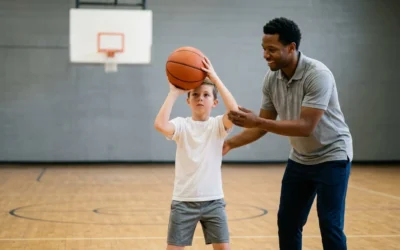
The most important role a basketball parent can play at any game or practice is the role of unconditional fan. Not analyst. Not assistant coach. Not performance evaluator. Fan.
Your child has a coach. That coach has specific knowledge of the game, specific knowledge of your child’s development, and specific authority over the decisions made during practices and games. When parents coach from the stands — calling out plays, correcting technique, criticizing decisions, or contradicting what the coach has been teaching — they create a situation where their child is receiving two sets of conflicting instructions simultaneously. This is cognitively and emotionally overwhelming for a young athlete and almost always makes performance worse, not better.
The research on this is clear and consistent. Athletes whose parents coach from the sideline consistently report higher anxiety, lower enjoyment, and poorer performance in competitive situations than athletes whose parents simply watch and support. The most effective sideline behavior for basketball parents is cheering for effort and team play, saying nothing about specific decisions or mistakes, and communicating through their demeanor that they are enjoying the experience regardless of the score.
3.2 Master the Car Ride Home
The car ride home after a game or practice is one of the most consequential moments in a young athlete’s development — and one of the moments where well-intentioned parents most consistently do damage without realizing it.
The natural parental instinct after watching a child struggle is to help — to analyze what went wrong, explain what the child should have done differently, and suggest what they need to work on. This feels constructive. For most young athletes in the immediate aftermath of a competitive experience, it feels like criticism.
The research on post-game parental communication is remarkably consistent: the phrase that young athletes most want to hear from their parents after a game is “I love watching you play.” Nothing about performance. Nothing about what went wrong. Simply the communication that being there watching was itself a source of joy.
In practical terms this means giving your child space in the immediate aftermath of a competition — 20 to 30 minutes of silence or neutral conversation before any discussion of the game. And when discussion does happen, leading with what went well and asking questions rather than delivering analysis.
3.3 Trust the Coach to Coach
One of the most common friction points between parents and youth basketball programs is disagreement over playing time, role assignment, or coaching decisions. This youth basketball parent guide offers one clear principle for navigating this: trust the coach to coach, and have any concerns addressed privately, respectfully, and at an appropriate time.
Never approach a coach immediately before or after a game or practice about playing time or decisions. The appropriate time for these conversations is a scheduled discussion at a neutral moment — not when emotions are elevated and the coach is focused on other responsibilities.
When you do have the conversation, approach it with curiosity rather than confrontation. “Can you help me understand what [child’s name] needs to work on to earn more playing time?” is a productive question that demonstrates investment in development. “Why isn’t my child playing more?” is a demand that creates defensiveness and damages the relationship.
Playing time decisions are almost always based on practice behavior, effort, and execution of team responsibilities — not on talent alone. The coach who gives playing time to the athlete who competes hardest in practice and executes their role most consistently is doing exactly what they should be doing.
3.4 Separate Your Emotions From Your Child’s Performance
This is the hardest item in this youth basketball parent guide for most families — and the most important. The way a parent responds emotionally to their child’s athletic performance is one of the most powerful determinants of whether that child develops a healthy relationship with competition or a anxious and fragile one.
When a parent’s mood changes visibly based on their child’s performance — when they are visibly happy after a good game and visibly disappointed after a bad one — the child learns that their athletic performance has consequences for the people they love most. This is one of the most powerful sources of competitive anxiety in youth athletes. They begin playing to manage the emotional states of their parents rather than playing for the intrinsic reasons that sustain long-term participation and development.
The goal for basketball parents is to have the same emotional response to a bad game as to a good one — genuine, warm, unconditional support for the person who was out there competing, completely separate from any evaluation of how they performed.
At You Hoop, we work with parents as partners in our athletes’ development. Our coaching staff communicates directly with families about their child’s progress and about the ways families can most effectively support development at home and on the sideline.
3.5 Ask the Right Questions After Practice and Games
The questions a parent asks after practice or a game shape how their child processes the experience and what habits of reflection they develop over time. Questions focused on outcomes teach children to measure their experience by outcomes. Questions focused on process teach them to measure their experience by how they competed and what they learned.
Questions that build healthy development habits:
- What did you enjoy most today?
- What is one thing you felt good about in practice?
- Is there anything you want to work on before next time?
- What did your coach teach you today that was interesting?
- How did you feel out there today?
Questions that create performance pressure:
- How many points did you score?
- Why did you miss that shot?
- Did the coach put you in much?
- Why did your team lose?
The difference seems subtle. The cumulative effect over hundreds of car rides and thousands of dinners is enormous.
3.6 Support the Program Culture
Parents who undermine the program culture — who criticize coaches in front of their children, who dismiss team rules as unnecessary, who communicate that their child is being treated unfairly by the program — are doing the most damaging thing a basketball parent can do. They are teaching their child that authority and accountability are negotiable, that commitment is conditional, and that individual interests always trump collective ones.
The programs that produce the best athletes — the ones who succeed at the next level and in life — are the ones where parents actively reinforce the culture at home. They hold their children to the same standards the program holds them to. They communicate genuine respect for the coaching staff and for the program’s values. They model the accountability and commitment that the program is trying to develop.
This is not blind deference to authority. If a program behaves in ways that are genuinely harmful — emotionally abusive coaching, unsafe physical demands, or unethical conduct — parents have both the right and the responsibility to address it directly and decisively. But disagreeing with a playing time decision or a competitive strategy is not in that category. That is a difference of opinion about basketball, and how a parent handles it teaches their child more about character than any drill ever will.
3.7 Keep Basketball in Its Proper Place
Basketball is a vehicle for development — not the destination. The most important things a young athlete takes from their experience in sport are not the skills they developed, the games they won, or the level they reached. They are the habits of mind, the character qualities, and the human relationships built through years of competing, struggling, learning, and growing together.
This youth basketball parent guide closes with the reminder that the best outcome for any young basketball player is not a college scholarship or a starting spot on the varsity team. It is a young adult who knows how to compete, how to be accountable, how to work as part of a team, how to handle adversity, and how to love the process of getting better at something that matters to them.
Basketball done right produces those outcomes. Parents who keep that perspective at the center of everything make it possible. For more on how our program builds these qualities from the inside out, see our Skill Class page and book your session to get started.
4. Realistic Expectations at Each Stage of Youth Basketball Development
One of the most consistent sources of family frustration in youth basketball is misaligned expectations — parents expecting outcomes that are not appropriate for the developmental stage their child is in. This section of the youth basketball parent guide addresses what realistic expectations look like at each stage.
3rd through 5th grade. The appropriate expectation is enjoyment, effort, and gradual improvement in basic skills. Wins and losses are irrelevant. Whether your child is getting better than they were last month is relevant. Whether they are enjoying themselves and developing a love for the game is the most relevant thing of all.
6th through 8th grade. The appropriate expectation is measurable skill development, growing basketball IQ, and the establishment of competitive habits. Role clarity begins to emerge. Players begin to understand their strengths and the areas they need to develop. The quality of coaching matters enormously at this stage.
9th through 12th grade. The appropriate expectation is performance at an appropriate competitive level with clear, honest evaluation of what that level is and what the path forward looks like. Recruiting conversations should be grounded in reality — understanding where your child fits in the landscape of players at the positions they play is more valuable than aspirational thinking that produces disappointment.

0 Comments