How to improve basketball shooting skills is the single most searched question in all of youth basketball — and for good reason. Shooting is the skill that defines how defenders guard you, how coaches deploy you, and ultimately how far you go in this game. A player who can shoot forces the defense to respect them everywhere on the floor. A player who cannot shoot gets packed into the paint, taken out of their game, and limited to roles that their athleticism alone cannot sustain at higher levels.
But here is what most players and most parents misunderstand about shooting improvement. It is not about taking more shots. It is about taking better shots — with better form, better habits, and better decision-making — over and over again until those things become automatic. Shooting thousands of shots with poor mechanics does not build a great shooter. It builds a fast bad shooter. And fixing a bad shooting habit that has been ingrained through years of repetition is one of the hardest things in basketball development.
This guide covers exactly how to improve basketball shooting skills the right way — from the mechanical foundations that everything else is built on, to the practice habits that accelerate improvement, to the mental approach that separates good shooters from great ones.
1. Why Most Players Never Reach Their Shooting Potential
The gap between a player’s shooting potential and their actual shooting ability almost always comes down to one of three things: incorrect mechanics established early and never corrected, insufficient deliberate practice focused specifically on shooting, or an inability to replicate mechanics under competitive pressure.
Understanding which of these is the primary limitation is the starting point for any serious shooting improvement program.
Incorrect mechanics. Most youth players learn to shoot in a way that feels natural before a coach ever gives them formal instruction. They shoot how they can get the ball to the basket — which at young ages often means pushing with both hands, launching from the chest, or throwing off one foot. These compensations work when the basket is close and the defense is not there. They break down completely when the game speeds up, the defense closes out, and the shot needs to happen in half a second off a dribble or a catch.
Insufficient deliberate practice. There is a significant difference between shooting around and deliberate practice. Shooting around feels productive because you are touching the ball and taking shots. Deliberate practice is structured specifically to address the mechanics, the spots, the situations, and the pressures that are limiting improvement. Most players who feel stuck in their shooting development are shooting a lot but not practicing deliberately.
Inability to perform under pressure. A player who shoots well in open gym but falls apart in games has not transferred their mechanics to competitive conditions. This transfer requires specific practice habits — simulating game speed, game pressure, and game decision-making in the gym rather than only practicing in the comfortable, slow, open conditions of casual shooting.
2. The Mechanical Foundations: What Correct Shooting Form Actually Looks Like
Before any player can meaningfully answer how to improve basketball shooting skills, they need to understand what correct shooting mechanics look like at every phase of the shot. These are the non-negotiables — the elements that every elite shooter in the world shares regardless of their individual style.
Stance and balance. Every shot starts from the ground. Feet should be shoulder width apart with the shooting side foot slightly ahead. Weight should be balanced and slightly forward on the balls of the feet. A wide, stable base is what makes the rest of the shot consistent. Players who shoot from a narrow stance or with their weight back will never have a consistent shot because the foundation changes from attempt to attempt.
Hand placement. The shooting hand supports and guides the ball. The guide hand — the non-shooting hand — is on the side of the ball only and comes off completely before the ball leaves the fingertips. One of the most common shooting flaws in young players is using the guide hand to push or rotate the ball, which sends the shot in unpredictable directions. The guide hand is a shelf. It does not shoot.
Leg drive. Great shooting is a full body action, not an arm action. The power for the shot comes from the legs — a quick, explosive knee bend and drive that transfers energy up through the core and into the shooting arm. Players who shoot only with their arms tire quickly, lose range under fatigue, and cannot generate consistent arc. The legs are the engine of the shot.
Elbow alignment. The shooting elbow should be directly under the ball and pointed at the basket throughout the shooting motion. An elbow that flares out to the side pushes the shot wide. An elbow that comes in too far pulls the shot across the body. Elbow alignment is one of the most consistent differentiators between players who shoot straight and players who struggle with left-right accuracy.
Release and follow through. The ball should leave the fingertips — not the palm — with a consistent backspin generated by the fingers rolling over the top of the ball. The wrist snaps down and the fingers point toward the target at the completion of the shot. A consistent follow through that holds until the ball reaches the basket is one of the most reliable indicators of correct release mechanics.
Shot arc. A shot with appropriate arc — roughly 45 degrees at the peak — has a larger window to enter the basket than a flat shot. Flat shots require near-perfect aim because the ball is approaching the rim at a shallow angle. Arced shots are more forgiving because they are dropping down into the basket rather than cutting across the rim.
3. How to Improve Basketball Shooting Skills: The Proven 6-Step Practice System
3.1 Form Shooting: Building Muscle Memory From the Ground Up
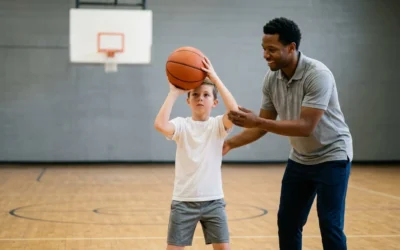
Every shooting improvement journey starts in the same place regardless of the player’s age or current level: form shooting close to the basket. Form shooting means taking shots from very close range — 3 to 5 feet from the basket — with full focus on executing perfect mechanics on every single repetition.
This feels boring to most players because it is not challenging athletically and the shots are easy to make. That is precisely the point. The goal of form shooting is not to challenge the player. It is to build the neural pathways for correct mechanics without the interference of distance, fatigue, or competitive pressure. Every repetition of perfect mechanics at close range makes those mechanics slightly more automatic — slightly more likely to appear when the game is on the line and there is no time to think.
Form shooting should be done at the beginning of every individual workout before any other shooting. It should feel like turning on a machine — calibrating the mechanics before putting them under stress.
Form shooting protocol:
- Start directly in front of the basket, 3 to 4 feet away
- Focus on one mechanical element per set — stance, elbow, release, follow through
- Take 10 to 20 repetitions from each spot before moving back
- Make 8 of 10 shots from each distance before progressing to the next
3.2 Spot Shooting: Building Consistency From Game Locations
Once form shooting has calibrated the mechanics, spot shooting develops consistency from the locations on the floor where the player will actually need to shoot in games. Spot shooting means taking a specific number of shots from a specific location before moving to the next spot, always tracking makes and total attempts.
A basic spot shooting workout:
- 5 spots: both corners, both wings, and the top of the key
- 10 shots from each spot for a total of 50 attempts
- Track makes from each spot to identify which locations need the most attention
- Goal is 7 of 10 or better from each spot before adding distance or difficulty
Spot shooting should be done at game speed — not lazy catch-and-shoot, but active catch, set, and fire with the same footwork the player would use in a game. The transition between the catch and the shot should be practiced with the same urgency as a real game possession.
For players at You Hoop working on their shooting with our coaching staff, spot shooting is one of the primary tools we use to build measurable improvement. See our Skill Class page for how we structure individual shooting development within our program.
3.3 Off the Dribble Shooting: Adding Movement and Decision Making
Spot shooting builds consistency on catches. But most shots in real games come off the dribble — pull-ups off drives that do not finish, step-back jumpers to create separation, mid-range shots off pick and roll actions. The ability to shoot off the dribble requires all of the same mechanical foundations as catch-and-shoot shooting, plus the ability to gather and set quickly after lateral or forward movement.
Basic off the dribble shooting progression:
- One dribble pull-up from the elbow — drive one dribble, gather, shoot
- Two dribble pull-up from the wing — attack the lane, two dribbles, pull up at the elbow
- Crossover pull-up — change direction on the dribble, create space, pull up
- Step-back jumper — drive, one step back to create space, set, shoot
Each of these movements should be drilled at game speed with emphasis on a clean gather that brings the feet under the body quickly and a shot that uses the same mechanics as the stationary game.
3.4 Catch and Shoot Drills: Simulating Game Delivery
In real games the ball rarely arrives on the shooter’s timeline. It comes late, it comes early, it comes at an awkward height, it comes while the shooter is moving. The ability to catch and shoot quickly — converting an off-balance or late pass into a good shot — is one of the most underdrilled skills in youth basketball.
Catch and shoot practice options:
- Partner passing: a partner delivers passes from various angles and distances, shooter must catch, set, and shoot without adjusting unnecessarily
- Wall passing: use a rebounder or wall to deliver the ball back from various angles and practice quick releases on return passes
- Shot fake into pull-up: catch, shot fake to move the defender, one dribble, pull-up — teaches the shooter to read the defense and choose the right action
3.5 Pressure Shooting: Transferring Skills to Game Conditions
This is the step most players skip entirely — and it is the step that determines whether shooting improvement in the gym transfers to shooting improvement in games. Pressure shooting means practicing shots under conditions that simulate the fatigue, urgency, and consequence of real game situations.
Pressure shooting methods:
- Timed shooting: set a timer for 60 seconds and count makes from a specific spot — the time pressure forces game-speed decision-making
- Make-based challenges: must make a specific number in a row or from a specific spot before moving on — the consequence creates pressure
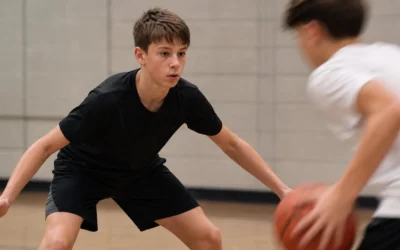
- Conditioning into shots: sprint a short distance and immediately catch and shoot — simulates the physical fatigue of shooting off movement in a game
- Competition: shoot against a partner from the same spots with a score — the competitive stakes activate the same mental pressure as games
At You Hoop, competitive shooting drills are a regular part of our practice culture because we know that skills built only in comfortable conditions stay in comfortable conditions.
3.6 Tracking and Accountability: Measuring What Actually Matters
How to improve basketball shooting skills comes down ultimately to what you measure and what you hold yourself accountable for. Players who track their shooting percentages from specific spots over time can see exactly where they are improving and exactly where they need more work. Players who shoot without tracking are practicing without information.
What to track in every shooting workout:
- Makes and attempts from each spot
- Field goal percentage from each distance and angle
- Percentage off the dribble vs off the catch
- Percentage under pressure vs percentage in open gym
This data reveals patterns that feel invisible otherwise. A player who shoots 75 percent from the right corner but 45 percent from the left corner has a clear priority for their next workout. A player whose percentage drops from 70 percent open to 35 percent under pressure has a clear area to develop.
4. The Mental Side of Shooting: What Separates Good Shooters From Great Ones
The mechanical and physical work of shooting improvement is visible and measurable. The mental work is less visible but equally important — and at advanced levels it is often the primary differentiator between good shooters and great ones.
Short memory. Every elite shooter misses shots. The ones who maintain their shooting confidence and keep shooting through misses are the ones who reach their potential. The ones who begin second-guessing their mechanics, choosing not to shoot after a miss, or avoiding the ball in big moments are the ones who never become the shooters their ability suggested they could be. A missed shot tells you one thing: the next one is coming.
Pre-shot routine. Great shooters have a consistent pre-shot routine — a brief sequence of physical and mental actions that prepares them for every shot the same way. It might be a specific way they receive the ball, a breath, a focus word, or a particular alignment check. The routine signals to the brain that it is time to execute the well-rehearsed pattern. It also provides a consistent anchor to return to when the game is chaotic.
Visualization. The neural pathways activated during mental rehearsal of a skill are nearly identical to the pathways activated during physical execution. Players who spend time visualizing their shooting mechanics and visualizing shots going in are building the same patterns they build through physical repetition. Elite shooters use visualization before games, before practice, and in the moments before taking important shots.
Process focus under pressure. The player who is thinking about the scoreboard, the crowd, or the importance of the shot in a pressure moment is occupying mental space that should be occupied by the mechanics of shooting. Developing the ability to focus entirely on the process — the same process that has been rehearsed thousands of times — in high-pressure moments is what separates players who perform in big games from those who shrink.
5. How Many Shots Should a Player Take Every Day
There is no single correct answer to how many shots a player should take every day to maximize shooting improvement. The right number depends on the player’s age, development stage, and the quality of the repetitions. Quantity without quality builds bad habits faster. Quality without sufficient quantity does not build the repetitions needed for muscle memory.
As a general guide: younger players at the foundation stage benefit most from 50 to 100 quality repetitions per session with strong emphasis on correct mechanics over makes. Middle school players working to develop their shooting seriously should aim for 150 to 250 quality repetitions per session across multiple spots and movement patterns. High school players with serious shooting development goals can handle 300 to 500 quality repetitions in a focused session with appropriate recovery time.
The key word in every case is quality. A player who takes 500 shots with poor mechanics for an hour is reinforcing the problem. A player who takes 100 shots with deliberate focus on specific mechanics for 20 minutes is solving it.
According to research on skill acquisition published by the American Psychological Association, deliberate practice characterized by focused effort, specific feedback, and progressive challenge produces skill development that far exceeds the development produced by equivalent time in unstructured practice. This principle applies directly to basketball shooting development and is the reason why quality of practice always matters more than quantity.

0 Comments